
The 150-Year Shadow of a 19th-Century Silkworm Experiment
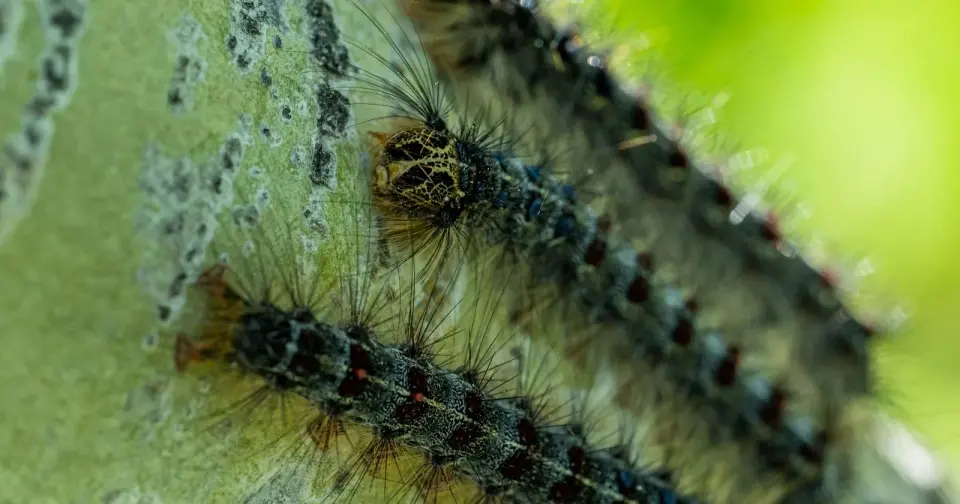
A 1869 accident in Massachusetts, where a French naturalist’s silkworm larvae escaped into the wild, led to the spongy moth becoming North America’s most costly forest pest. After a 20-year delay, the species defoliated 360 square miles and continues to strip over a million acres annually, costing the U.S. $868 million yearly.
Key points
- Étienne Léopold Trouvelot, a French amateur naturalist in Medford, Massachusetts, attempted to breed disease-resistant silkworms using European gypsy moth larvae in 1869.
- A windstorm scattered the caterpillars from his nets into the local woods, initiating an invasion that remained largely invisible for two decades.
- The first major outbreak occurred around 1889, defoliating fruit and shade trees across a 360-square-mile area near Medford.
- The species, renamed 'spongy moth' in 2022, spreads via wind-borne silk threads and lacks natural predators in North America.
- Current control efforts rely on the federal 'Slow the Spread' program, utilizing traps, mating disruptors, and aerial sprays, alongside the natural fungus Entomophaga maimaiga.
Background
This story highlights the long-term ecological consequences of accidental biological introductions. Unlike rapid environmental disasters, invasive species often exhibit a 'slow fuse' effect, where populations build silently before causing widespread damage. The spongy moth’s impact is compounded by its ability to feed on over 300 tree species, draining tree reserves and potentially killing up to 80% of hardwood forests after two consecutive years of defoliation. While earlier archive articles cover unrelated topics such as oyster restoration and bourbon markets, they do not provide direct background for this specific entomological history.
Why it matters
The spongy moth serves as a critical case study in the economics and logistics of invasive species management. With an estimated annual damage cost of $868 million, the pest demonstrates how a single historical oversight can create a permanent, multi-state financial and ecological burden. The 20-year lag between introduction and visible crisis underscores the difficulty of early detection in biological invasions, challenging modern monitoring systems to identify threats before they reach critical mass.
What to watch
Eradication is no longer feasible, so the focus remains on containment through the 'Slow the Spread' initiative. Future management will continue to rely on a combination of chemical mating disruptors, aerial treatments, and monitoring the efficacy of the naturally occurring fungus Entomophaga maimaiga, which was discovered in 1989 and has since helped suppress certain outbreaks.
Want the full story? Read the original reporting
Read on Space Daily