
First Live Sighting of Humpback Anglerfish at Surface Raises Deep-Sea Mystery
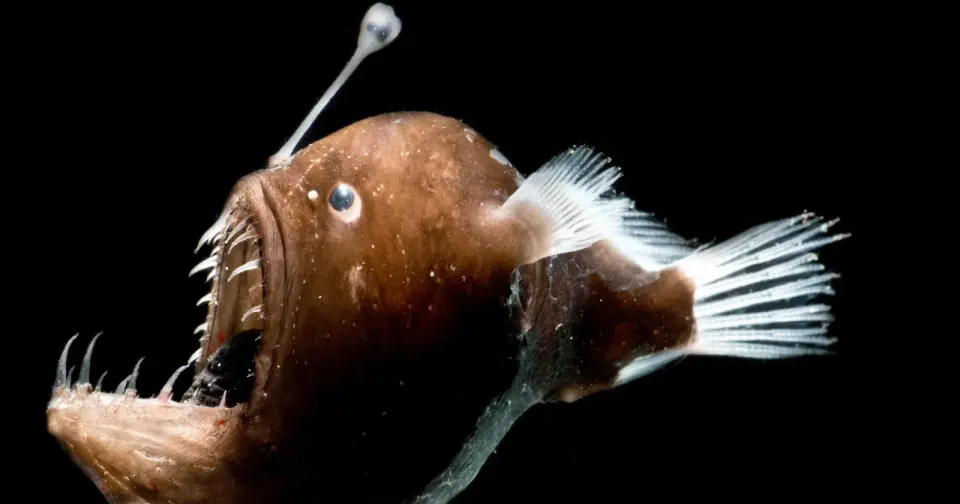
A humpback anglerfish, typically found in the pitch-black depths of the ocean, was spotted alive at the surface off Tenerife in January 2025. This is the first documented instance of a living adult of this species being observed in daylight. Researchers are investigating why the fish surfaced, as it likely died shortly after due to the drastic change in pressure and temperature.
Key points
- On January 26, 2025, a team from the Spanish NGO Condrik Tenerife observed a humpback anglerfish (Melanocetus johnsonii) at the surface while returning to port from a research expedition off Playa San Juan.
- The fish was identified by marine biologist Laia Valor, who initially mistook it for plastic or debris due to its unusual appearance in the sunlit zone.
- This species typically inhabits the midwater column between 200 and 2,000 meters depth, where temperatures are around 4 degrees Celsius and pressure is extreme.
- The fish died approximately 90 minutes after surfacing, and its body was preserved at the Museum of Nature and Archaeology in Santa Cruz de Tenerife for further analysis.
- The footage of the live fish has been viewed hundreds of millions of times, marking the first time a living adult of this species has been documented outside of deep-sea submersibles or preserved specimens.
Background
Deep-sea creatures like the humpback anglerfish are adapted to extreme conditions, including high pressure and near-freezing temperatures, which make surface exposure fatal. Previous archive articles on marine biology highlight how deep-sea environments foster unique adaptations, such as bioluminescence and slow metabolisms, but rarely discuss the physiological limits of these organisms when exposed to surface conditions. The 2025 sighting challenges existing understanding of deep-sea species behavior and survival mechanisms.
Why it matters
This event provides unprecedented visual data on a rarely seen deep-sea predator, offering insights into its behavior and physiology. It also raises concerns about potential environmental or biological factors that could disrupt deep-sea ecosystems, potentially affecting species that are otherwise inaccessible to direct observation.
What to watch
Researchers at the Museum of Nature and Archaeology in Santa Cruz de Tenerife are continuing to examine the preserved specimen to determine the cause of the fish's ascent. No definitive explanation has been confirmed, but hypotheses include pathology, upwelling currents, or predator avoidance. Further studies may reveal new information about the species' biology and the forces affecting deep-sea habitats.
Want the full story? Read the original reporting
Read on Space Daily