
First-Ever Footage Captures Humpback Whale Mourning Stillborn Calf on Seafloor
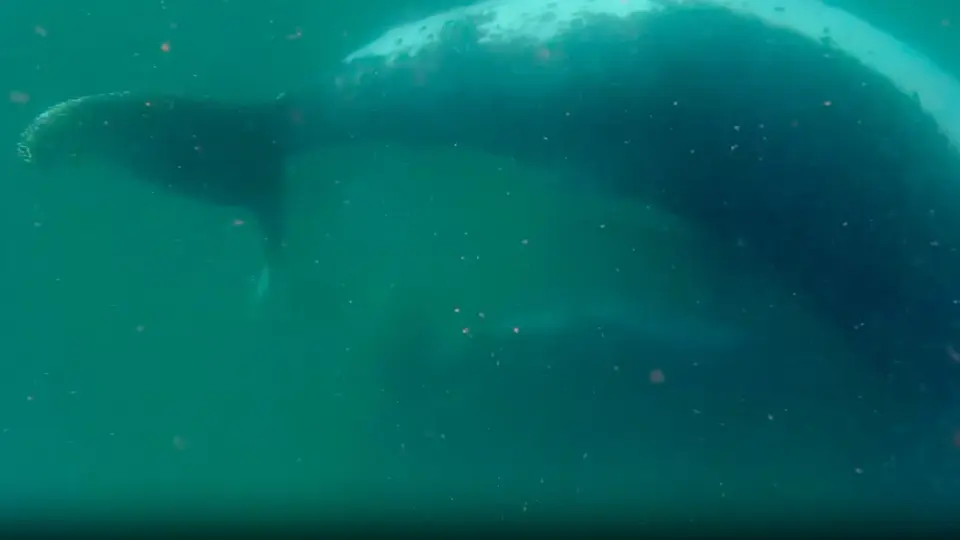
Researchers in Australia have captured the first-ever footage of a humpback whale mother grieving her stillborn calf. The video, recorded in July 2025 off southeastern Australia, shows the mother repeatedly diving to make eye contact with her motionless baby and resting beside it on the seafloor for extended periods. Published in the journal Discover Animals, the study highlights this as an extremely rare observation, as only about 20 humpback births have been documented in scientific literature, none involving a stillbirth. The behavior, described as 'postmortem attentive behavior,' lasted at least 90 minutes and possibly longer, offering unprecedented insight into maternal grief in cetaceans.
Key points
- Footage recorded off southeastern Australia in July 2025 shows a humpback whale mother interacting with her stillborn calf on the seafloor.
- The mother repeatedly dove to make eye contact with the calf, rested beside it for about a minute, and moved her pectoral fin over the body before resurfacing.
- This behavior, interpreted as grieving, lasted at least 90 minutes and possibly days, though researchers left the scene after two hours.
- Only about 20 humpback whale births have been observed and described in scientific literature, none involving a stillborn calf.
- Newborn humpback calves lack sufficient blubber to float, causing stillborn calves to sink immediately, making such events extremely difficult to observe.
- The study was published in the journal Discover Animals on September 16, 2025, by researchers including Olaf Meynecke of Griffith University and Andrew Mulville.
Background
This discovery follows other rare humpback whale observations in Australia, including drone footage of a live birth off New South Wales in 2026, which was the fourth ever recorded. Long-term acoustic monitoring in Monterey Bay has also shown shifts in humpback whale activity linked to environmental changes, underscoring the importance of detailed behavioral and acoustic data in understanding cetacean responses to ecological shifts.
Why it matters
This footage provides the first direct evidence of grief-like behavior in humpback whales following stillbirth, a phenomenon previously unobserved in this species. It challenges assumptions about cetacean maternal instincts and offers critical data for understanding emotional and behavioral responses to loss in marine mammals. The rarity of such observations underscores the need for advanced underwater monitoring to capture fleeting, significant biological events.
What to watch
Researchers may use this footage to inform future studies on cetacean grief and maternal behavior. Increased underwater surveillance and acoustic monitoring could lead to more documented cases of stillbirths and postpartum behaviors in humpback whales, potentially revealing broader patterns in whale social and emotional responses to loss.
Want the full story? Read the original reporting
Read on Live Science