
USGS Geologist Collects Molten Lava Samples from Kilauea Volcano
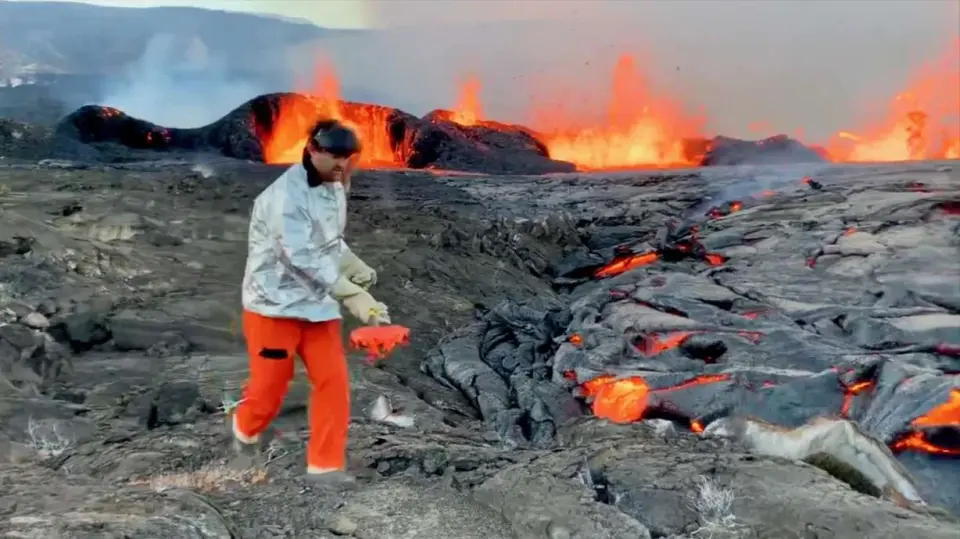
A U.S. Geological Survey (USGS) geologist was filmed collecting molten lava samples from an active flow at Kilauea Volcano in Hawaii. The video, posted on the USGS Facebook page, shows the worker using a shovel to scoop red-hot lava into a metal bucket and then cooling it with water. According to the USGS, these samples help scientists understand processes within the volcano's magma chambers. The recent eruption episode, which ended on November 5, produced approximately eight million cubic yards of lava, with fountains reaching up to 660 feet and an eruption rate of about 260 cubic yards per second. Lava temperatures typically range from 1,300 to 2,200 degrees Fahrenheit, according to AccuWeather. The USGS warns that active lava flows pose significant hazards, including severe burns from hot or sharp surfaces, heat exhaustion, and reduced visibility from acidic ground fog caused by rainfall.
Key points
- A USGS geologist collected molten lava samples from an active flow at Kilauea Volcano in Hawaii, as shown in a video posted on the agency's Facebook page.
- The geologist used a shovel to scoop the lava into a metal bucket and then cooled it with water, despite the extreme temperatures and hazards.
- The recent eruption episode ended on November 5, producing approximately eight million cubic yards of lava.
- Lava fountains reached heights of up to 660 feet, and the eruption rate was about 260 cubic yards per second.
- Lava temperatures typically range from 1,300 to 2,200 degrees Fahrenheit, according to AccuWeather.
- The USGS warns that active lava flows pose hazards such as severe burns, heat exhaustion, and reduced visibility from acidic ground fog.
Background
This incident follows earlier coverage of geological discoveries, such as the 2026-11-06 report on Utah paleontologists uncovering potential new armored dinosaur species at the Ironstone Bonebed, and the 2026-10-04 discovery of a hidden Victorian bridge painting on the back of a geological map. These events highlight ongoing scientific and geological research efforts, though they are unrelated to the current volcanic activity in Hawaii.
Why it matters
The collection of molten lava samples by USGS geologists is crucial for understanding volcanic processes and improving safety measures for communities near active volcanoes. The recent eruption at Kilauea Volcano, with its significant lava output and high eruption rates, underscores the importance of monitoring and studying volcanic activity to mitigate potential hazards.
What to watch
The USGS will likely continue to analyze the collected lava samples to gain insights into the volcano's magma chambers and improve predictions of future eruptions. Additionally, the agency will monitor ongoing volcanic activity and provide updates to the public to ensure safety and preparedness.
Want the full story? Read the original reporting
Read on KSL News