
Videographer Captures Record-Breaking Lion’s Mane Jellyfish in Pacific Night Dive
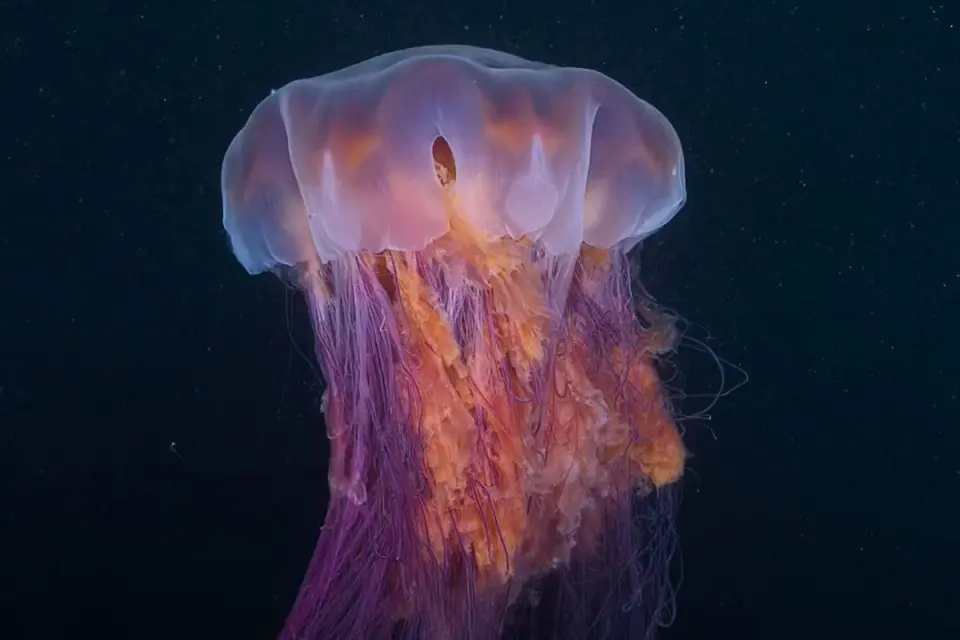
Underwater videographer John Roney filmed a massive lion’s mane jellyfish during a night dive in the Salish Sea, a marginal sea of the Pacific Ocean between British Columbia and Washington State. The footage, originally shared in 2024, highlights the creature’s enormous size and vibrant colors, confirming it as the heaviest jellyfish species in the world according to Guinness World Records.
Key points
- John Roney filmed a giant lion’s mane jellyfish during a night dive in the Salish Sea, located between British Columbia, Canada, and Washington State, USA.
- The jellyfish was so large that Roney spent over a minute following its trailing tentacles before spotting the main body.
- The footage shows the creature pulsing through dark water with brightly colored tentacles in shades of orange, purple, and crimson.
- Guinness World Records estimates the lion’s mane jellyfish can exceed one tonne in weight, making it the heaviest jellyfish species globally.
- Roney warned that the species has a dangerous sting and should not be touched.
Background
Recent marine research has highlighted the growing interest in deep-sea and large jellyfish species, including the first visual documentation of giant phantom jellyfish sheltering juvenile rudderfish off Argentina in October 2026. Additionally, NASA satellites have observed significant changes in Pacific Ocean phytoplankton levels due to a super El Niño event, which may impact marine ecosystems. These developments underscore the broader scientific focus on understanding large marine organisms and their environmental contexts.
Why it matters
The footage provides visual evidence of the lion’s mane jellyfish’s exceptional size, reinforcing its status as the heaviest jellyfish species. This highlights the importance of documenting large marine organisms to understand biodiversity and ecosystem dynamics in the Pacific Ocean.
What to watch
No further developments are mentioned in the source. The footage serves as a historical record from 2024, and no new research or events are anticipated based on the provided information.
Want the full story? Read the original reporting
Read on BBC Wildlife Magazine