
Neuroscience 2026: From Maternal Brain Shifts to the Politics of Big Science
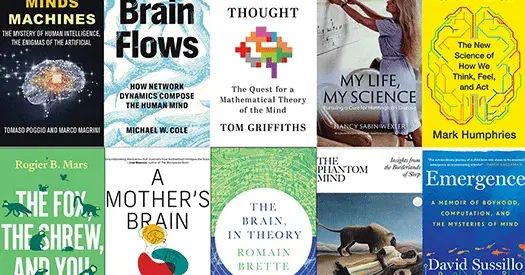
The Transmitter has released its 2026 reading list, highlighting five major new books in neuroscience that explore maternal brain changes, sleep paralysis, and the failure of the European Human Brain Project. The list also features titles on whole-brain modeling and the history of computational intelligence, reflecting a shift toward network dynamics and sociological critiques of large-scale scientific initiatives.
Key points
- Susana Carmona’s 'A Mother’s Brain' details neuroplasticity changes during gestation, building on her 2024 study of over 100 pregnant women in Spain.
- Michael Cole’s 'Brain Flows' proposes a theoretical framework for how neuronal activity between populations shapes free will and creativity.
- Baland Jalal’s 'The Phantom Mind' examines sleep paralysis as a key to understanding consciousness and imagination through fractured sleep states.
- Tara Mahfoud’s 'A Brain for Europe' critiques the 2013-2023 Human Brain Project, analyzing how scientific governance debates emerged from competing visions of brain models.
- Mark Humphries’ 'The Latent Brain' argues that brain function must be understood through collective network activity rather than individual neuronal signals.
Background
This release follows earlier 2026 cultural discussions on curated reading lists, such as the New York Times’ thriller list and Texas’ broad curriculum mandates, but focuses specifically on academic and scientific literature. The archive shows a trend toward diverse, expert-curated selections, whereas this list is strictly focused on neuroscience advancements and societal impacts of brain research.
Why it matters
These publications signal a move away from reductionist 'biological computer' metaphors in neuroscience toward holistic, network-based, and sociological approaches. The critique of the Human Brain Project highlights growing scrutiny of 'big science' governance, while new theories on maternal brains and sleep offer practical insights into human development and consciousness.
What to watch
Readers can expect continued debate on the validity of computational models in neuroscience, with new books like 'The Brain, In Theory' challenging existing paradigms. The release of 'A Brain for Europe' may influence future policy discussions on large-scale scientific funding and collaboration in Europe.
Want the full story? Read the original reporting
Read on The Transmitter