
Canadian astronaut Joshua Kutryk becomes fourth to miss a child's birth while in space
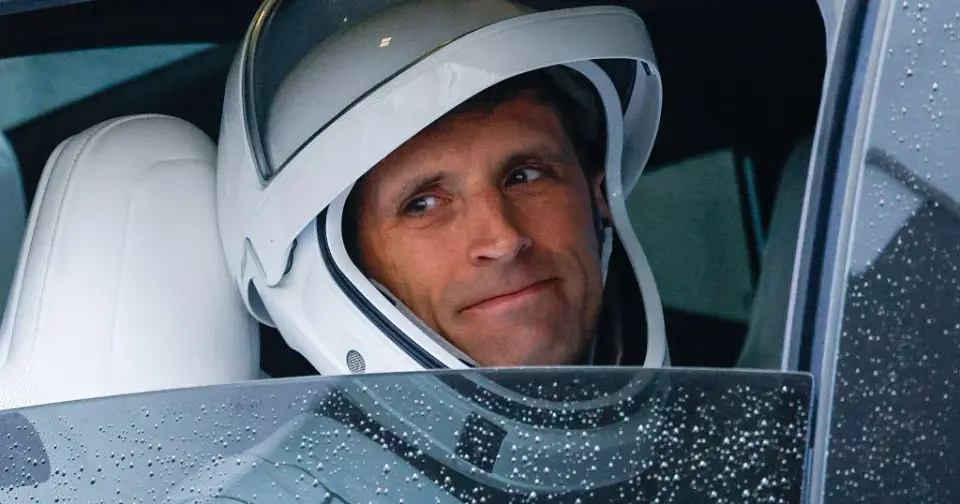
Canadian astronaut Joshua Kutryk, currently aboard the International Space Station, welcomed his third child, a daughter, while in orbit. His wife, Heather, gave birth on November 24, 2026. Kutryk, a Royal Canadian Air Force colonel and former military test pilot, launched on October 1 as part of the SpaceX Crew-13 mission. This is his first spaceflight and he is the 17th Canadian to travel to space. The Canadian Space Agency confirmed both mother and baby are healthy. Kutryk is the fourth astronaut in history to miss a child's birth while in space, following NASA astronauts Mike Fincke and Randy Bresnik. The couple shared a statement expressing their connection despite the distance and thanking support teams. Kutryk has completed two spacewalks, including the final installation of a solar array, and is expected to return to Earth in the spring.
Key points
- Heather Kutryk gave birth to a daughter on November 24, 2026, while her husband, astronaut Joshua Kutryk, was aboard the International Space Station.
- Joshua Kutryk launched to the ISS on October 1, 2026, aboard a SpaceX Crew Dragon capsule as part of the Crew-13 mission, accompanied by two NASA astronauts and a Russian cosmonaut.
- The Canadian Space Agency confirmed that both Heather and the newborn are doing well, and that Joshua was able to participate in the experience from orbit.
- Kutryk is the fourth astronaut in history to miss the birth of a child while in space, following NASA astronauts Mike Fincke (2004) and Randy Bresnik (2009).
- The couple's two older children, Peter and Anna, are ages 7 and 5, respectively, and have taken on roles as big brother and big sister.
- Kutryk, a Royal Canadian Air Force colonel and former military test pilot, is the 17th Canadian to fly in space and this is his first spaceflight.
Background
Joshua Kutryk launched to the International Space Station on October 1, 2026, as part of the SpaceX Crew-13 mission. During his stay, he completed two spacewalks, including the final installation of a roll-out solar array on November 5, which concluded a five-year power upgrade project for the ISS. The Canadian Space Agency had previously announced it would provide psychological and family support for Kutryk during his mission, including priority video calls and potential time off around the birth. This is Kutryk's first spaceflight, and he is the 17th Canadian to travel to space. In the broader context of space travel, only three astronauts before Kutryk have missed the birth of a child while in space: NASA astronaut Mike Fincke in 2004 and Randy Bresnik in 2009. The ISS is scheduled for deorbit in 2030, and the power upgrade completed by Kutryk and NASA astronaut Anil Menon boosts the station's power output by 30% to 215 kilowatts to support operations through that date.
How outlets are covering it
The Canadian Space Agency and the Kutryk family emphasized the emotional connection and support received during the birth, describing the daughter as a 'little star' and expressing gratitude to NASA and CSA teams. CBS News highlighted the historical significance of Kutryk being the fourth astronaut to miss a child's birth and quoted his pre-launch interview where he acknowledged the difficulty but framed it as a 'unique and enriching life experience.' SpaceQ focused on the logistical support provided by the Canadian Space Agency, including psychological support and priority video calls, and noted that Kutryk's mission includes two spacewalks and a spring return. All sources agree on the core facts of the birth, the health of mother and baby, and the couple's statement, but differ in emphasis: the CSA and family statement focus on family unity and gratitude, CBS News focuses on the historical and personal challenge, and SpaceQ focuses on the agency's support systems and mission details.
Why it matters
This event highlights the human and family challenges faced by astronauts on long-duration missions, as well as the support systems in place to mitigate those challenges. It underscores the balance between professional duties and personal life for space travelers, and the importance of institutional support in maintaining well-being. The fact that only four astronauts in history have missed a child's birth while in space indicates that such situations are rare, but the growing frequency of long-duration missions may make them more common. The successful completion of the ISS power upgrade by Kutryk also demonstrates the critical nature of his mission, as the upgrade ensures the station's operations through its 2030 deorbit. This event may influence future policies on family support and mission planning for astronauts, particularly as space agencies plan for longer and more frequent missions.
What to watch
Joshua Kutryk is expected to return to Earth in the spring of 2027, though a specific date has not been confirmed. The Canadian Space Agency will continue to provide support to the Kutryk family, including video calls and psychological support, until his return. The couple plans to reunite as a family of five, including their two older children, Peter and Anna. The ISS will continue its operations through 2030, supported by the power upgrade completed by Kutryk and NASA astronaut Anil Menon. Future missions may include more detailed family support protocols, given the challenges highlighted by this event.
Want the full story? Read the original reporting
Read on CBS News