
Centenarian physicist Jim Choyke continues silicon carbide research at Pitt
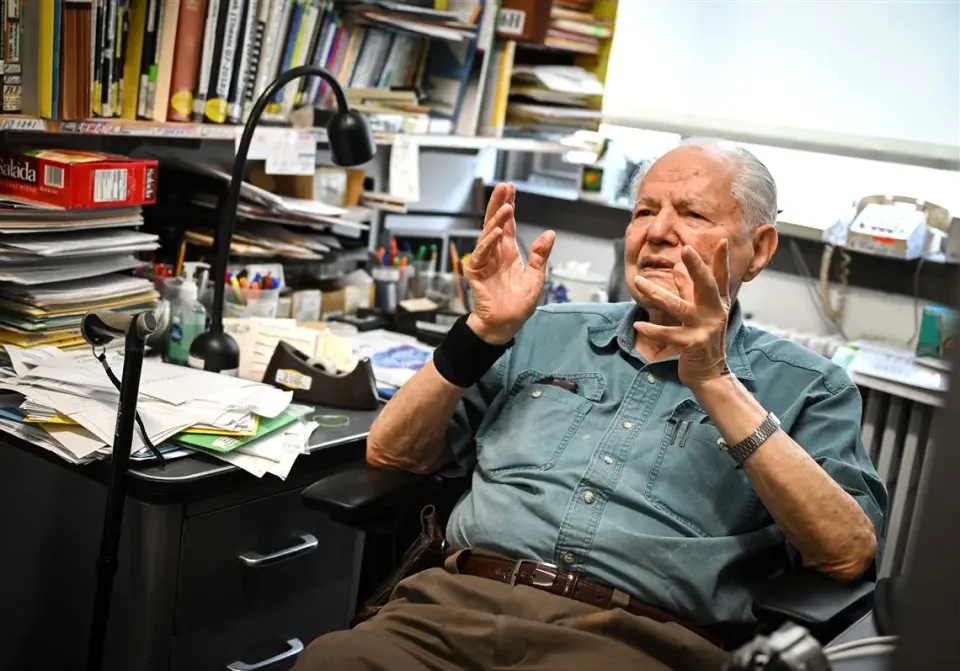
Jim Choyke, a 100-year-old emeritus professor at the University of Pittsburgh, continues active research on silicon carbide. Born in Berlin in 1926, he fled Nazi Germany as a child and later pioneered semiconductor studies at Westinghouse. His foundational work on silicon carbide conductivity in the 1950s underpins modern AI, quantum computing, and electric vehicle batteries. Despite reaching a century of age, Choyke rejects retirement, citing a lifelong passion for physics and a desire to remain helpful to the scientific community.
Key points
- Jim Choyke celebrated his 100th birthday on July 24, 2026, and remains an active emeritus professor in the physics and astronomy department at the University of Pittsburgh.
- Choyke fled Berlin in 1934 to escape Nazi persecution, arriving in New York at age nine before eventually settling in Pittsburgh in 1952 to work at Westinghouse Research Laboratories.
- He published the first study proving silicon carbide could conduct electricity, a discovery that became critical for electroluminescence, modern batteries, and high-temperature semiconductor stability.
- Colleagues describe him as meticulous and warm; he maintains contact with former students and continues to walk to his office in Allen Hall using a cane, despite having no chronic illnesses.
- Choyke states he does not believe in retirement, asserting that he continues working because he enjoys physics and wants to remain helpful, rather than seeking personal fame or recognition.
Background
Recent scientific advancements in quantum mechanics and AI infrastructure, such as the validation of glueball states and the expansion of AI agents, highlight the growing reliance on advanced semiconductor materials. Choyke’s decades-old research on silicon carbide provides the foundational material science that supports these contemporary technologies, linking mid-20th-century physics to 21st-century computational and energy demands.
Why it matters
Choyke’s continued work illustrates the long-term impact of foundational materials science on modern technology. His research on silicon carbide, initially overlooked, is now essential for scaling artificial intelligence models and developing efficient electric vehicle batteries, demonstrating how early scientific discoveries can underpin future technological revolutions decades later.
What to watch
Choyke has no plans to stop working, despite losing his lab space at age 93. He intends to continue contributing to physics research and mentoring students, maintaining his role at the University of Pittsburgh as long as his health permits.
Want the full story? Read the original reporting
Read on post-gazette.com