Tag

Quantum Mechanics

All articles tagged with #quantum mechanics

When Schrödinger Met the Box: Reassessing Quantum Reality
science7 hours ago

When Schrödinger Met the Box: Reassessing Quantum Reality

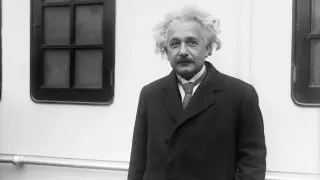
The piece revisits Schrödinger’s 1935 cat-in-a-box thought experiment, used to critique interpretations of quantum mechanics by suggesting a system could be in a live-and-dead superposition until observed. It notes Schrödinger’s letter to Einstein and the ongoing debate over whether reality collapses to a definite state at measurement, highlighting the origin and stakes of the quantum measurement problem.

One of Physics’ Biggest Surveys Finds Almost No Consensus
physics-and-chemistry13 days ago

One of Physics’ Biggest Surveys Finds Almost No Consensus

APS’s large survey of about 1,660 participants—ranging from researchers to science enthusiasts—reveals widespread disagreement on core physics questions, from the Big Bang to quantum gravity. The Big Bang is widely seen as a hot, dense state (68%), not necessarily the absolute beginning (25%). Quantum interpretations are not universally accepted: Copenhagen leads at around 36%, with many opting for other theories or 'no opinion.' About half agree on cosmic inflation, while dark energy and ΛCDM show no clear majority, with evolving dark energy edging ahead slightly. Only a minority subscribe to specific quantum gravity views, with string theory leading among them. The results underscore that physics frontiers remain active and data and theory must advance to resolve these debates.

Time’s Quantum Riddle: Collapse Models Hint at Tiny Fundamental Uncertainty
science1 month ago

Time’s Quantum Riddle: Collapse Models Hint at Tiny Fundamental Uncertainty

A team studying quantum-collapse models (Diósi–Penrose and Continuous Spontaneous Localization) linked to gravity finds that time itself may have a minute intrinsic uncertainty, implying a fundamental limit on how precisely time can be measured. The effect is unimaginably small and would not affect current timekeeping, but it suggests deep connections between quantum mechanics and gravity and offers a way to experimentally distinguish collapse models from standard quantum theory.

Metal Nanoparticles Demonstrate Quantum Superposition at Near-Macroscopic Scale
science1 month ago

Metal Nanoparticles Demonstrate Quantum Superposition at Near-Macroscopic Scale

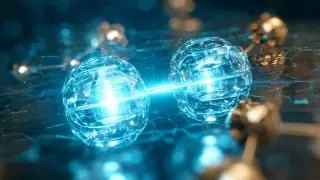
Vienna and Duisburg-Essen researchers show that sodium nanoparticle clusters (~8 nm, >170,000 amu) can exhibit quantum interference, existing in a superposition as they pass through three UV-laser diffraction gratings. Achieving a macroscopicity value of μ = 15.5, the experiment extends quantum behavior toward larger scales and opens the door to studying bigger particles and precision sensing.

Quantum Mechanics: From Paradox to Tech Powerhouse
technology1 month ago

Quantum Mechanics: From Paradox to Tech Powerhouse

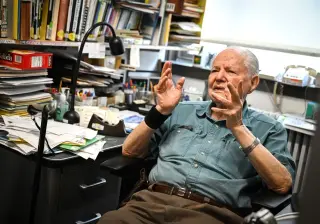
Quantum mechanics has evolved from a puzzling theory to the backbone of modern technology, powering lasers, chips, quantum computing, and secure communications. Texas A&M physicist Marlan Scully surveys the journey—from Schrödinger’s cat to coherence and entanglement enabling new sensors and cryptography, to quantum heat engines that can exceed classical limits. The reach extends into biology and cosmology, while open questions about unifying gravity with quantum theory promise a continued scientific adventure.

What 'Real' Means for the Multiverse, According to an Astrophysicist
science1 month ago

What 'Real' Means for the Multiverse, According to an Astrophysicist

The piece argues that the 'reality' of a multiverse hinges on definition: while quantum mechanics’ many-worlds view and string theory’s landscape offer frameworks in which multiple universes could exist, there is no direct evidence for other universes. Indirect hints might come from how these theories predict physics at tiny scales or high-energy experiments, but proving a multiverse remains elusive.

Quantum Time Chaos: New Test Supports Indefinite Causal Order
science1 month ago

Quantum Time Chaos: New Test Supports Indefinite Causal Order

A Vienna team extends Bell-test ideas to indefinite causal order, using entangled photons arranged so that the sequence A→B or B→A depends on polarization. The observed correlations differ from local-hidden-variable predictions by 18 standard deviations, suggesting quantum processes can exist in a superposition of temporal orders. However, notable loopholes remain (photon loss, limited separation) and further experiments are needed to close them, though the work points toward broader applications of time-uncertain quantum processes.

Quantum Engine Reshapes Time’s Arrow with Feedback Control
physics-and-chemistry2 months ago

Quantum Engine Reshapes Time’s Arrow with Feedback Control

Physicists reveal a measurement-based feedback protocol that can steer a monitored quantum system’s evolution to mimic reversed time, effectively reshaping the arrow of time and enabling potential energy extraction in quantum devices; while not time travel, the approach could boost quantum batteries and algorithms, with plans to test on superconducting qubits.

Quantum 2.0: The Next Frontier of Single-Particle Control and Quantum AI
technology2 months ago

Quantum 2.0: The Next Frontier of Single-Particle Control and Quantum AI

An interview about Paul Davies’s book Quantum 2.0 explains how the original quantum mechanics (Quantum 1.0) gave us technologies like lasers, chips, and MRI, and how Quantum 2.0 involves manipulating individual quanta to encode information in the particles themselves, signaling a new tech revolution. The discussion spans quantum biology, the rise of quantum AI, and the tantalizing prospect of mind–machine interfaces, while noting ongoing debates about how quantum reality relates to everyday experience and imagining a potential Quantum 3.0 ahead.

Rat Study Keeps Minds Awake Longer, Stirring Quantum-Consciousness Debate
science3 months ago

Rat Study Keeps Minds Awake Longer, Stirring Quantum-Consciousness Debate

A Wellesley College study found rats given a microtubule-stabilizing treatment stayed conscious longer under anesthesia, lending experimental support to Orch OR—the idea that consciousness arises from quantum processes in the brain—and suggesting quantum effects might persist at physiological temperatures; although controversial, the result fuels the debate on whether consciousness could extend beyond the brain, if validated.

The Box That Still Holds Energy: Zero-Point Secrets of the Quantum Vacuum
science3 months ago

The Box That Still Holds Energy: Zero-Point Secrets of the Quantum Vacuum

Even a truly empty box still contains zero-point energy—the ground-state energy of quantum fields and particles—so the vacuum is energy-filled and can influence reality (as seen in effects like Casimir). Depending on interpretation, these fluctuations may appear as motion or be purely nonclassical, but the takeaway is that the vacuum is ‘nothing infused with the potential to be anything.’

Quantum states are real: the 2012 theorem reshaping quantum reality
science3 months ago

Quantum states are real: the 2012 theorem reshaping quantum reality

The article argues that the Pusey-Barrett-Rudolph (PBR) theorem, proven in 2012, shows the quantum state must be ontic (a property of reality) under three basic assumptions, ruling out epistemic hidden-variable interpretations and implying the wavefunction has real physical status. This places quantum foundations on firmer ground, clarifies debates about reality vs. knowledge in quantum mechanics, and underscores the theorem’s impact alongside ongoing quantum technologies that exploit entanglement and nonlocality.

Graviton trap aims to witness gravity's quantum particle
science4 months ago

Graviton trap aims to witness gravity's quantum particle

Scientists at Stevens Institute of Technology and Yale University are launching the world’s first experiment to detect gravitons, using a centimeter-scale resonator filled with superfluid helium cooled to its quantum ground state. A passing gravitational wave should impart energy that becomes a single graviton, converted into a phonon and read out with precision lasers. By scaling the detector from gram-scale to larger detectors, the team hopes to observe gravitons directly and bridge General Relativity with Quantum Mechanics, backed by the Keck Foundation.