
China's Tianwen-3 targets 2028 launch to return Mars samples by 2031
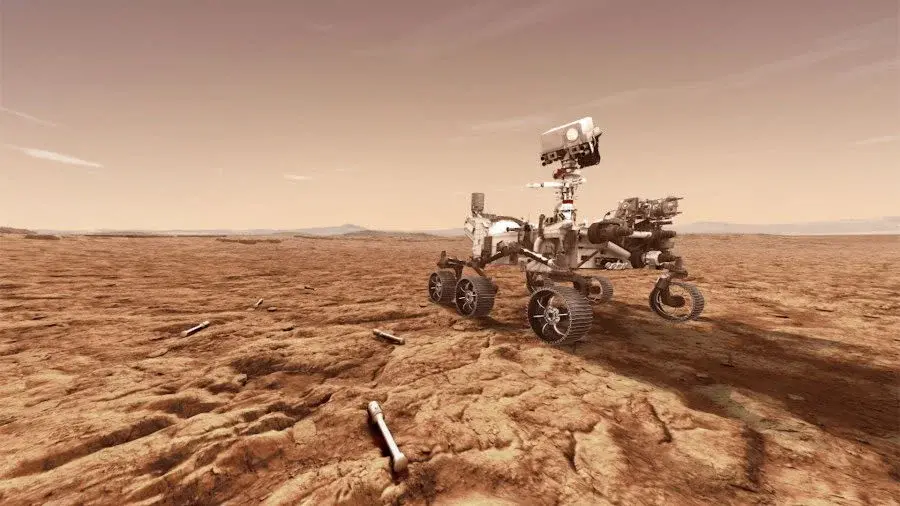
China's Tianwen-3 mission has entered the prototype development stage, targeting a 2028 launch to retrieve Martian samples by 2031. Chief scientist Hou Zengqian stated that the primary goal is to search for signs of ancient life, with the mission planning to drill two meters below the surface to collect at least 500 grams of material. The project involves five spacecraft components and the construction of a new planetary protection laboratory in Hefei to prevent contamination.
Key points
- Tianwen-3 is planned for launch around 2028 and aims to return samples to Earth by 2031.
- The mission's top scientific priority is detecting traces of life, including microbial or unknown forms.
- The spacecraft consists of a lander, ascent vehicle, service module, orbiter, and return module.
- China is building the world's first planetary protection laboratory in Hefei to manage sample contamination.
- The mission will drill approximately two meters deep to collect subsurface samples less affected by radiation.
Background
China's sample-return effort follows earlier international milestones, such as Japan's MMX mission, which aims to return material from Mars' moon Phobos by 2031. While NASA's Perseverance rover has collected surface samples, its return mission has faced redesigns and delays, making China's single-mission approach a distinct strategic alternative in planetary exploration.
How outlets are covering it
Global Times and The Macau Post Daily emphasize the scientific ambition to answer whether life has existed beyond Earth, citing Hou Zengqian's focus on biosignatures. Inside Outer Space highlights the engineering specifics, including the use of two Long March-5 rockets and the 500-gram sample target. While all sources agree on the 2028 launch window, Global Times notes international cooperation with Thailand and Serbia, whereas Inside Outer Space focuses on the technical challenges of contamination control and landing site selection.
Why it matters
This mission represents a major milestone in China's space program, potentially making it the first nation to return Martian samples to Earth. Success would provide critical data on Mars' habitability and demonstrate advanced engineering capabilities, while the new planetary protection lab sets a precedent for handling extraterrestrial materials safely.
What to watch
China expects to finalize the landing site by the end of 2026 and complete a new geological map of Mars by 2028. The mission will proceed through prototype development, with launch preparations underway for the 2028 window, followed by sample return and analysis in the early 2030s.
- China unveils plans to beat US in retrieving Mars samples Yahoo
- Tianwen-3 mission enters prototype phase, prioritizing search for Martian life traces: chief scientist Global Times
- Chief scientist of Tianwen-3 mission says search for signs of life on Mars is top goal The Macau Post Daily
- China Moves Forward on Mars Sample Return Mission Inside Outer Space
- China narrows Tianwen-3 Mars sample return landing site selection, seeking traces of life SpaceNews
Want the full story? Read the original reporting
Read on Yahoo