Tag

Planetary Protection

All articles tagged with #planetary protection

Rocky hitchhikers: hardy microbes may shuttle life between planets
space-exploration1 month ago

Rocky hitchhikers: hardy microbes may shuttle life between planets

A Johns Hopkins-led study shows the bacterium Deinococcus radiodurans can survive pressures up to about 1.4–2.4 gigapascals from simulated asteroid impacts, lending support to lithopanspermia—the idea that microbes could hitchhike on rock fragments between planets. While not proof that life transferred from Mars to Earth or vice versa, the findings suggest microbes could endure interplanetary transfer, potentially prompting reevaluation of planetary-protection rules.

Martian regolith may block Earth microbes, tardigrades reveal through soil tests
space1 month ago

Martian regolith may block Earth microbes, tardigrades reveal through soil tests

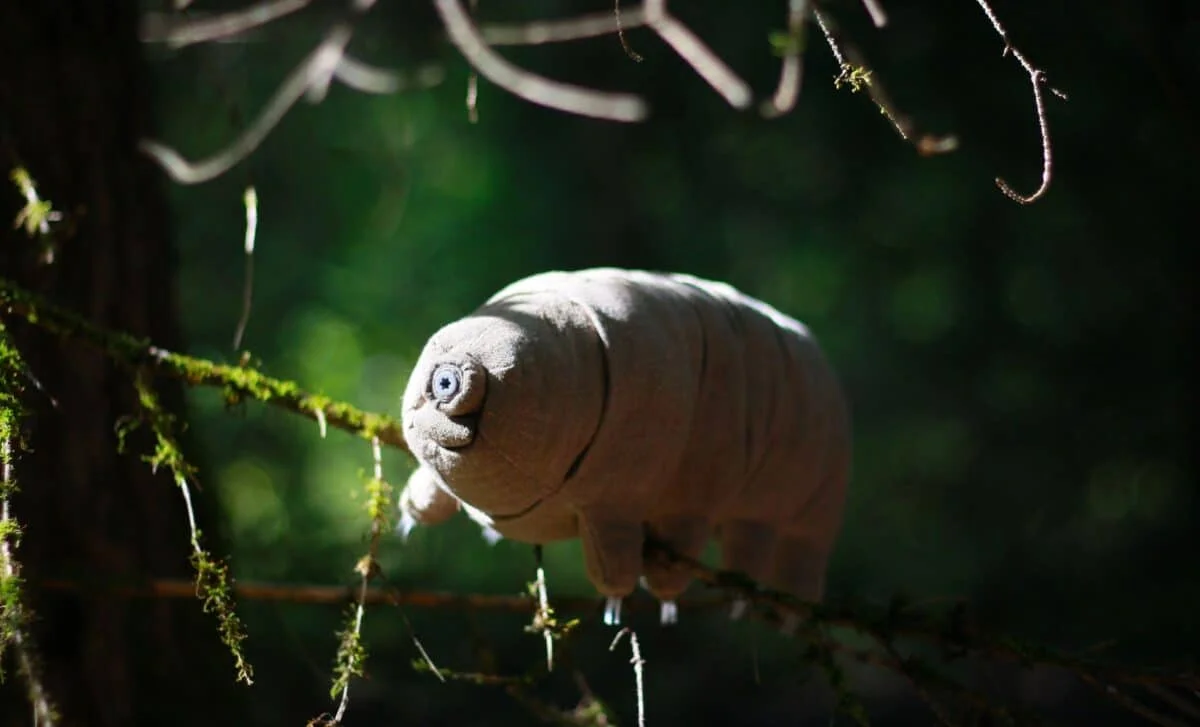
Researchers exposed tardigrades to two Martian regolith simulants (MGS-1 and OUCM-1). MGS-1 caused notable stress and rapid dormancy, while OUCM-1 was less harmful. Washing the simulant reduced toxicity, indicating a water-soluble component—likely salts—drives the harm. The results suggest Mars’ soil chemistry could help prevent Earth microbes from contaminating the planet (a planetary-protection bonus), while also implying that treating regolith could eventually support plant growth on Mars.

Mars soil may defend against Earth microbes while enabling future farming
space-exploration1 month ago

Mars soil may defend against Earth microbes while enabling future farming

Space-biologist researchers exposed tardigrades to Mars-regolith simulants (MGS-1 and OUCM-1). In MGS-1, tardigrades entered dormancy within two days, suggesting a toxic component that could be washed away—washing improved tardigrade resilience and made regolith more hospitable for growth, while OUCM-1 remained inhibitory but less so. The work implies Mars’ soil may defend against Earth microbes, aiding planetary protection, and that washed regolith could potentially be turned into crop‑soil for future missions. The findings were published in December 2025 in the International Journal of Astrobiology.

Martian Regolith Proves Harmful to Tardigrades, Study Finds
science1 month ago

Martian Regolith Proves Harmful to Tardigrades, Study Finds

In lab-made Martian soils (MGS-1 and OUCM-1), tardigrades showed reduced activity in MGS-1 and remained reasonably active in OUCM-1; a simple water rinse of MGS-1 restored vigor, suggesting some regolith components harm organisms but can be washed away. The study informs planetary-protection considerations and Mars-exploration planning, but results rely on simulations and further work under Mars-like pressure/temperature is needed.

Water Wash Could Help Tardigrades Survive Martian Dirt, Boosting Mars Farming Prospects
science1 month ago

Water Wash Could Help Tardigrades Survive Martian Dirt, Boosting Mars Farming Prospects

Two tardigrade species were placed in Mars regolith simulants (MGS-1 and OUCM-1) and in Earth sand as a control. In the regolith, tardigrades died off quickly, especially Hypsibius exemplaris, while Ramazzottius cf. varieornatus fared somewhat better but still declined. When the simulant was rinsed with water, tardigrades survived longer and remained active, suggesting a water-soluble, damaging component in MGS-1. The finding could inform future Mars agriculture and planetary protection, though researchers did not test radiation, temperature, or other environmental factors, and the exact cause remains to be identified. The study was published in the International Journal of Astrobiology.

Unusual Changes Detected in Earth's Magnetic Field
science5 months ago

Unusual Changes Detected in Earth's Magnetic Field

The South Atlantic Anomaly, a weak spot in Earth's magnetic field over the South Atlantic, has expanded significantly over the past 11 years, as revealed by ESA's Swarm satellites. This region's weakening is linked to complex patterns at Earth's liquid core boundary, and it poses risks to space missions by exposing satellites to higher radiation levels. The study highlights ongoing changes in Earth's magnetic field, which is vital for protecting the planet from cosmic and solar radiation.

China seeks international cooperation to return Mars samples
science8 months ago

China seeks international cooperation to return Mars samples

China is advancing its Mars Sample Return (MSR) project and constructing a specialized facility for handling samples, raising questions about international cooperation and planetary protection standards. Experts suggest that international peer review and collaboration, especially with agencies like ESA, could promote safety and transparency, but political sensitivities and lack of enforceable oversight pose challenges. The debate continues on how best to ensure safe and cooperative exploration of Mars.

"Proposed Giant Space Umbrella for Earth's Climate Protection Faces Micrometeoroid Perforation Challenge"
science-and-technology2 years ago

"Proposed Giant Space Umbrella for Earth's Climate Protection Faces Micrometeoroid Perforation Challenge"

Research on micrometeoroids suggests that a proposed sunshade to protect Earth's climate from rising temperatures may be perforated by space debris, posing a potential threat to the planet. The initiative, which involves positioning a giant sunshade at the Lagrange Point L1 between Earth and the Sun, faces engineering challenges and potential risks from impacts by micrometeoroids and dust. The author, Avi Loeb, emphasizes the importance of considering the threat from impactors in any space infrastructure, highlighting the potential vulnerability of a thin film in space.

Near-Earth Asteroid Eludes Detection Until Days After Close Encounter
science-and-technology2 years ago

Near-Earth Asteroid Eludes Detection Until Days After Close Encounter

An asteroid, named 2023 NT1, three times larger than the one that caused damage in Chelyabinsk, Russia in 2013, was only detected two days after it made its closest approach to Earth on July 13. This highlights the blind spot in humanity's planetary protection systems. NASA and the European Space Agency are planning missions to improve early warning systems for near-Earth asteroids. The estimated number of undiscovered near-Earth asteroids between 30 and 100 meters wide is around a million. While 2023 NT1 posed no immediate threat, its close approach emphasizes the need for improved detection and monitoring of potentially hazardous asteroids.

Guardians of the Cosmos: Scientists Battling Interplanetary Contamination
space-exploration2 years ago

Guardians of the Cosmos: Scientists Battling Interplanetary Contamination

The Committee on Space Research (COSPAR) panel on planetary protection is responsible for formulating policies to prevent interplanetary contamination and ensuring the preservation of celestial bodies. The panel's Planetary Protection Policy defines categories based on the objectives of space missions and establishes requirements for contamination control. With the increasing involvement of national space agencies, non-governmental organizations, and private sector entities in space exploration, it is crucial to ensure compliance with this policy. COSPAR provides an international forum for scientific discussions and regularly updates the policy based on new scientific findings. The panel welcomes input from the international space community and aims to facilitate sustainable exploration of the solar system while preventing forward and backward contamination.

Revolutionizing Mars Exploration: A Fresh Approach.
science2 years ago

Revolutionizing Mars Exploration: A Fresh Approach.

A new deal for the exploration of Mars is needed to balance the critical astrobiological goals with safer human exploration. Current planetary protection guidelines may be insufficient as it is impossible to ensure that all human-associated processes and operations are conducted within entirely closed systems. Terrestrial microorganisms will accompany human crews to Mars and may find ways to adapt and survive, leading to contamination. The common ground between human spaceflight and astrobiology can be used as the foundation for a new deal.

NASA's Apollo 11 Moon Quarantine: A Publicity Stunt?
science2 years ago

NASA's Apollo 11 Moon Quarantine: A Publicity Stunt?

NASA's Apollo 11 Moon Quarantine was mostly for show, according to a study published in the science history journal Isis. The study shows that NASA officials knew that lunar germs could pose an existential threat, and their lunar quarantine probably wouldn't keep Earth safe if such a threat did exist. The study also offers useful lessons as NASA and other space agencies prepare to collect samples from Mars and other worlds in the solar system for study on Earth.

ExoMars Mission Successfully Resumes Journey to Mars
space3 years ago

ExoMars Mission Successfully Resumes Journey to Mars

The European Space Agency's ExoMars mission, which was put on hold in 2022 due to the Russian invasion of Ukraine, is back on track with new tests being conducted on the rover's Earth twin Amalia. The Rosalind Franklin rover has unique drilling capabilities and an on-board science laboratory unrivalled by any other mission in development. The mission has been reshaped with new European elements, including a lander, and a target date of 2028 for the trip to Mars. The aim is to create an independent European capability to access the surface of Mars with a sophisticated robotic payload.