
Cold War Submarine Spy Network Now Tracks Whale Migration Across Ocean Basins
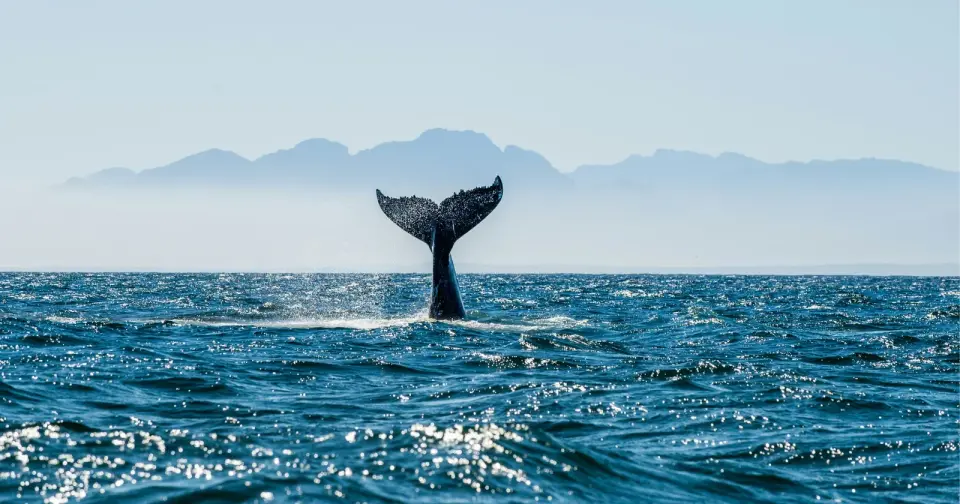
The Sound Surveillance System (SOSUS), a Cold War-era hydrophone network originally designed to detect Soviet submarines, has been repurposed by marine biologists since 1991 to track whale movements. This civilian application allows scientists to monitor individual whales across thousands of miles of open water without requiring research vessels, revealing long-distance communication patterns that were previously impossible to observe.
Key points
- SOSUS was built by the US Navy’s Office of Naval Research in the 1950s to detect Soviet submarines using hydrophones fixed on the ocean floor and connected to coastal listening stations.
- The system was declassified and opened for scientific use in 1991 under the first Bush administration, providing biologists with infrastructure that no research budget could have independently constructed.
- Marine mammal scientist Christopher Clark utilized the network to track a single blue whale for 43 days, following its movement 2,200 miles across the ocean from a listening post located 1,000 miles away.
- The network enables the detection of low-frequency calls from whales on opposite sides of the Atlantic Ocean, such as a fin whale call near Stellwagen Bank in Cape Cod being matched with echoes from Spain within one hour.
- For species like bowhead whales migrating under Arctic ice, where vision is limited to a few hundred feet, the hydrophone network provides critical insight into hearing-based navigation and communication.
Background
Recent studies have highlighted the importance of long-term acoustic monitoring in understanding marine mammal behavior. For instance, a six-year hydrophone deployment in Monterey Bay revealed shifts in humpback and blue whale song frequencies following marine heat waves, while other research identified male sperm whales as producers of the loudest known animal communication signals, audible up to 70 kilometers away. These findings underscore the value of sustained underwater listening systems in tracking species-specific responses to environmental changes.
Why it matters
The repurposing of military infrastructure for civilian scientific use demonstrates how legacy technologies can yield unexpected benefits. By leveraging a system designed for surveillance, researchers can now observe whale behavior at a scale and distance that was previously unfeasible, offering crucial data on migration patterns and communication across vast ocean basins without the logistical constraints of physical tracking.
What to watch
Continued use of the SOSUS network will likely expand the dataset available for studying whale communication and migration. As the system remains operational, scientists may uncover further details about long-distance acoustic interactions between whale populations, potentially revealing new insights into how these animals navigate and coordinate across global ocean basins.
Want the full story? Read the original reporting
Read on Space Daily