
Surrey researchers find keeping water in sodium batteries doubles capacity and enables desalination
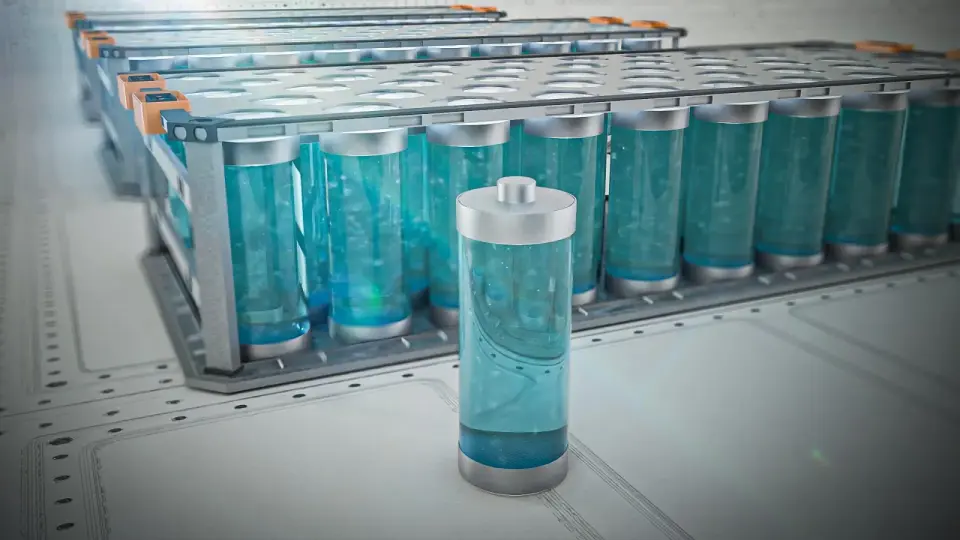
University of Surrey scientists discovered that retaining water in sodium vanadate hydrate cathodes nearly doubles charge capacity and improves stability. This finding challenges standard manufacturing practices and suggests sodium-ion batteries could simultaneously store energy and desalinate seawater.
Key points
- Researchers at the University of Surrey found that leaving water in nanostructured sodium vanadate hydrate (NVOH) significantly boosts performance, contrary to conventional practices that remove moisture.
- The hydrated material stored almost twice as much charge as typical sodium-ion materials and maintained reliability for over 400 charge cycles.
- The material functioned effectively in salt water, successfully removing dissolved sodium and chloride ions through electrochemical desalination.
- This dual functionality suggests future systems could store renewable energy while producing fresh water, particularly beneficial for coastal regions with limited freshwater access.
- The discovery may simplify battery manufacturing by eliminating the heating step required to remove water, potentially lowering costs and improving sustainability.
Background
Sodium-ion batteries have been developed as a more abundant and cost-effective alternative to lithium-ion technology, which faces supply chain and environmental concerns. While previous research focused on optimizing lithium-based systems or removing moisture from sodium materials to prevent degradation, this study highlights a new approach where moisture enhances performance. The findings align with broader efforts to find sustainable energy storage solutions that can also address water scarcity, building on earlier discussions about the environmental impacts of battery materials and water quality.
Why it matters
This breakthrough could accelerate the adoption of sodium-ion batteries for grid-scale energy storage and electric vehicles by offering higher performance at lower cost. Additionally, the potential for integrated energy storage and desalination systems could provide a critical solution for coastal communities facing water shortages, turning a waste product (saltwater) into a resource for both energy and fresh water.
What to watch
Further testing is required to validate the commercial viability of these batteries and desalination systems. Researchers will need to assess long-term durability, scalability, and safety in real-world conditions before these technologies can be deployed in large-scale infrastructure.
Want the full story? Read the original reporting
Read on ScienceDaily