
Peking University Team Creates Levitating Magnetometer for Ultrafaint Brain Signals
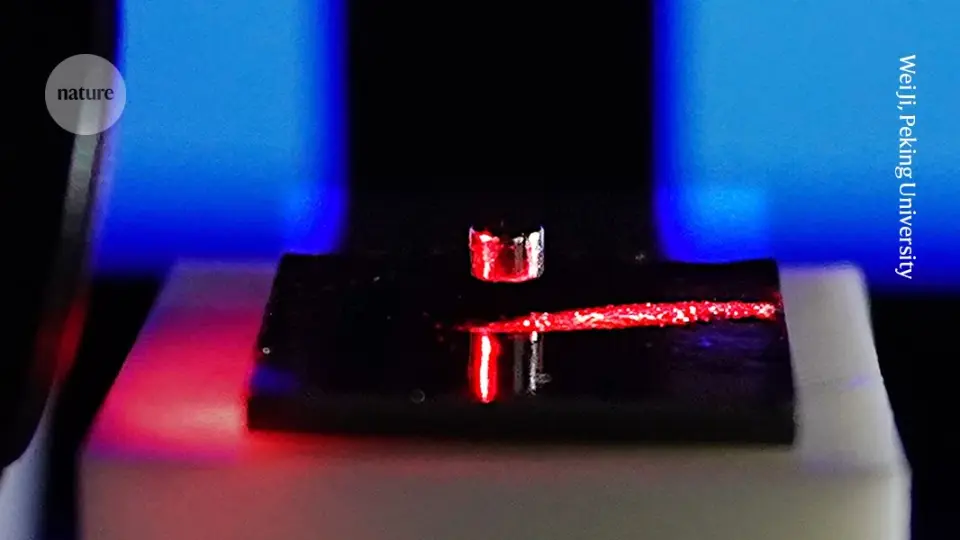
Researchers at Peking University have developed a novel magnetometer that uses a levitating magnet to detect magnetic fields with extreme precision. This new device is significantly simpler than existing superconducting or spin-exchange relaxation-free sensors and can measure fields at the femtotesla scale. The technology could enable non-invasive detection of faint brain activity and potentially aid in the search for dark matter.
Key points
- A team led by physicist Wei Ji at Peking University created a magnetometer that suspends a sub-millimeter magnet in a vacuum chamber.
- The device achieves sensitivity at the femtotesla scale, which is ten billion times weaker than Earth's magnetic field.
- It operates by balancing a sensor magnet between a lifting magnet above and a diamagnet below, using a laser to track orientation changes.
- The design eliminates the need for complex cryogenics or perfect magnetic shielding required by current state-of-the-art sensors.
- The proximity of the sensor to the sample is reduced to a few hundred micrometres, improving measurement accuracy for biological signals.
Background
Recent advancements in magnetic field detection have focused on improving sensitivity for various scientific applications. In June 2026, researchers used magnetic interactions to probe exoplanet magnetism, while in August 2026, solar telescopes revealed magnetic energy transport mechanisms. Additionally, the shifting of Earth's magnetic north continues to impact infrastructure, as seen in recent runway renumberings. This new levitating sensor represents a significant leap in miniaturizing and simplifying high-precision magnetic detection, moving away from the complex cryogenic systems previously required for such sensitivity.
Why it matters
This innovation offers a practical alternative to complex, expensive magnetometers, making high-sensitivity magnetic field detection accessible for biophysics research. It could lead to new methods for monitoring brain activity without invasive procedures and may provide a new tool for fundamental physics experiments, such as searching for dark matter, by detecting ultra-faint magnetic signatures.
What to watch
Researchers will likely test the device in biological settings to validate its ability to detect brain activity. Further development may focus on refining noise reduction techniques and exploring applications in dark matter detection. The simplicity of the design suggests potential for broader adoption in laboratory settings where complex cryogenic infrastructure is not feasible.
Want the full story? Read the original reporting
Read on Nature