
NASA’s LRO Orbiter Identifies Record-Breaking 2024 Lunar Impact Crater
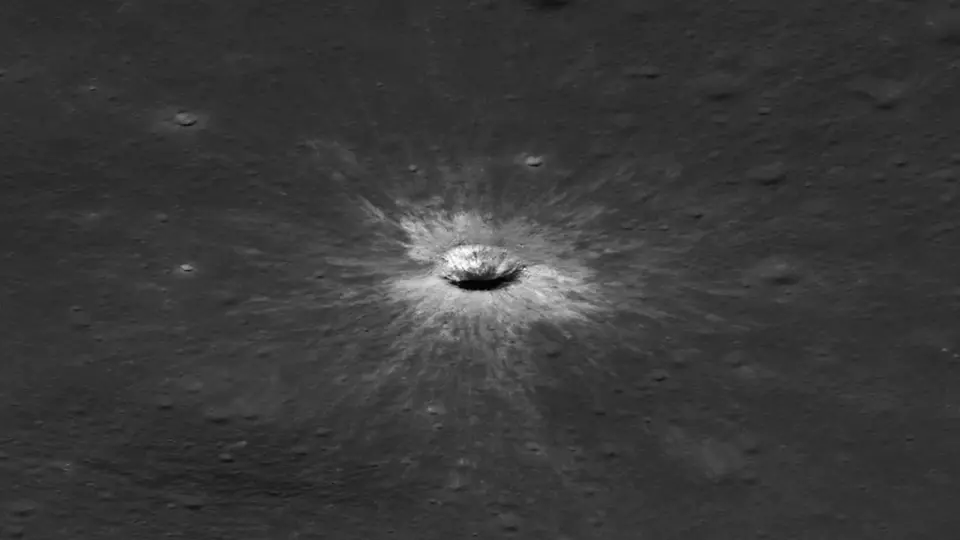
NASA’s Lunar Reconnaissance Orbiter (LRO) has identified McGetchin, the largest newly formed impact crater ever discovered in the solar system. Formed between April and May 2024 by an object the size of a three- to six-story building, the 728-foot-wide crater was detected in October 2025 during a routine data review. Published in Science Advances on September 16, 2026, the findings reveal a rare 'once-in-a-century' event that provides a pristine view of immediate impact aftermath, including a surrounding cold spot caused by loosened regolith.
Key points
- McGetchin crater measures 728 feet (222 meters) wide and 141 feet (43 meters) deep, making it the largest new crater identified by LRO.
- The impact occurred between April 11 and May 22, 2024, but was not discovered until October 24, 2025, by Robert Wagner of Intuitive Machines.
- A 4-mile-wide 'cold spot' surrounds the crater, with nighttime temperatures 14 to 16 degrees Fahrenheit cooler than the surrounding surface due to fluffed regolith.
- Scientists estimate such large impacts occur on the Moon only once every 132 years, making this a statistically rare observation.
- Two studies in Science Advances detail the crater’s physical dimensions and the thermal anomalies caused by the impact.
Background
This discovery follows earlier reports in September 2026 confirming the crater’s record status. It aligns with NASA’s broader efforts to map lunar surface changes for future Artemis missions, building on the Artemis II crew’s recent recognition for their lunar flyby. Previous archive notes highlighted the crater’s significance for assessing ejecta risks and regolith stability for potential lunar bases.
How outlets are covering it
Space.com emphasizes the rarity of the event, noting it is the largest new crater in the solar system. NASA’s official release details the discovery process by Robert Wagner and the thermal findings from the Diviner instrument. Gizmodo highlights the 'cold spot' anomaly and suggests future lunar missions might use impacts to 'garden' regolith for resource extraction. All sources agree on the crater’s dimensions and the 2024 impact date, but differ in emphasis: Space.com focuses on the 'once-in-a-century' nature, while Gizmodo explores the practical implications for lunar base planning and regolith management.
Why it matters
The McGetchin crater provides a unique, pristine dataset for studying immediate impact effects, which is critical for planning future lunar missions. Understanding how impacts alter surface temperature and regolith density helps mitigate risks from ejecta and informs strategies for resource extraction. This discovery underscores the dynamic nature of the lunar surface and the value of long-term orbital monitoring for human exploration.
What to watch
Researchers plan to publish further analysis on the size and force of the impacting object. NASA and Intuitive Machines will continue monitoring the site for long-term changes. The findings will inform safety protocols for future lunar landers and rovers, particularly regarding surface stability and thermal conditions. Additional studies may explore the feasibility of using controlled impacts for regolith management in future lunar bases.
- A NASA spacecraft just found a giant new crater on the moon. Here's why everyone's talking about the 'once-in-a-century' discovery Space
- NASA’s Moon Orbiter Spots New, ‘Once-in-Century’ Moon Crater science.nasa.gov
- Asteroid the size of six-storey building crashed into moon in 'once-in-a-lifetime' moment, says NASA Sky News
- Something Crashed Into the Moon in 2024, Leaving a Curiously Cold, ‘Once in a Century’ Crater Gizmodo
- NASA spacecraft discovers a huge new crater on the moon Phys.org
Want the full story? Read the original reporting
Read on Space