Tag

Lunar Reconnaissance Orbiter

All articles tagged with #lunar reconnaissance orbiter

Laser Light Reaches Moon in 1.3 Seconds, Confirming Orbital Drift
science28 days ago

Laser Light Reaches Moon in 1.3 Seconds, Confirming Orbital Drift

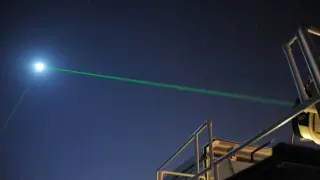
A laser beam takes between 1.21 and 1.35 seconds to travel from Earth to the Moon, depending on the Moon's orbital position. This travel time is derived from the average distance of 238,855 miles and the speed of light. Real-world measurements using retroreflectors left by Apollo missions and Soviet rovers confirm these figures. These experiments also reveal that the Moon is drifting away from Earth by approximately 1.5 inches per year.
NASA Confirms Largest Fresh Lunar Crater in Solar System History
science2 months ago

NASA Confirms Largest Fresh Lunar Crater in Solar System History

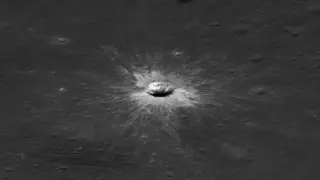
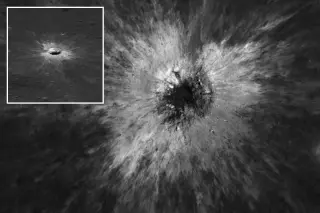
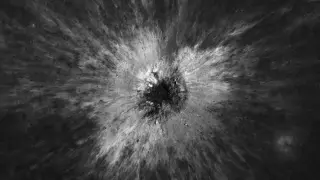
NASA scientists have confirmed the discovery of McGetchin, the largest newly formed crater ever observed in the solar system. Measuring 728 feet wide and 141 feet deep, the crater was created by a 2024 impact from an object the size of a three- to six-story building. The finding, published in Science Advances, highlights the Moon's ongoing vulnerability to space debris and underscores the need for impact monitoring as NASA prepares for sustained human presence through the Artemis program.

NASA Orbiter Identifies Largest Modern Lunar Crater, Named McGetchin
science2 months ago

NASA Orbiter Identifies Largest Modern Lunar Crater, Named McGetchin

NASA’s Lunar Reconnaissance Orbiter (LRO) has identified the largest newly formed crater in the solar system, named McGetchin. Measuring 728 feet wide and 141 feet deep, the feature was created by an impact between April and May 2024. Discovered in October 2025, it represents a statistically rare event occurring roughly once every 132 years, highlighting the ongoing hazard of space debris for future lunar missions.

Global Moon Night 2026: Telescopes, Artemis II, and Lunar Features
science2 months ago

Global Moon Night 2026: Telescopes, Artemis II, and Lunar Features

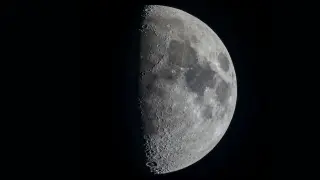
On September 19, 2026, the world celebrates International Observe the Moon Night, a global event organized by NASA to encourage public engagement with lunar science. The Moon is in its first quarter phase, offering optimal lighting for observing surface features like the Montes Apenninus and the Apollo 11 landing site. NASA’s Goddard Space Flight Center hosts a free, family-friendly event featuring telescope views, a real Apollo 14 Moon rock, and talks on Artemis II. The event marks nearly two decades of the initiative, which began in 2009 to celebrate the Lunar Reconnaissance Orbiter.

NASA Confirms Record-Sized Lunar Crater Formed by Rare 2024 Impact
science2 months ago

NASA Confirms Record-Sized Lunar Crater Formed by Rare 2024 Impact

NASA’s Lunar Reconnaissance Orbiter identified a massive new crater on the Moon, named McGetchin, formed between April and May 2024. Measuring 222 meters wide and 43 meters deep, it is the largest newly formed crater ever recorded. The impact, likely from a three-to-six-story-sized rock, created a surrounding 'cold spot' 16°F cooler than nearby terrain due to disturbed regolith. Published in Science Advances, the findings highlight the Moon’s dynamic surface and implications for future lunar operations.

NASA Confirms Largest Modern Lunar Crater, Named McGetchin, Formed in 2024
science2 months ago

NASA Confirms Largest Modern Lunar Crater, Named McGetchin, Formed in 2024

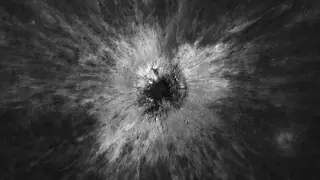
NASA’s Lunar Reconnaissance Orbiter (LRO) identified the largest newly formed crater in the solar system, named McGetchin. Formed between April 11 and May 22, 2024, by an impactor the size of a three- to six-story building, the 728-foot-wide crater is a rare event occurring roughly once every century. Scientists discovered it in October 2025 by comparing LRO images, revealing a surrounding 4-mile-wide zone that is 16 degrees Fahrenheit cooler at night due to disturbed regolith.

NASA Confirms 2024 Lunar Impact as Largest Fresh Crater in Solar System
space2 months ago

NASA Confirms 2024 Lunar Impact as Largest Fresh Crater in Solar System

NASA’s Lunar Reconnaissance Orbiter identified McGetchin, a 222-meter-wide crater formed between April 11 and May 22, 2024, as the largest newly formed impact feature in the solar system. Discovered in October 2025 through routine image comparisons, the crater’s bright ejecta and a 4-mile-wide thermal anomaly provide a rare, precisely dated record of impact physics. The findings, published in Science Advances, highlight how distant impacts alter lunar regolith, posing risks for future surface infrastructure.

NASA’s LRO Orbiter Identifies Record-Breaking 2024 Lunar Impact Crater
science-and-technology2 months ago

NASA’s LRO Orbiter Identifies Record-Breaking 2024 Lunar Impact Crater

NASA’s Lunar Reconnaissance Orbiter (LRO) has identified McGetchin, the largest newly formed impact crater ever discovered in the solar system. Formed between April and May 2024 by an object the size of a three- to six-story building, the 728-foot-wide crater was detected in October 2025 during a routine data review. Published in Science Advances on September 16, 2026, the findings reveal a rare 'once-in-a-century' event that provides a pristine view of immediate impact aftermath, including a surrounding cold spot caused by loosened regolith.

LRO Identifies Record-Breaking Lunar Crater from 2024 Impact
science2 months ago

LRO Identifies Record-Breaking Lunar Crater from 2024 Impact

NASA’s Lunar Reconnaissance Orbiter confirmed a massive new crater on the Moon, formed in 2024 by an asteroid or comet fragment. Measuring 728 feet wide and 141 feet deep, it is the largest recent impact crater known. The discovery, published in Science Advances, highlights the dynamic nature of the lunar surface and provides critical data for planning future human habitats.

LRO Identifies Record-Breaking Lunar Crater from 2024 Impact
science2 months ago

LRO Identifies Record-Breaking Lunar Crater from 2024 Impact

NASA’s Lunar Reconnaissance Orbiter (LRO) has confirmed a massive new impact crater on the Moon, measuring 728 feet across and 141 feet deep. Formed by an asteroid or comet fragment in May 2024, the event was undetected by Earth-based telescopes until LRO data was analyzed in 2025. This is the largest known recent impact in the solar system, occurring once every 132 years, and provides critical data for planning future lunar bases.

LRO Images Reveal New Lunar Crater Formed by May 2024 Impact
space2 months ago

LRO Images Reveal New Lunar Crater Formed by May 2024 Impact

NASA's Lunar Reconnaissance Orbiter has identified a new crater on the Moon's surface, captured in images from May 2024. The discovery was announced by AP News on September 16, 2026, and involves imagery provided by Intuitive Machines. This finding adds to the growing catalog of recent lunar impacts, though the specific cause of this particular crater is not detailed in the primary report.

NASA and IBM release open-source AI model to map lunar ice and craters
space2 months ago

NASA and IBM release open-source AI model to map lunar ice and craters

NASA and IBM have launched the NASA-IBM Lunar Foundation Model, an open-source AI tool designed to analyze decades of lunar data. The model, available on Hugging Face, helps researchers map craters, identify volcanic features, and locate water ice near the poles by processing data from missions like the Lunar Reconnaissance Orbiter.

NASA Reveals Detailed Images of SpaceX Rocket’s Lunar Impact Site
science-and-space3 months ago

NASA Reveals Detailed Images of SpaceX Rocket’s Lunar Impact Site

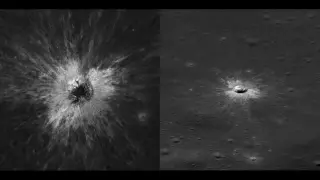
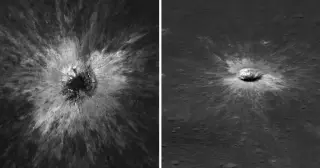
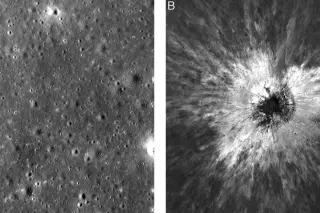
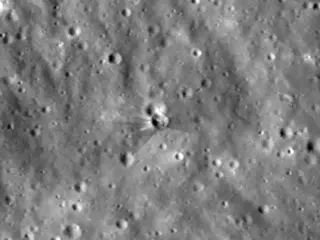
NASA’s Lunar Reconnaissance Orbiter (LRO) has released high-resolution before-and-after images of a crater formed on August 5, 2026, when a SpaceX Falcon 9 upper stage struck the Moon. The booster, which had drifted in space for over a year after a January 2025 launch, impacted the surface at approximately 5,400 mph. The resulting crater is roughly 60 feet wide and less than 10 feet deep, located at coordinates 19.4759°N, 266.7138°E. The images reveal distinct ejecta patterns, with darker rays indicating weathered surface material and brighter rays showing fresh subsurface rock. This event highlights ongoing concerns regarding space debris, though NASA describes such impacts as an accepted disposal method.

NASA Confirms SpaceX Rocket Crater on Moon After Year-Long Orbit
space3 months ago

NASA Confirms SpaceX Rocket Crater on Moon After Year-Long Orbit

NASA’s Lunar Reconnaissance Orbiter has captured images of a new crater on the Moon caused by a SpaceX Falcon 9 upper stage impact on August 5, 2026. The debris, which had been in an unstable orbit since a January 2025 launch, struck the lunar surface at approximately 5,400 mph. The resulting crater is 18 meters wide and less than 3 meters deep. This event highlights the growing challenge of tracking space debris and the precision required to predict impacts on celestial bodies.