
Maker Builds Custom DIY Centrifuge to Isolate T-Cells for Lab Research
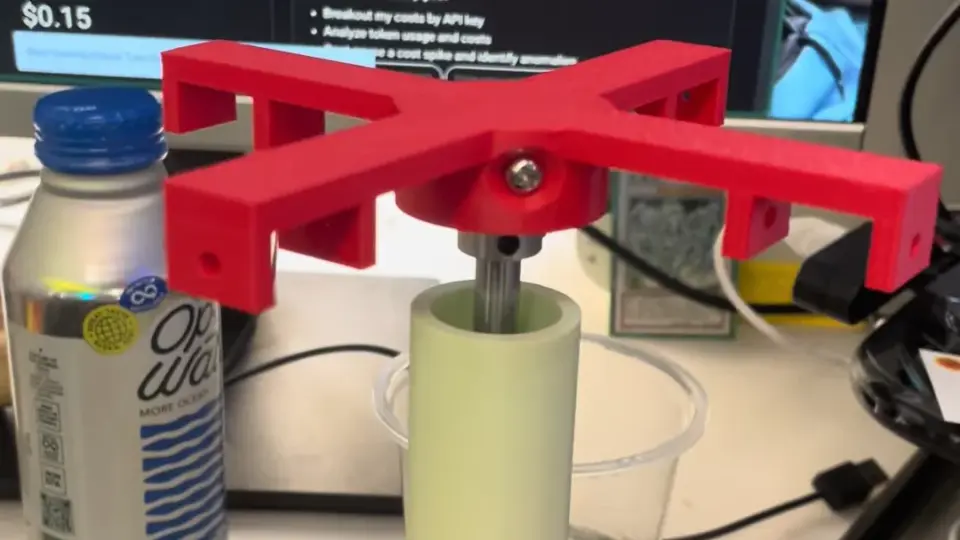
Thomas Nguyen has constructed a custom fixed-angle centrifuge using a Raspberry Pi Pico, a 3D printer, and a brushless motor to separate T-cells from blood. The device includes safety features like vibration and speed monitoring, and is currently undergoing testing with non-biological fluids before being used with actual blood samples.
Key points
- Thomas Nguyen built a DIY centrifuge to address the high cost of commercial lab equipment needed for separating T-cells from blood.
- The device utilizes a Raspberry Pi Pico, a 3D-printed housing, and an A2212 brushless motor controlled by a 30-amp electronic speed controller.
- Safety mechanisms include an MPU-6050 sensor to detect dangerous imbalances and an IR sensor to monitor and control rotational speed.
- The centrifuge is designed to work with 15 mL conical tubes and is currently in the testing phase using dyed water and glycerol.
- Nguyen plans to validate the device's safety and separation capabilities with non-biological fluids before introducing real blood products.
Background
This project aligns with a broader trend of making specialized laboratory equipment accessible through open-source and DIY methods. While recent policy discussions have focused on DIY meat processing for ranchers, this initiative highlights how hobbyists and researchers are applying similar principles to biological sciences to bypass expensive commercial hardware.
Why it matters
Developing affordable, custom lab equipment can lower the barrier to entry for independent researchers and small labs, potentially accelerating scientific discovery in fields like immunology and cellular analysis by making specialized tools more accessible.
What to watch
The next step for the project is to complete safety and performance testing with non-biological fluids. If successful, Nguyen will proceed to test the centrifuge with actual blood samples to verify its ability to effectively separate T-cells.
Want the full story? Read the original reporting
Read on Hackaday