
Stokes’ 180-Year-Old Fluid Puzzle Ignites AI Industry Clash
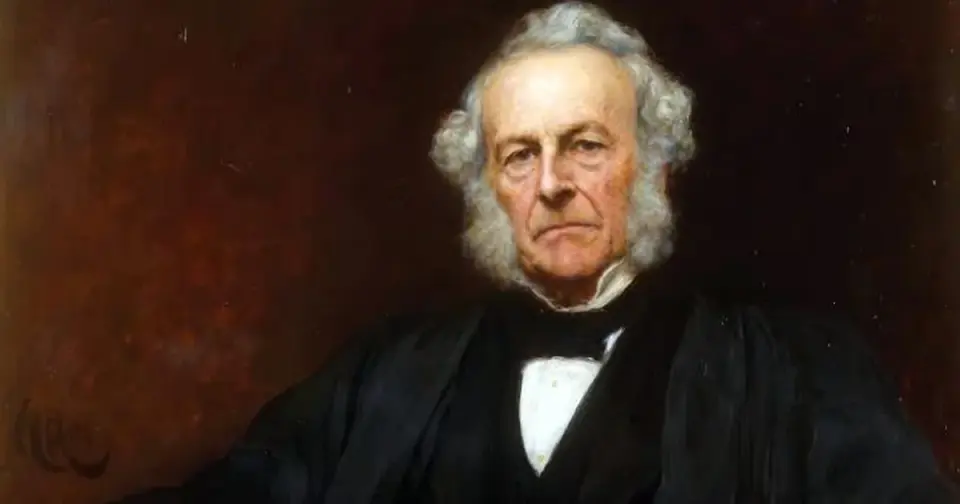
OpenAI claims its AI agents solved the 180-year-old Navier-Stokes existence and smoothness problem, a feat that has sparked fierce disputes among tech rivals and mathematicians. The controversy centers on the validity of the proof, which was verified using the Lean programming language, and accusations that OpenAI scooped human research. While the Irish Times highlights the Irish connection to the puzzle’s creator, George Gabriel Stokes, the broader scientific community remains divided on whether AI can genuinely resolve such complex mathematical challenges or merely identify counterexamples.
Key points
- OpenAI asserts that its internal AI model, utilizing approximately 10,000 autonomous agents, solved the Navier-Stokes existence and smoothness problem in 88 hours.
- The proof, which demonstrates that fluid equations can 'blow up' to infinite speeds, was verified using the Lean programming language.
- Tech rivals and mathematicians have criticized the claim, accusing OpenAI of predatory behavior and prioritizing publicity over rigorous verification.
- George Gabriel Stokes, born in Skreen, Co. Sligo, in 1819, formulated the equations that underpin this Millennium Prize problem.
- The dispute has intensified as OpenAI reportedly targets the Hodge Conjecture next, raising questions about AI’s role in solving the remaining five million-dollar Millennium Prize Problems.
Background
The Navier-Stokes existence and smoothness problem is one of the seven Millennium Prize Problems, each carrying a $1 million reward for a solution. George Gabriel Stokes, an Irish mathematician and physicist, made significant contributions to hydrodynamics and optical science in the 19th century. His equations, which describe fluid motion, have remained unsolved for nearly two centuries. Recent AI advancements have led to claims of breakthroughs, but the scientific community remains cautious about the validity and ethical implications of such solutions.
Why it matters
The Navier-Stokes problem is central to understanding fluid dynamics, with applications in weather forecasting, aerodynamics, and engineering. A verified solution could revolutionize these fields. However, the current dispute highlights tensions between AI-driven research and traditional mathematical methods, raising concerns about intellectual property, verification standards, and the future of scientific discovery.
What to watch
Expect continued debate over the validity of OpenAI’s proof and potential legal or ethical challenges from rival researchers. The scientific community may demand independent verification of the Lean-based proof. Additionally, OpenAI’s focus on the Hodge Conjecture could trigger similar disputes, further straining relations between AI developers and human mathematicians.
Want the full story? Read the original reporting
Read on The Irish Times