
Giant Clam Shell Decodes 200-Year-Old Climate Diary of the Great Barrier Reef
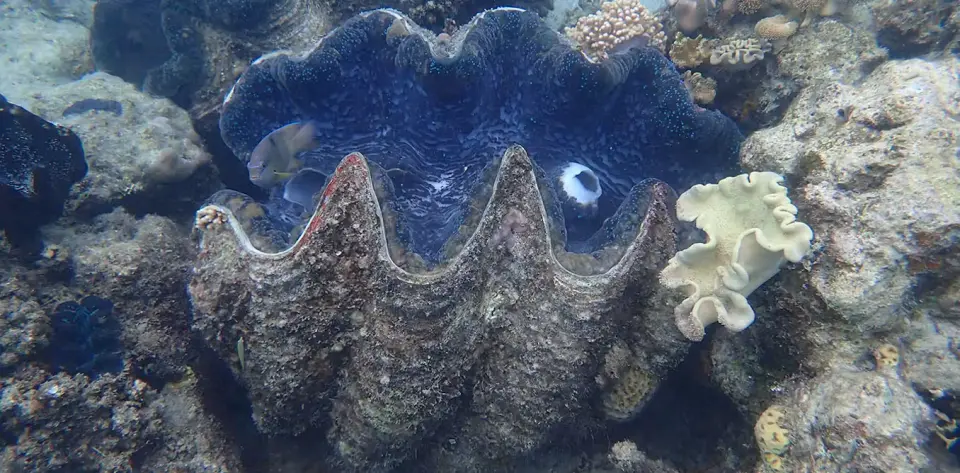
Researchers reconstructed month-by-month climate conditions at the northern Great Barrier Reef 200 years ago by analyzing the shell of a giant clam (Tridacna gigas). The study, conducted in partnership with Aboriginal communities, reveals that pre-industrial summers were 0.9–1.2°C cooler than today, while winters remained similar. The shell’s geochemical layers provided a detailed record of temperature and rainfall variability, including El Niño and La Niña cycles, offering a rare high-resolution climate archive for the Southern Hemisphere.
Key points
- A 58-centimeter giant clam shell from Jiigurru (Lizard Island Group) was analyzed to reconstruct climate conditions between 1785 and 1827.
- The shell contained nearly 10,900 daily growth lines, allowing researchers to date the clam’s lifespan to approximately 30 years.
- Geochemical analysis of 784 powder samples revealed that pre-industrial summers were 0.9–1.2°C cooler than modern averages, while winter temperatures were nearly identical.
- Carbon isotopes in the shell indicated a clear rhythm of wet and dry seasons, with El Niño-like conditions more frequent in the late 1700s and La Niña-like events dominating the early 1800s.
- The study was conducted in partnership with the Walmbaar Aboriginal Corporation and Nguurruumungu Indigenous Corporation, integrating scientific methods with Indigenous knowledge.
Background
This research builds on recent efforts to understand the Great Barrier Reef’s past, including a 2026 study that revealed ancient submerged coastlines beneath the reef using sonar mapping and sediment cores. While that project focused on geological history and Indigenous habitation, the current study uses biological archives to provide a high-resolution climate record. Both initiatives highlight the importance of combining scientific data with Indigenous knowledge to understand environmental changes over long timescales.
Why it matters
The study provides a rare, high-resolution climate record for the Southern Hemisphere, a region with limited pre-industrial data. By showing that pre-industrial summers were significantly cooler than today, the research underscores the impact of industrial-era warming on tropical oceans. The detailed month-by-month record also helps scientists understand natural climate variability, such as El Niño and La Niña cycles, which is crucial for improving climate models and predicting future changes in the region.
What to watch
Researchers plan to analyze similar giant clam shells from other Indo-Pacific reefs to compare climate patterns across different locations. This will help determine whether the cooling and circulation shifts observed at Jiigurru were part of a broader Southern Hemisphere trend or a local phenomenon. Expanding the use of biological archives could fill gaps in the global climate record and improve predictions of future environmental changes.
Want the full story? Read the original reporting
Read on The Conversation