
E. coli ribosomes mimic AI neural networks to store environmental memory
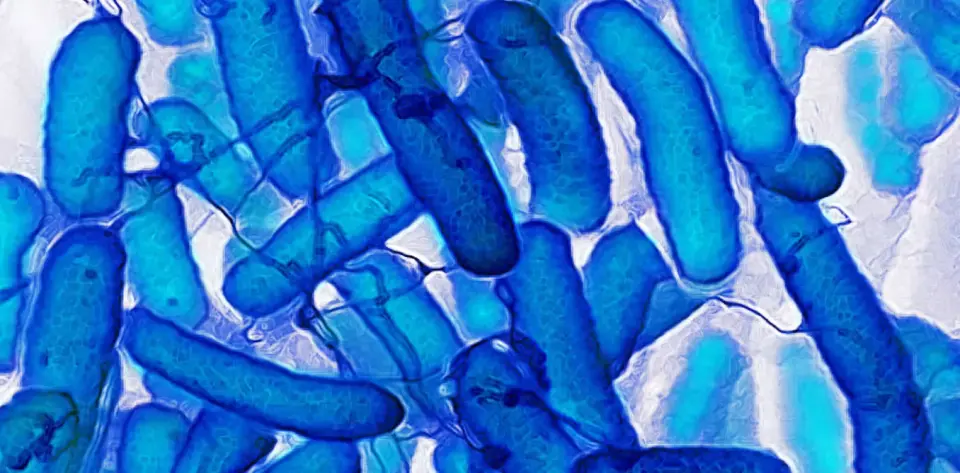
Researchers at Georgia Tech and Carnegie Mellon University have demonstrated that single-celled E. coli bacteria can learn from past experiences and store memories without a brain. By using microfluidic devices to track tens of thousands of individual cells, the team found that bacteria exposed to fluctuating nutrient conditions adapted faster to new food sources than those from stable environments, even when current conditions were identical. This behavior indicates that bacteria retain a record of their recent history. Mathematical modeling revealed that this memory is stored in ribosomes, the molecular factories that build proteins and regulate growth. The study shows that bacterial ribosome networks operate using the same computational logic as gated recurrent neural networks, a type of artificial intelligence used for processing sequential data. By balancing fast-responding and slow-responding ribosomes, bacteria create a multi-timescale memory system that allows them to anticipate future threats. This discovery suggests that learning is not exclusive to neurons and offers a biological blueprint for developing AI systems that can learn continuously under strict energy constraints. It also highlights potential targets for new antibiotics, as pathogenic bacteria rely on this adaptive memory to survive changing conditions inside the human body.
Key points
- E. coli bacteria exhibit learning behavior by using past nutrient experiences to shape current responses, even without a brain or neurons.
- Microfluidic experiments showed that bacteria from unstable environments adapted faster to nutrient pulses than those from stable environments, proving the existence of stored memory.
- Ribosomes serve as the memory storage site, with fast-responding units tracking the present and slow-responding units retaining traces of the past.
- The bacterial molecular network follows the same computational logic as gated recurrent neural networks, using chemical gates to balance memory retention and new information.
- This finding provides a biological blueprint for energy-efficient AI and suggests new drug targets for disrupting the adaptive capabilities of pathogenic bacteria.
Background
Recent studies have explored information processing in non-neural systems, such as the electrical activity in ancient moss and the modular cognitive architecture in mice brains. These findings, alongside the current research, challenge the traditional view that complex learning requires a centralized brain, suggesting instead that distributed chemical and electrical networks can achieve similar adaptive functions.
How outlets are covering it
The Conversation emphasizes the fundamental biological mechanism, highlighting how ribosomes act as a molecular memory storage site that spans multiple timescales. It frames the discovery as a bridge between biology and artificial intelligence, noting that bacteria evolved this strategy long before humans built AI. The News International focuses more on the practical implications and the direct parallel to AI architecture, stressing that the bacterial 'gates' are functionally identical to those in modern AI systems, just implemented through chemistry rather than code. Both sources agree on the core finding but differ in emphasis, with The Conversation focusing on the evolutionary and biological significance, while The News International highlights the technological and medical applications.
Why it matters
This research redefines the concept of learning, showing that it can emerge from simple chemical networks without neurons. It offers a new perspective on how organisms adapt to changing environments and provides a potential blueprint for creating more efficient AI systems that can learn continuously without high energy costs. Additionally, understanding how bacteria store and use memory could lead to the development of new antibiotics that disrupt this adaptive process, making infections easier to treat.
What to watch
Researchers may explore how this memory mechanism can be applied to design more efficient AI systems that operate under tight energy constraints. In medicine, scientists could investigate how to disrupt the molecular components that allow pathogenic bacteria to store and use environmental information, potentially leading to new treatments for infections. Further studies might also examine how other single-celled organisms use similar mechanisms to adapt to their environments.
- Learning without a brain – how bacteria store memories and remember the past like artificial neural networks The Conversation
- Bacteria can remember without brain, new study finds The News International
Want the full story? Read the original reporting
Read on The Conversation