Tag

Computational Biology

All articles tagged with #computational biology

AI system RhoAgent designs functional RNA with 6x efficiency gains
science-and-technology4 days ago

AI system RhoAgent designs functional RNA with 6x efficiency gains

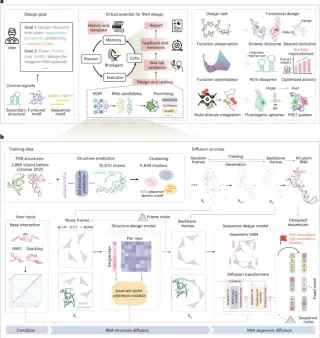
Researchers have introduced RhoAgent, an autonomous AI system capable of designing functional RNA molecules by iteratively refining candidates using experimental feedback. The system leverages a diffusion-based generative tool called RDiff to program three-dimensional structures, overcoming limitations in current computational methods. Validated through multiple benchmarks, RhoAgent generated active ribozymes with 40–70% sequence similarity to wild-type counterparts and improved the cleavage efficiency of the hovlinc ribozyme by up to sixfold. Additionally, it created a fluorogenic aptamer scaffold that increased fluorescence by 230% and designed 3D scaffolds for Förster resonance energy transfer systems, preserving the binding activities of distinct functional cores. This advancement represents a significant step in synthetic biology and therapeutic development, enabling the precise engineering of RNA for complex biological functions.
ProteinTalks Model Predicts Drug Responses Using 38 Million Proteomics Data Points
science2 months ago

ProteinTalks Model Predicts Drug Responses Using 38 Million Proteomics Data Points

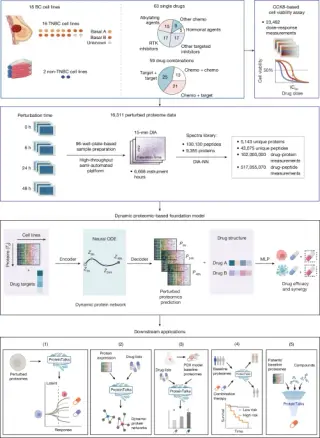
Researchers have developed ProteinTalks, a virtual cell model that uses over 38 million time-resolved protein abundance measurements from breast cancer cell lines to predict drug efficacy, synergy, and resistance. Published in Nature, the model leverages a new pretraining framework to learn transferable dynamic representations, enabling it to function as an operational tool for in silico drug discovery. It demonstrates robust performance across cell lines, patient-derived organoids, and clinical biopsies, outperforming selected benchmark implementations in various drug discovery tasks.

E. coli ribosomes mimic AI neural networks to store environmental memory
science-tech2 months ago

E. coli ribosomes mimic AI neural networks to store environmental memory

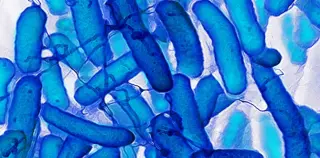
Researchers at Georgia Tech and Carnegie Mellon University have demonstrated that single-celled E. coli bacteria can learn from past experiences and store memories without a brain. By using microfluidic devices to track tens of thousands of individual cells, the team found that bacteria exposed to fluctuating nutrient conditions adapted faster to new food sources than those from stable environments, even when current conditions were identical. This behavior indicates that bacteria retain a record of their recent history. Mathematical modeling revealed that this memory is stored in ribosomes, the molecular factories that build proteins and regulate growth. The study shows that bacterial ribosome networks operate using the same computational logic as gated recurrent neural networks, a type of artificial intelligence used for processing sequential data. By balancing fast-responding and slow-responding ribosomes, bacteria create a multi-timescale memory system that allows them to anticipate future threats. This discovery suggests that learning is not exclusive to neurons and offers a biological blueprint for developing AI systems that can learn continuously under strict energy constraints. It also highlights potential targets for new antibiotics, as pathogenic bacteria rely on this adaptive memory to survive changing conditions inside the human body.

New Study Maps Nonlinear Aging Across 40 Human Tissues
science2 months ago

New Study Maps Nonlinear Aging Across 40 Human Tissues

A new study published in Nature Aging reveals that human organs age on distinct, non-linear schedules rather than a single uniform timeline. Using a computational tool called PathStAR, researchers analyzed over 25,000 post-mortem tissue samples to identify periods of accelerated structural change. The findings indicate that arteries age rapidly in the 30s, while reproductive organs change significantly around menopause. Most tissues exhibit a 'biphasic' pattern with two bursts of aging, coordinated by hormonal signals.

Generative AI Risks Fabricating Biological Evidence in Scientific Workflows
science-and-technology3 months ago

Generative AI Risks Fabricating Biological Evidence in Scientific Workflows

Generative AI tools used in biological research pose a significant risk of 'hallucinating' non-existent biological effects. While AI can assist in drug screening, its potential to fabricate data or distort signals in complex datasets may lead researchers to accept false discoveries as fact. Computational biologist Thomas Burger warns that the danger lies not just in obvious errors, but in subtle corruptions of data that bypass experimental verification.

Digital birth of a bacterial cell: a full-scale virtual division
science8 months ago

Digital birth of a bacterial cell: a full-scale virtual division

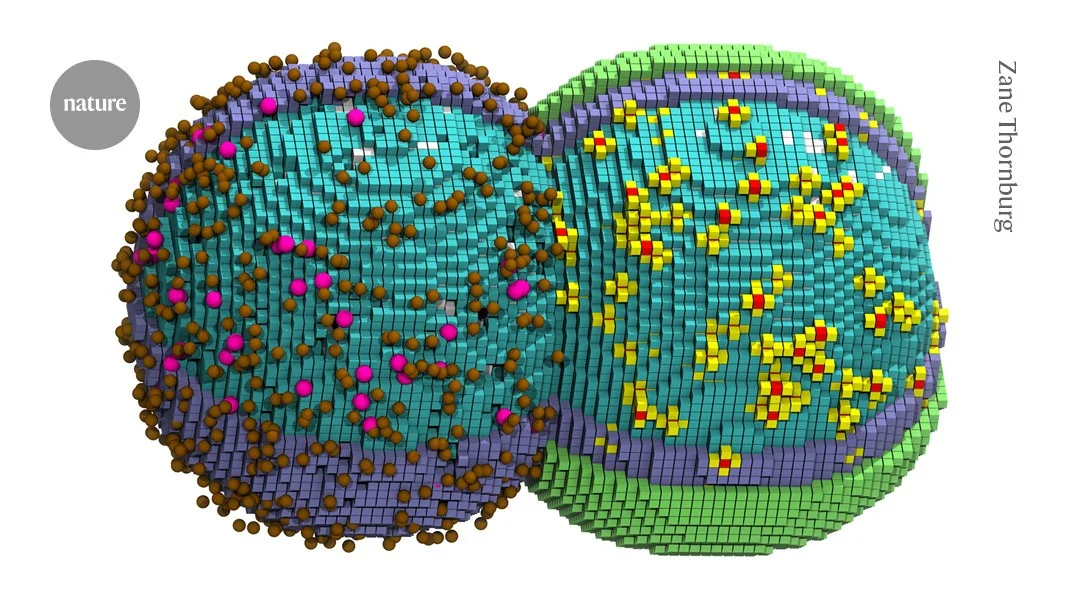
Researchers built a three‑dimensional computer model that simulates nearly every chemical reaction in a minimal bacterial cell (JCVI‑Syn3a), producing a virtual cell that copies its DNA and divides in about 105 minutes. The full simulation ran for six days on a supercomputer and required simplifying assumptions, but it demonstrated coherent, life‑like cellular processes across the cell cycle.

Unveiling the AI Algorithms Revolutionizing Cell Search
science-and-technology3 years ago

Unveiling the AI Algorithms Revolutionizing Cell Search

Computational biologists are harnessing the power of deep learning algorithms to improve the segmentation of cellular and subcellular features in biological imaging experiments. Algorithms such as U-Net have been transformative in identifying cell nuclei, while other approaches like StarDist and CellPose aim for a more holistic strategy by segmenting the entire cell. Training these algorithms requires large and diverse annotated datasets, and researchers are exploring strategies such as bulk annotation and human-in-the-loop approaches to streamline the process. While challenges remain, such as interoperability across imaging platforms and the analysis of 3D volumes, the field is making rapid progress and researchers are already exploring more advanced applications of these tools.

"Unveiling the Depths of Protein Space: A Programmable Generative Model Sheds Light"
science-and-technology3 years ago

"Unveiling the Depths of Protein Space: A Programmable Generative Model Sheds Light"

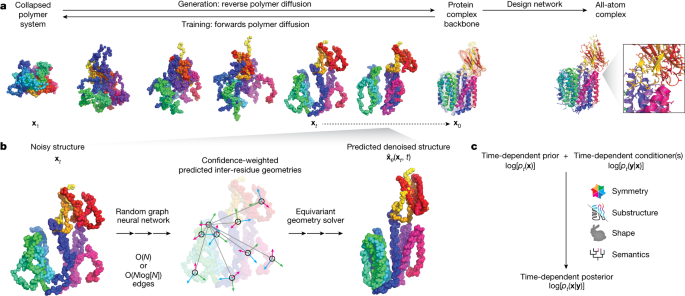
Researchers have developed Chroma, a generative model for proteins that can efficiently generate high-quality protein structures with diverse properties. Chroma combines diffusion models and graph neural networks to model the joint likelihood of sequences and three-dimensional structures of protein complexes. The model achieves quasi-linear computational scaling, allowing it to handle larger protein systems. Chroma also enables conditional sampling, allowing for the programmable generation of proteins based on desired properties such as symmetry, shape, protein class, and even textual input. This scalable generative model has the potential to significantly advance the design and construction of functional protein systems.

From Novice to Expert: My Journey in Computational Biology through the Command Line
science-and-technology3 years ago

From Novice to Expert: My Journey in Computational Biology through the Command Line

Ming Tommy Tang, a computational biologist, shares his unexpected career journey from a wet-lab biologist to a computational biologist. Tang emphasizes the importance of learning the command line, as it is essential for conducting bioinformatics analyses and working with high-performance computing clusters. He recommends resources such as online courses and books to learn the basics of the command line. Tang's dedication to helping other wet-lab biologists make the transition is evident through his blog and willingness to share his knowledge and experiences.

"Stanford Unveils Protpardelle: Revolutionizing Protein Design with All-Atom Diffusion Model"
science-and-technology3 years ago

"Stanford Unveils Protpardelle: Revolutionizing Protein Design with All-Atom Diffusion Model"

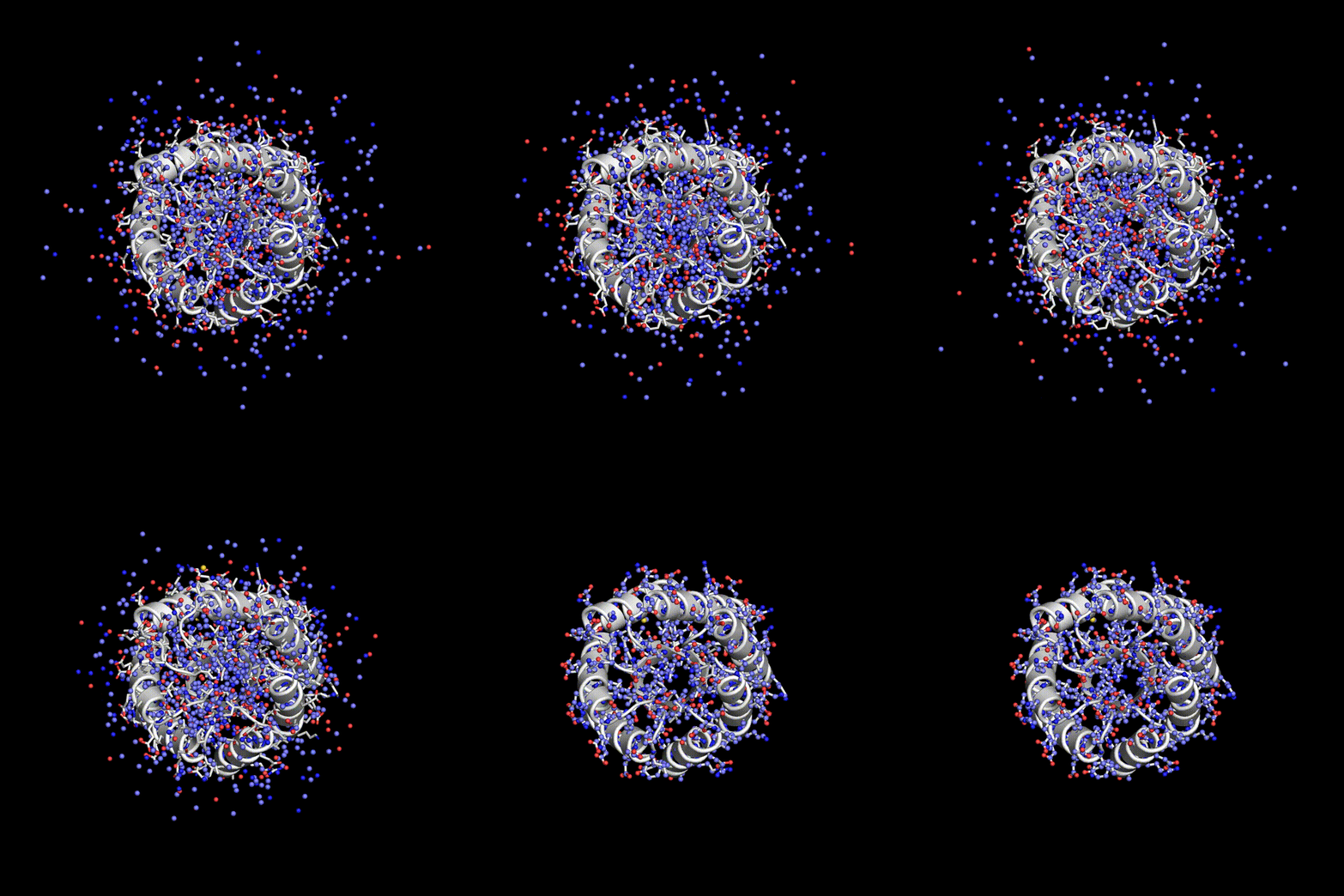
Stanford researchers have introduced Protpardelle, an all-atom diffusion model that co-designs protein structure and sequence. The model generates proteins of exceptional quality, diversity, and novelty by addressing the interplay between continuous and discrete protein structures. Protpardelle achieves high success rates in protein design, surpassing existing methodologies, and does so at a reduced computational cost. It demonstrates proficiency in generating diverse protein structures and has the ability to forge novel proteins beyond its training dataset. The model maintains chemical integrity and accurately captures sidechain behavior. Protpardelle's introduction marks a paradigm shift in protein design, with potential applications in biotechnology and pharmaceuticals.

AI-Designed Proteins: Revolutionizing Bio-Molecules.
science3 years ago

AI-Designed Proteins: Revolutionizing Bio-Molecules.

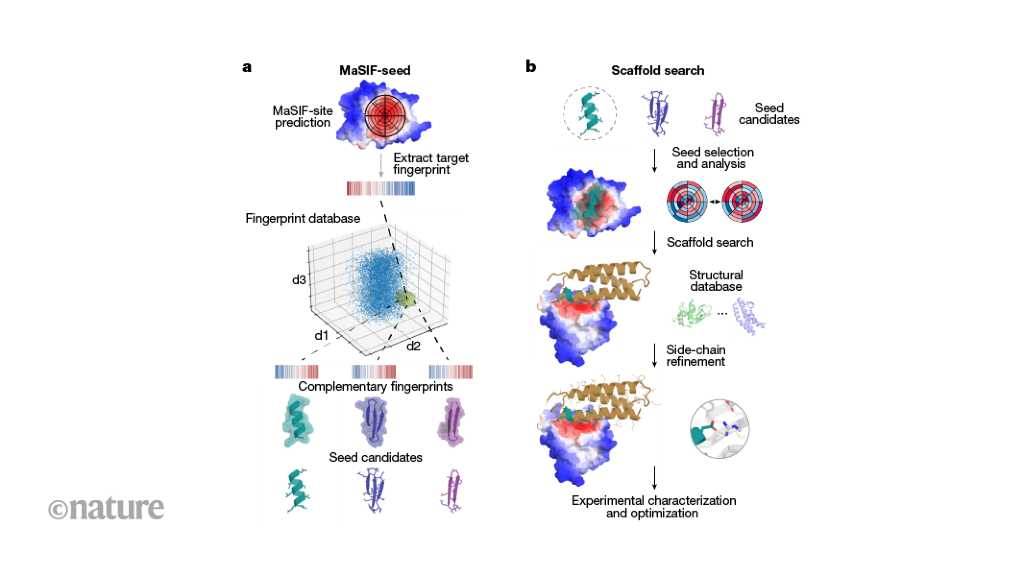
Researchers have used a computational approach to create synthetic proteins that can engage immunotherapeutic or viral targets with binding affinities comparable to those of naturally occurring proteins. The approach uses machine-learned fingerprints of protein-surface features to design protein interactions, which is a key challenge in the fields of basic and translational biology.