
19th-Century Fossil Reassessed: New Glyptodont Species Identified in South America
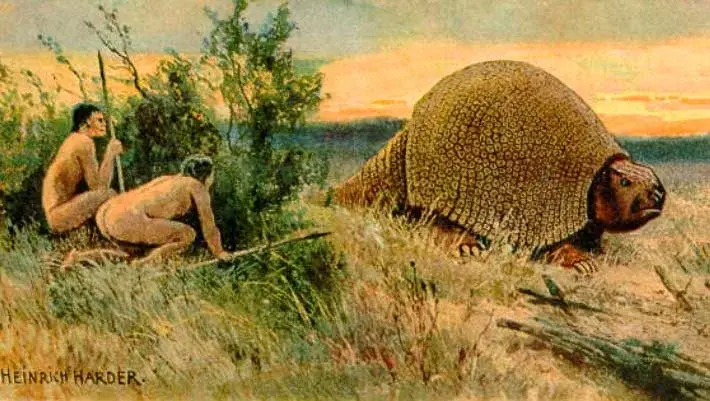
A fossil skull collected in the 19th century and long misclassified has been identified as a new species of glyptodont, Glyptotherium deuterophractum, which lived in South America between 60,000 and 17,000 years ago.
Key points
- The holotype specimen, catalogued as NHMD 2045557, was originally collected by Danish naturalist Peter Wilhelm Lund at the Lagoa Santa caves in Brazil.
- The fossil had been misclassified in 1875 by Johannes Reinhardt as 'Schistopleurum euphractum' and remained in the Natural History Museum of Denmark collections.
- Researchers from Universidade Federal de Pernambuco compared cranial features, teeth, ankle bones, and armor plates from Brazil and Venezuela to confirm the species' distinctiveness.
- The new species, Glyptotherium deuterophractum, is documented across northeastern, southeastern, and northern Brazil, as well as northwestern Venezuela.
- The study highlights the importance of re-examining historical museum collections to uncover overlooked biodiversity.
Background
Glyptodonts were extinct, heavily armored herbivores related to modern armadillos, some reaching the size of a small car. They thrived during the Pleistocene epoch in South America. Previous taxonomic assumptions had obscured the distinctiveness of this species, which was 'hiding in plain sight' in museum collections for over a century.
Why it matters
This discovery underscores the value of revisiting historical fossil collections, as outdated classifications can mask significant biodiversity. It also emphasizes the need for detailed comparative studies between regional fossil materials to accurately map prehistoric species distributions.
What to watch
Researchers will likely continue re-evaluating other historical specimens in museum collections to identify additional misclassified or overlooked species, particularly focusing on comparative studies between Brazilian and Venezuelan glyptodont materials.
Want the full story? Read the original reporting
Read on Sci.News