
Astronomers model SpaceX's 1-million-satellite plan, finding naked-eye satellites could outnumber stars
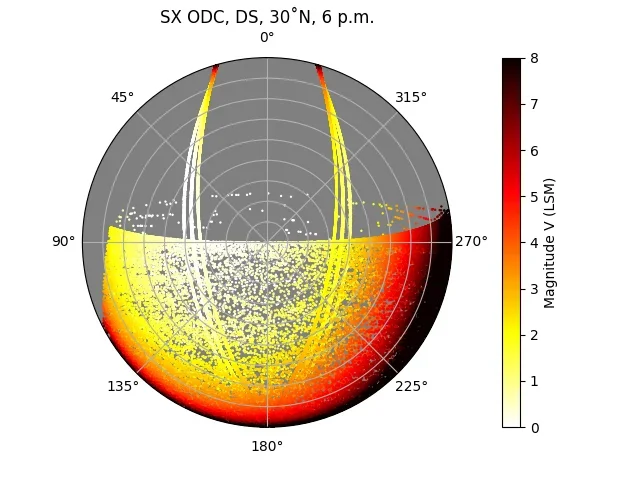
Researchers modeling SpaceX's proposed up-to-a-million orbital AI data-centre satellites—an upper limit in FCC filings—find that, with assumed sizes and reflectivity, large portions of the night sky could host tens to hundreds of thousands of satellites brighter than magnitude 5, potentially outnumbering stars at certain latitudes and times. The results come from an “if built as filed” scenario, not a guaranteed deployment, since the filing is an upper bound and actual hardware and orbital rules may change. Brightness depends on solar illumination, orientation, and mitigation strategies; the study calls for regulatory oversight and deliberate brightness limits to avoid compromising astronomy.
- In 2026, astronomer Samantha Lawler and two colleagues modelled SpaceX’s proposal for one million orbital AI data-centre satellites and found that, if they are launched with the assumed sizes and reflectivity, naked-eye satellites could outnumber visible star Space Daily
- Elon Musk's orbital AI network could send a new kind of e-waste beyond Earth's reach Yahoo
- Orbital Data Centers Could Put National Environmental Policy Act to the Test in Space Morgan Lewis
- Astronomy or Megaconstellations: New Study Shows We Can't Have Both extremetech.com
- 1.7 Million Satellites Could Threaten Astronomy ColombiaOne.com
Reading Insights
1
28
11 min
vs 12 min read
96%
2,372 → 99 words
Want the full story? Read the original article
Read on Space Daily