
Chilean Physicist Calculates Conditions for Human-Scale Wormhole Travel
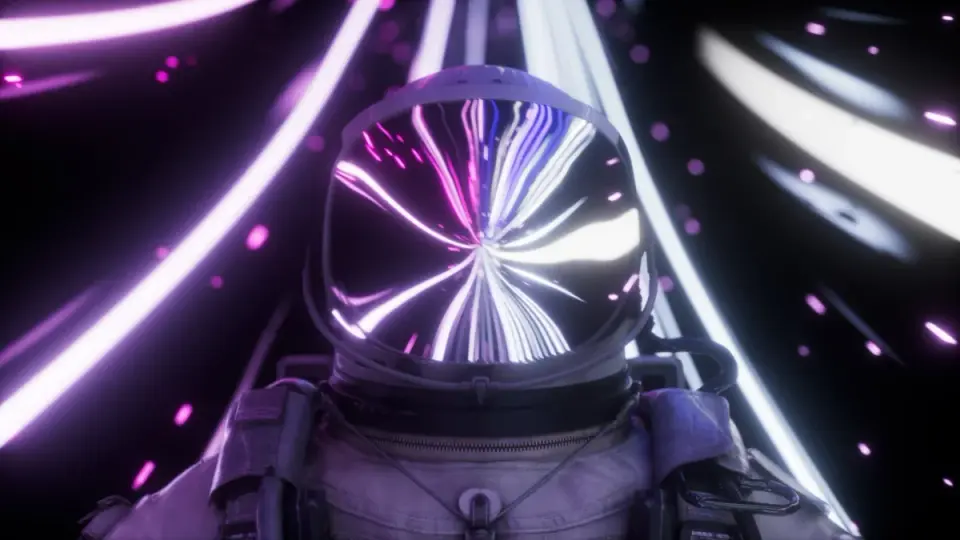
Physicist Mauricio Cataldo has published a mathematical model demonstrating that wormholes could theoretically be large enough for human travel, provided they are sustained by exotic matter. While the calculations suggest a journey could take just over six days without rocket propulsion, the model requires a finite but immense amount of negative energy, equivalent to the mass of 45,000 suns, which currently cannot be produced.
Key points
- Mauricio Cataldo of the University of Bío-Bío in Chile calculated that a wormhole with a throat radius of approximately 100,000 kilometers could allow a human to travel through it safely.
- The proposed wormhole would be wider than Jupiter, reducing tidal forces to less than 1 g, which prevents the 'spaghettification' of the traveler.
- The journey would rely entirely on gravity; a traveler released from a space station would accelerate to 66% of the speed of light at the throat and decelerate upon exit, taking 6.1 days total.
- The model requires 'Casimir-like' exotic matter with negative energy density to keep the wormhole open, a property mathematically similar to the Casimir effect but not limited to Planck-scale dimensions.
- The total quantity of exotic matter required is finite but massive, equivalent to the mass of 45,000 suns, and no known method exists to produce such negative energy densities.
- Cataldo notes that the work establishes what Einstein's field equations permit mathematically, not what is physically realizable, and does not address the long-term stability of the structure.
Background
This research builds on a 2019 model by Italian physicist Remo Garattini, which used the Casimir effect to describe a traversable wormhole but was limited to a throat radius just above the Planck length (10^-35 meters), too small for any physical object. The Casimir effect, predicted in 1948 and measured in 1997, involves negative energy density between closely spaced plates. Cataldo’s work expands this by decoupling the energy scale from the specific Casimir phenomenon, allowing for macroscopic solutions. Previous archive coverage in November 2026 focused on unrelated medical and environmental studies, indicating no prior local context for this specific physics development.
Why it matters
The study challenges the assumption that traversable wormholes are confined to microscopic scales, opening new avenues for theoretical physics. While not a practical travel proposal, it demonstrates that general relativity permits macroscopic solutions, potentially guiding future research into exotic matter and quantum gravity.
What to watch
The physical realizability of macroscopic Casimir-like wormholes remains an open question. Future research will need to address the stability of such structures and the broader problem of sourcing exotic matter within general relativity. No immediate experimental or observational investigations are planned, as the work is purely theoretical.
Want the full story? Read the original reporting
Read on ScienceAlert