
Tag

Exotic Matter

All articles tagged with #exotic matter

The Light-Speed Wall: Mass Makes Reaching c Impossible and Near-Light Travel Hovers on Engineering, Not Physics
space27 days ago

The Light-Speed Wall: Mass Makes Reaching c Impossible and Near-Light Travel Hovers on Engineering, Not Physics

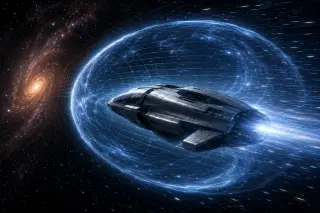
Traveling at the speed of light is impossible for any object with mass because it would require infinite energy; you can get arbitrarily close, which would produce extreme time dilation so travelers age less than those left behind. In theory, concepts like Alcubierre warp drives and wormholes exist, but they require exotic negative energy and remain beyond practical reach. Near-light-speed travel is the active frontier, with Breakthrough Starshot outlining a feasible (though engineering-heavy) path to about 0.2c for gram-scale probes rather than humans, while real interstellar journeys for larger objects remain firmly beyond our current physics and technology.
Warp Drive: A Realistic Possibility for the Next Century
space3 months ago

Warp Drive: A Realistic Possibility for the Next Century

Warp drive has shifted from sci‑fi to a serious physics question. The Alcubierre model envisions a spacecraft riding a bubble of contracted/expanded spacetime, not breaking light locally, but it requires negative energy and exotic matter. While theorists have proposed tweaks to reduce energy needs, major obstacles—quantum-field instabilities at the bubble’s boundary, potential causality paradoxes, and enormous energy or size requirements—remain. Some researchers see future discoveries that could lower the bar or even produce detectable gravitational-wave signatures from warp dynamics, and ideas for hybrid systems (boosting with conventional propulsion before engaging warp) have been proposed. In short, warp drive is a provocative, still-unresolved frontier that could take decades or more to resolve, if ever.

"Quantum Breakthrough Achieved in Fifth State of Matter"
science-and-technology2 years ago

"Quantum Breakthrough Achieved in Fifth State of Matter"

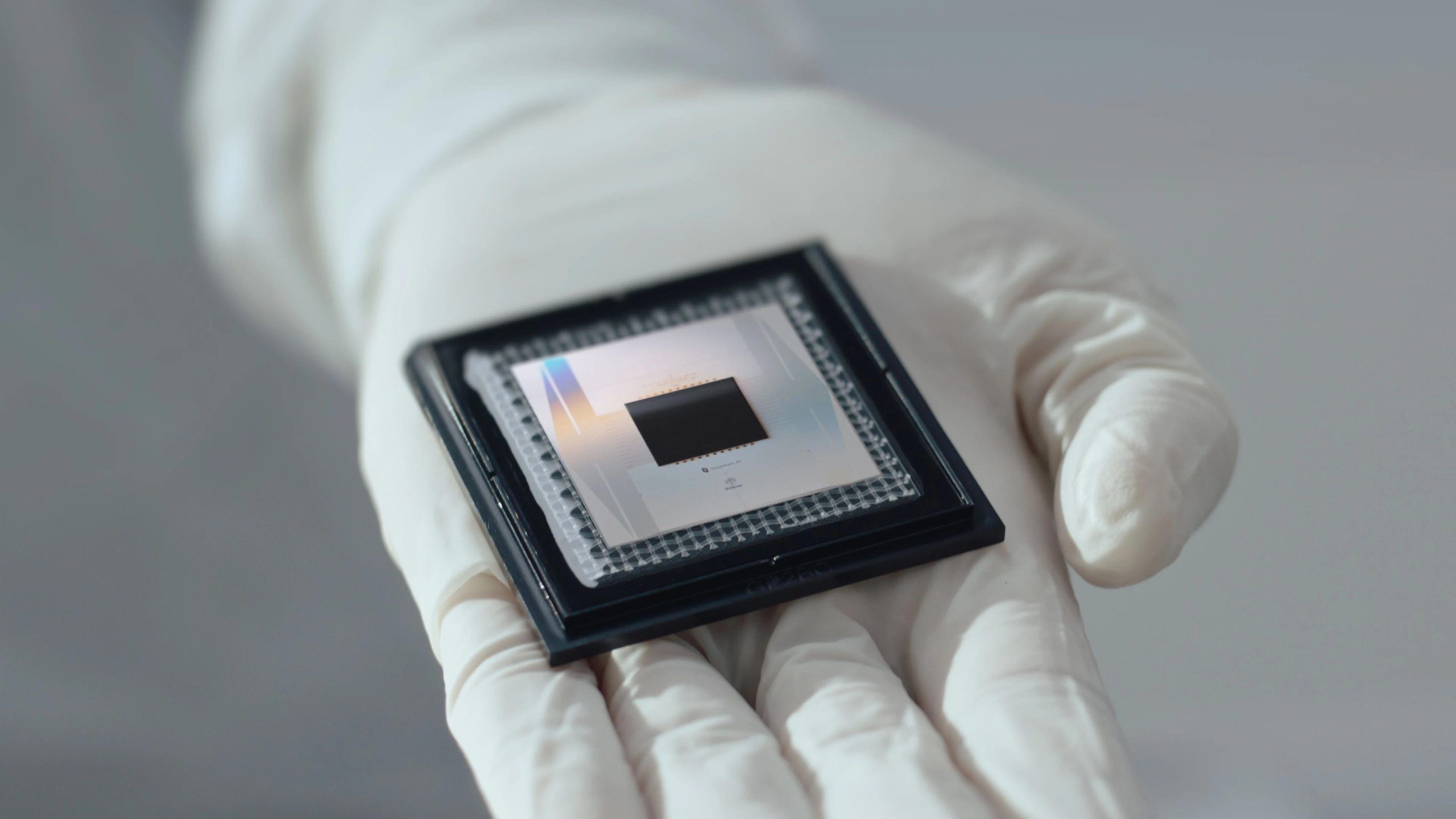
Scientists from Columbia University have created a dipolar Bose-Einstein condensate (BEC) using molecular sodium-cesium, which lasts for two seconds and is only five nanoKelvin above absolute zero. This breakthrough, achieved with the help of two microwave fields, opens the door to numerous applications in exotic matter and quantum chemistry, marking a significant advancement in the study of quantum physics.