
Crows Exhibit Human-Level Cognition, Face Recognition, and Social Rituals
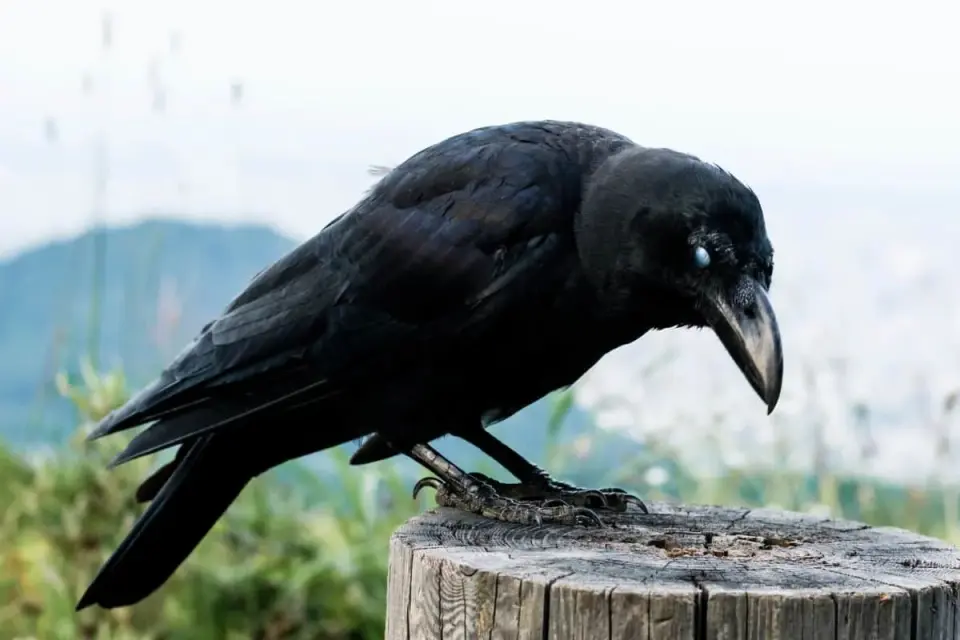
Crows possess cognitive abilities comparable to human children aged four to six, including future planning, tool use, and statistical reasoning. They can recognize individual human faces for years after a single encounter and engage in complex social behaviors, such as comforting peers after conflicts. While highly adaptable and resilient, their intelligence does not protect them from extinction, as seen with the Hawaiian crow, which was wiped out by human-driven habitat changes.
Key points
- Crows and ravens have among the largest brains of any bird, directly linked to advanced cognitive skills like planning, problem-solving, and tool crafting.
- Research indicates crows can recognize and remember specific human faces for years after seeing them only once, demonstrating exceptional facial recognition capabilities.
- Crows engage in abstract thinking and simple mathematics, with studies in Japan showing they drop nuts onto roads to have cars crack them open.
- They maintain complex social structures, using sounds, gestures, and beak-pointing to communicate, and they comfort each other after conflicts through preening or sharing food.
- Despite their resilience and ability to adapt to diverse environments, crows remain vulnerable to human impact, exemplified by the extinction of the Hawaiian crow in the wild.
Background
This story follows broader scientific discussions on animal intelligence and the boundaries of human-centric cognitive models. While recent debates in our archive focused on AI honesty and bias, this piece highlights how non-human animals exhibit complex social and cognitive behaviors that challenge traditional views of animal 'bird brains.'
Why it matters
Understanding crow intelligence reshapes how humans interact with urban wildlife and conservation efforts. Recognizing their cognitive and social complexity can lead to more respectful coexistence and better-informed policies regarding habitat protection and human-bird conflict resolution.
What to watch
Further research may explore the limits of crow adaptability in changing environments and the long-term impacts of human activity on their populations. Conservation efforts may need to prioritize protecting habitats of highly intelligent species to prevent further extinctions.
Want the full story? Read the original reporting
Read on A-Z Animals