
Curiosity Captures Dawn Over Ancient Martian Yardangs
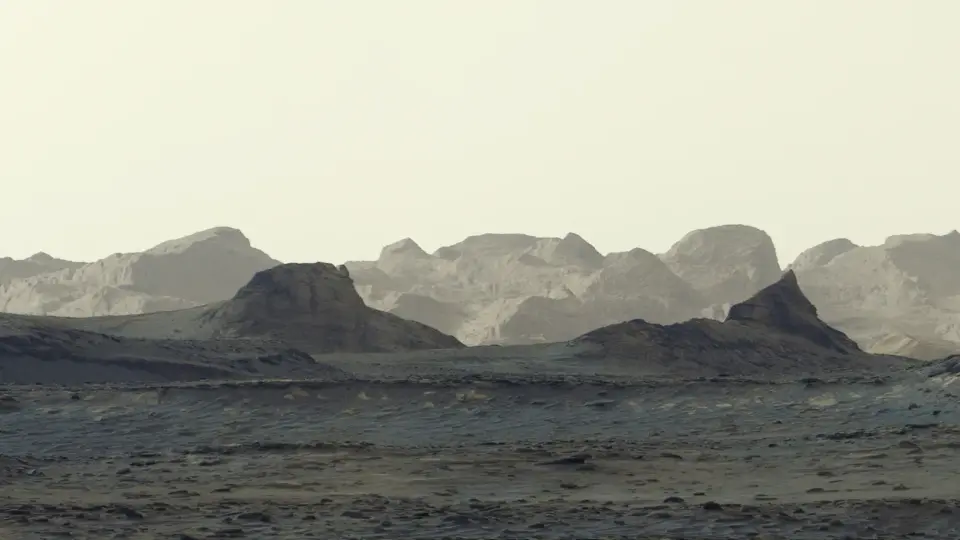
NASA’s Curiosity rover has released a new image of dawn on Mars, highlighting wind-carved rock formations known as yardangs. These structures, located on Mount Sharp, are estimated to be 3 billion years old and represent a distinct geological layer added after the mountain’s primary formation. The rover, which has climbed over 1 kilometer since landing in 2012, aims to reach this specific layer by 2027 or 2028 for detailed analysis.
Key points
- The image was captured by Curiosity’s Mastcam camera approximately one hour after sunrise, showcasing jagged peaks formed from wind-blown sediment.
- The yardang layer is believed to have formed around 3 billion years ago and spans approximately 16 kilometers across the northwestern part of Mount Sharp.
- This layer sits above an unconformity, indicating a gap in geological time where previous layers eroded before new deposits were added.
- Curiosity has gained over 1 kilometer in elevation since landing in Gale Crater in 2012, the highest climb ever recorded on Mars.
- NASA plans for the rover to reach the yardang layer between 2027 and 2028 to conduct close-up geological studies.
Background
This development continues Curiosity’s long-term exploration of Mount Sharp, a 5-kilometer-tall mountain in Gale Crater. Recent milestones include the rover reaching 5,000 sols on Mars in October 2026 and ongoing analysis of sedimentary layers that suggest ancient water activity. The mission has previously identified clay-rich mudstones and organic molecules, supporting the hypothesis that Mars once had conditions suitable for microbial life, though definitive proof requires sample return.
Why it matters
The discovery and upcoming study of the yardang layer provide critical insights into Mars’s geological history and climate evolution. Understanding how wind shaped these ancient rocks helps scientists reconstruct the planet’s atmospheric conditions billions of years ago. Furthermore, reaching this layer will allow Curiosity to test hypotheses about the timing and nature of sedimentary processes, contributing to the broader goal of assessing Mars’s past habitability.
What to watch
NASA expects Curiosity to reach the yardang layer by 2027 or 2028. Upon arrival, the rover will use its onboard instruments to analyze the rock composition and structure in detail. Meanwhile, the Perseverance rover continues its separate exploration of Jezero Crater, and NASA is preparing for future missions, including the Blue Origin Mars Telecommunications Network, which is expected to be operational by 2030.
Want the full story? Read the original reporting
Read on The Detroit News