
Egyptian Fossil Shifts Ape Origins to North Africa
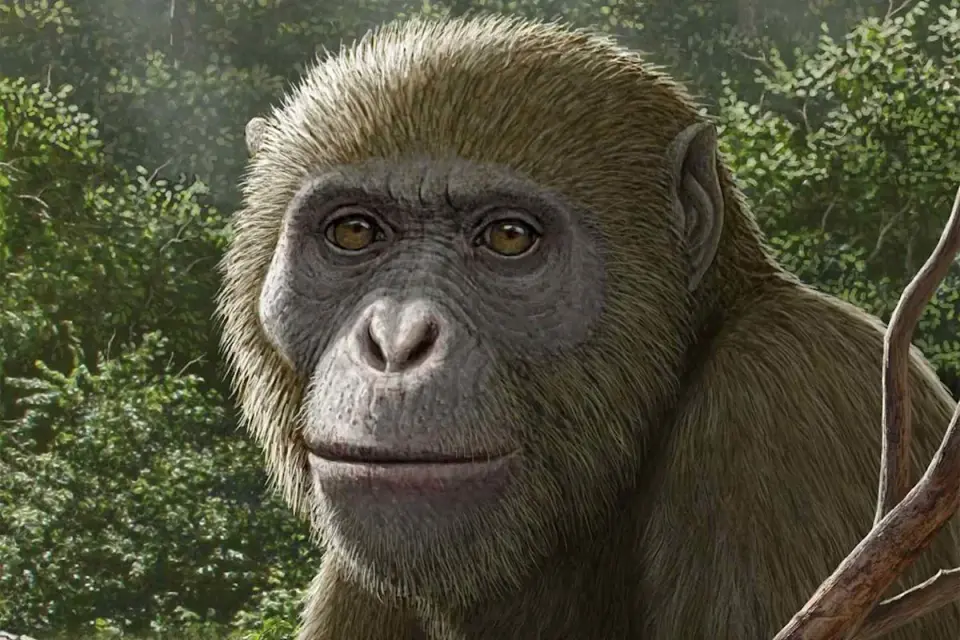
A 17- to 18-million-year-old jawbone discovered in northern Egypt identifies a new ape species, Masripithecus moghraensis. This find, the first definitive ape fossil from North Africa, suggests the common ancestor of all living apes may have originated in the Middle East and North Africa rather than East Africa, challenging long-held evolutionary theories.
Key points
- Researchers from Mansoura University and the University of Southern California identified Masripithecus moghraensis from fossils found at Wadi Moghra, Egypt, dating to the Early Miocene (17-18 million years ago).
- The fossil consists of a robust lower jaw with large canines and premolars, indicating a diet of fruit supplemented by tougher foods like nuts and seeds to cope with seasonal climate changes.
- Phylogenetic analysis places this species closer to modern apes than any known Early Miocene species from East Africa, suggesting North Africa and the Middle East were the birthplace of the hominoid lineage.
- The discovery does not imply Masripithecus is a direct ancestor of humans but provides evidence that the common ancestor of gibbons, orangutans, gorillas, chimpanzees, and humans evolved in this region.
- The study, published in Science in March 2026, fills a gap in the fossil record where North Africa previously yielded only monkey remains from this period.
Background
This discovery follows a trend of recent fossil finds that have revised mammalian origins, such as the 2026 identification of marsupial ancestors in China and bat origins in Europe. While previous theories placed early ape evolution in East Africa, this new evidence aligns with broader geological shifts that connected Africa and Eurasia during the Miocene.
How outlets are covering it
All four sources agree on the significance of the find in shifting the geographic focus of ape origins from East Africa to North Africa and the Middle East. Yahoo News and The Independent emphasize the career-changing impact on paleontologist Erik Seiffert, who previously believed East Africa was the likely origin. Science Daily provides the most detailed technical context, highlighting the use of Bayesian methods and the specific anatomical features of the jaw. UA.NEWS offers a concise summary focusing on the species' dietary flexibility and its position on the evolutionary tree. No source disputes the core findings, but they vary in the depth of explanation regarding the geological and phylogenetic evidence.
Why it matters
This discovery fundamentally alters the understanding of human and ape evolution by suggesting that the roots of the hominoid family tree lie in a different geographic region than previously assumed. It highlights the importance of North Africa in primate evolution and may guide future fossil searches in the Middle East and North Africa, potentially uncovering more ancestors of modern apes.
What to watch
Researchers plan to continue excavating in North Africa and the Middle East to find more complete fossils of Masripithecus and other early apes. This could provide insights into the animal's body size, movement, and behavior, as well as clarify the timing and location of the divergence of modern ape lineages.
- Ape Fossil Dating 18 Million Years Back Could Change What Scientists Know About Human Origins Yahoo
- Ancient ape fossil in Egypt could rewrite the story of human origins Science Daily
- This Egyptian ape fossil could rewrite human origin story, scientists say The Independent
- First reliable ape fossil found in Egypt — ScienceDaily UA.NEWS
- 18-million-year-old fossil sheds light on human ancestors' origins Newswav
Want the full story? Read the original reporting
Read on Yahoo