
China Unveils Detailed 2027-2030 Roadmap for Crewed Lunar Landing
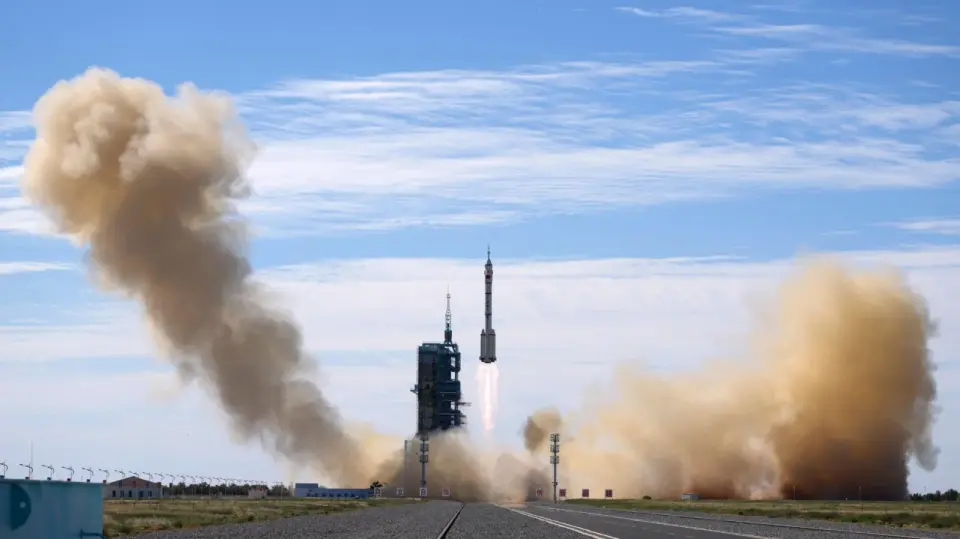
China has publicly disclosed a specific four-year plan to land astronauts on the Moon before 2030, involving uncrewed tests in 2027 and 2028, a full-scale orbital rehearsal in 2029, and a crewed mission shortly after. The strategy relies on the Long March 10 rocket and separate launches for the lander and crewed spacecraft, mirroring Apollo-era rendezvous techniques but adapted for smaller launch capabilities. This detailed timeline marks a significant shift from previous vague statements and intensifies the global race against NASA’s Artemis program.
Key points
- Wang Xiang, chief designer of China’s lunar exploration program, presented the roadmap at the 7th Manned Space Symposium in Beijing.
- The plan includes an uncrewed test of the Long March 10A and Mengzhou spacecraft in early 2027, followed by an uncrewed lunar landing test of the Lanyue lander in 2028.
- A full-scale uncrewed rehearsal involving a rendezvous in lunar orbit is scheduled for 2029, preceding the crewed landing before 2030.
- The crewed mission will involve three taikonauts, with two landing on the surface for a three-day stay involving daily extravehicular activities.
- The strategy omits a crewed flyby mission similar to Artemis II, focusing instead on direct progression to landing after station tests.
Background
China’s lunar ambitions have been a subject of speculation for years, but this is the first comprehensive public disclosure of the technical steps and timeline. Previously, Chinese officials offered only vague targets. In August 2025, China successfully tested a high-fidelity mock-up of the 26-ton Lanyue lander using tethers to simulate lunar gravity. The current plan follows a period of increased transparency, with hardware for upcoming tests recently arriving at the Wenchang spaceport. This development occurs amidst a broader geopolitical context where the US and China are competing for lunar dominance, with both nations also planning long-term bases at the Moon’s South Pole.
How outlets are covering it
Gizmodo and Ars Technica highlight the strategic shift from vague timelines to a concrete, aggressive schedule, noting that China is racing to beat NASA’s Artemis 4 target of early 2028. Ars Technica emphasizes that China’s plan lacks a crewed flyby mission, unlike the US approach, and notes that while the US has a more established rocket, its reliance on commercial landers from SpaceX and Blue Origin creates uncertainty. SpaceNews focuses on the technical specifics of the uncrewed test campaign, confirming the sequence of standalone lander tests and orbital rehearsals. Vocal provides a speculative analysis of the potential crew, suggesting that Chen Dong is the frontrunner due to his extensive orbital experience and command history, while noting that fourth-batch astronauts are unlikely to be selected for the first landing due to insufficient training time. All sources agree that the 2030 deadline is a major geopolitical milestone, though they differ on the likelihood of success, with some noting technical hurdles for both nations.
Why it matters
The disclosure of a specific, actionable timeline for a crewed lunar landing signals that China is moving from planning to execution, potentially altering the global space race. It forces the US to accelerate its own Artemis program, which faces delays due to commercial partner issues. The success or failure of this mission will have significant implications for international relations, scientific discovery, and the future of human presence in deep space. It also highlights the increasing transparency of China’s space program, which has historically been opaque, allowing for better international assessment of its capabilities and intentions.
What to watch
The next critical milestone is the uncrewed test of the Long March 10A and Mengzhou spacecraft in early 2027. Following this, the uncrewed lunar landing test of the Lanyue lander in 2028 will be a major indicator of the program’s technical readiness. The 2029 orbital rehearsal will be the final major test before the crewed mission. NASA’s Artemis 4 mission, targeted for early 2028, will be the first US attempt to land astronauts on the Moon since Apollo 17, and its success or failure will be closely watched in relation to China’s progress. The outcome of these missions will determine which nation achieves the first crewed lunar landing in over 50 years.
- China Reveals Detailed Plan to Land Astronauts on the Moon Gizmodo
- China publicly discloses plan for a lunar landing within three years Ars Technica
- China outlines uncrewed test campaign for buildup to crewed moon landing SpaceNews
- China aims for manned moon landing before 2030 Global Times
- China's First Moon Crew: Three Names, One Frontrunner, and the Case for a Woman in Orbit Vocal
Want the full story? Read the original reporting
Read on Gizmodo