
Real Velociraptors Were Feathered, Turkey-Sized Predators, Not Scaly Giants
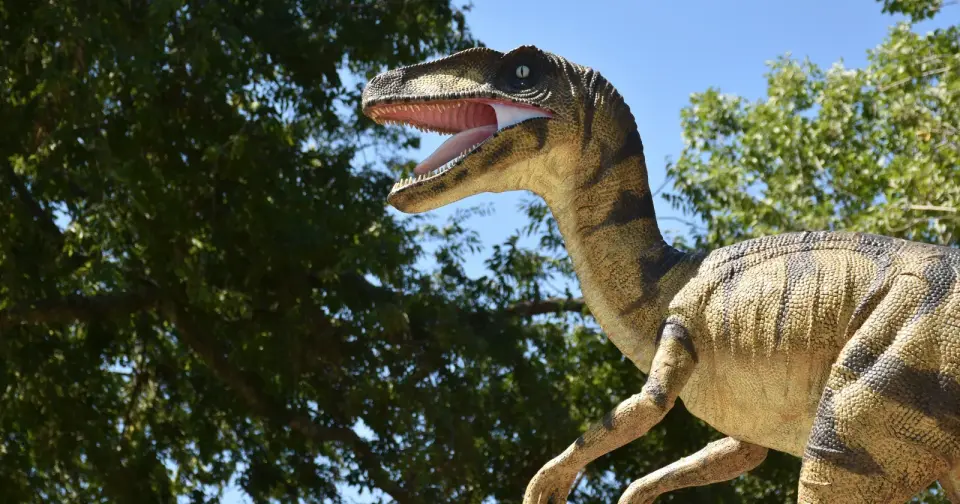
The Velociraptors depicted in the 1993 film Jurassic Park were significantly larger and scaly, whereas the actual animals were small, feathered predators roughly the size of a turkey.
Key points
- The real Velociraptor measured approximately 1.8 meters from nose to tail, with most of that length consisting of its tail, and weighed around 15 kilograms.
- Fossil evidence from a 2007 study led by Alan Turner identified six quill knobs on a Velociraptor forearm, indicating the presence of feathers similar to those found in modern birds.
- The film's depiction of the animal as a two-meter-tall, scaly predator was a dramatic exaggeration, likely influenced by the larger relative Deinonychus.
- Despite scientific consensus and museum descriptions comparing the animal to a turkey, the cinematic image of a large, scaly raptor remains deeply ingrained in public perception.
- The real animal possessed a long, stiff tail and an outsized sickle claw on the second toe, but its short forelimbs meant it could not fly.
Background
This discussion follows earlier coverage of Jurassic Park's cultural impact, including the identification of authentic 1990s computer hardware used in the film's production and the recent passing of star Sam Neill, who portrayed Dr. Alan Grant. The film's enduring influence continues to shape public understanding of paleontology, often overriding scientific accuracy in popular memory.
Why it matters
The discrepancy between the cinematic and scientific images of Velociraptor highlights how early, vivid media representations can overshadow later, accurate scientific findings. Understanding the true nature of these animals, including their feathered appearance and small size, is crucial for correcting widespread misconceptions about dinosaur biology and evolution.
What to watch
There are no immediate next steps for this specific topic, as the scientific consensus on Velociraptor's size and feathering is well-established. However, ongoing paleontological research continues to refine our understanding of dinosaur anatomy and behavior through new fossil discoveries.
Want the full story? Read the original reporting
Read on Space Daily