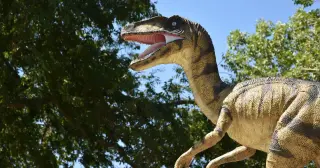
The Velociraptors depicted in the 1993 film Jurassic Park were significantly larger and scaly, whereas the actual animals were small, feathered predators roughly the size of a turkey.
The smallest dinosaur ever discovered is Epidexipteryx from the Jurassic period in China, notable for its feathered tail and potential display behaviors. Recent findings suggest many dinosaurs were small, challenging the common perception of dinosaurs as large creatures, and the search for the smallest dinosaur continues as new fossils are uncovered.
Two recent studies shed light on the molting process in ancient birds and its potential role in the survival of modern birds. Fossils preserved in amber reveal a baby bird from 99 million years ago that exhibited a combination of precocial and altricial characteristics during molting, which may have contributed to the extinction of its group. Another study analyzing modern bird specimens suggests that fossil birds molted differently from their modern counterparts, potentially influencing their survival during the mass extinction event. These findings highlight the importance of molting in bird evolution and the factors that contributed to the survival of modern birds.
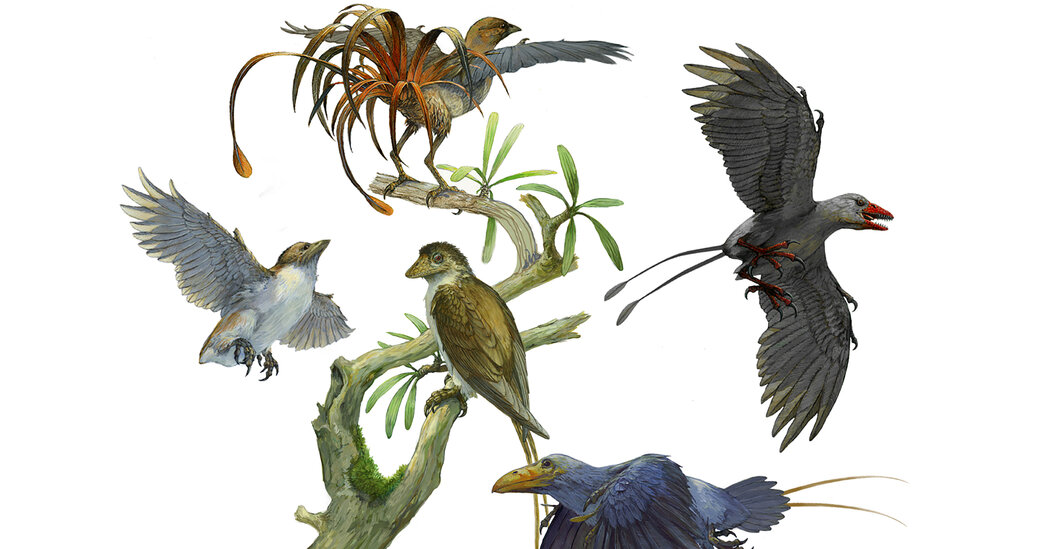
Paleontologists are studying how feathered dinosaurs achieved powered flight and became the birds we see today, an evolutionary mystery that stretches more than 150 million years. The first big clue to the origin of birds came in 1861 with the discovery of Archaeopteryx, a 145-million-year-old bird with traits found in reptiles. Since then, a trove of remarkable fossils has been unearthed in northeast China, revealing that the ancestor of all dinosaurs had feathers and that theropods were not the only dinosaurs with feathers. Enantiornithine birds, which dominated the skies for tens of millions of years, developed feathers in a radically different way than living birds.