
First Operational Nuclear Clocks Match Atomic Precision in Nature Papers
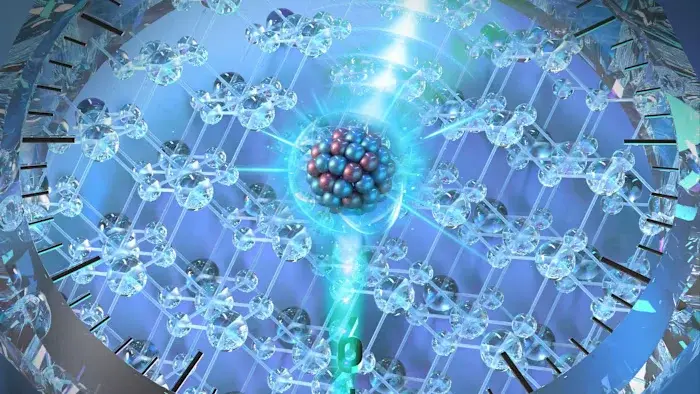
Researchers in Vienna and Beijing have demonstrated the first operational nuclear clocks, achieving precision comparable to state-of-the-art atomic clocks. These devices use thorium-229 embedded in calcium fluoride crystals, offering a more robust and compact alternative to current optical standards. The breakthroughs, published in Nature, enable new constraints on dark matter and lay the groundwork for future improvements in global timekeeping infrastructure.
Key points
- Two independent teams, one at TU Wien in Austria and another at Tsinghua University in China, successfully built the first functional nuclear clocks.
- The clocks utilize the 148-nm nuclear transition of thorium-229 within solid-state calcium fluoride crystals, avoiding the complex gas systems used in traditional atomic clocks.
- The Vienna team achieved a fractional frequency instability approaching 10^-15 over a 24-hour period, matching the sensitivity of leading atomic clocks for detecting ultralight dark matter.
- Current limitations include lower stability than optical atomic clocks and the scarcity of thorium-229, which is also used in potential cancer therapies.
- Researchers plan to install a second clock in Innsbruck within a year to measure subtle changes in Earth's movement and improve long-term stability.
Background
This development follows years of theoretical work on thorium-229, with key experimental milestones achieved in 2024 and 2025. Our archive notes that these clocks were previously discussed as a potential next-generation standard, but this is the first time they have been demonstrated as operational standalone devices. The broader context includes growing national security concerns regarding the vulnerability of GPS and digital systems to clock outages or sabotage, driving investment in more resilient timekeeping technologies.
How outlets are covering it
The Financial Times emphasizes the strategic importance of these clocks for safeguarding digital infrastructure against sabotage and outages, highlighting the robustness of the solid-state design. ABC News focuses on the practical applications, such as improving GPS, mining surveys, and earthquake prediction, while noting that the current accuracy does not yet surpass the best atomic clocks. The Nature abstract provides the technical details, confirming that the Vienna team's clock achieved shot-noise-limited instabilities and successfully constrained dark matter models, though it notes reproducibility issues between different operational runs due to laser alignment challenges.
Why it matters
Nuclear clocks could revolutionize timekeeping by offering a more compact, energy-efficient, and robust alternative to current atomic standards. Their enhanced sensitivity allows for more precise tests of fundamental physics, including the search for dark matter and variations in fundamental constants. As digital systems become increasingly reliant on precise time synchronization, developing resilient and accurate clocks is critical for national security and technological stability.
What to watch
Researchers expect to make significant technical improvements to nuclear clock performance within two to three years. The Vienna team plans to install a second clock in Innsbruck to enable comparative measurements and improve stability. Other groups are also developing competing technologies, such as ytterbium-based and molecular clocks, in a race to achieve practical, widespread deployment of next-generation timekeeping standards.
- Scientists unveil first ultra-accurate nuclear clocks Financial Times
- A thorium-229 optical nuclear clock with feedback loop Nature
- In Vienna and Beijing, the First Nuclear Clocks Begin to Tick The New York Times
- Scientists in Vienna and Beijing create world's first nuclear clocks Reuters
- New nuclear clocks could become world's most accurate timekeepers ABC News & Headlines – Australian Broadcasting Corporation
Want the full story? Read the original reporting
Read on Financial Times