
Florida Quarry Finds Reveal Ancient Meteorite Glass Hidden in Fossil Clams
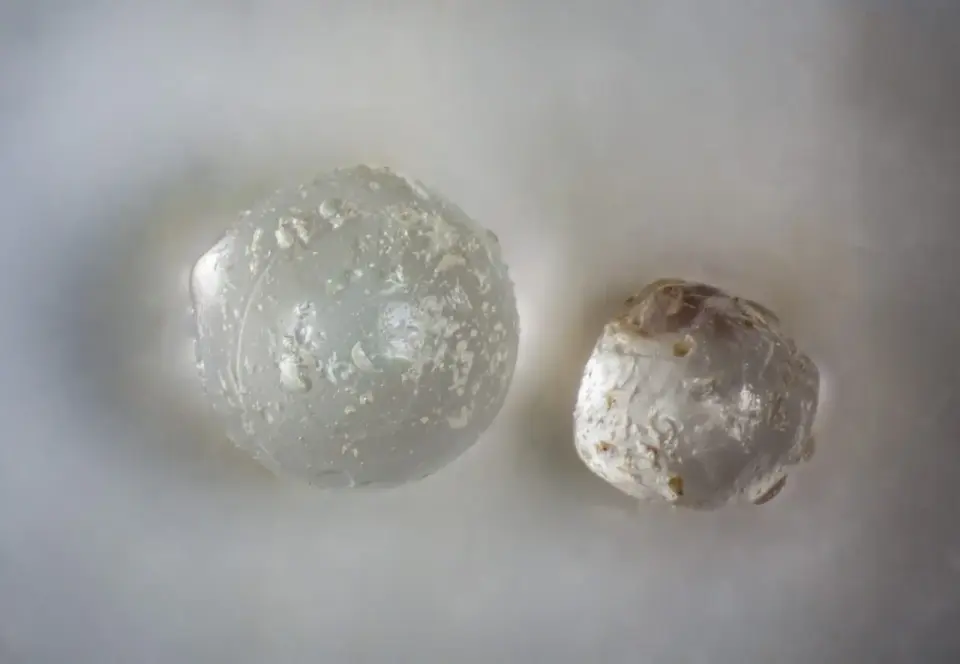
A 2019 study confirms that 83 tiny glass beads found in 2006 inside fossil clams in Florida are microtektites, formed by a meteorite impact 2 to 3 million years ago. The discovery, made by undergraduate Mike Meyer, represents the first documented microtektites in Florida and possibly the first recovered from within fossil shells. The beads, sealed inside southern quahog shells, offer a unique time capsule of the impact event, though the original crater remains unidentified.
Key points
- In 2006, University of South Florida student Mike Meyer discovered 83 minuscule glass spheres while sifting sediment from fossil clams in a Sarasota County quarry.
- A 2019 study in Meteoritics and Planetary Science identified the spheres as microtektites, glass droplets created by a meteorite impact that cooled in the atmosphere before falling back to Earth.
- The beads are estimated to be 2 to 3 million years old and contain high sodium levels, suggesting the impact occurred nearby, possibly on the Florida Platform or near a salt source.
- The fossil clams acted as natural time capsules, preserving the beads within their shells for millions of years after the impact event.
- The original quarry has since been developed into a housing project, and the specific impact crater associated with these microtektites has never been located.
Background
This discovery adds to a growing body of evidence regarding impact events and their geological signatures. Recent studies, such as the re-dating of the Ames Crater in Oklahoma to 370 million years ago, highlight the importance of precise dating in linking impacts to mass extinctions. Additionally, advancements in understanding lunar impact flashes from Artemis II data provide broader context for how impact events are detected and analyzed across different planetary bodies. The Florida microtektites offer a unique terrestrial example of impact debris preservation within biological structures.
Why it matters
The finding of microtektites within fossil shells provides a rare, direct link between a specific meteorite impact and the geological record, offering insights into the timing and location of past impact events. It demonstrates how biological structures can inadvertently preserve evidence of catastrophic cosmic events, enhancing our understanding of Earth's history and the frequency of such impacts.
What to watch
Researchers may continue to search for the unidentified crater associated with these microtektites, potentially using the high sodium content as a clue to narrow down the impact location. Further studies could explore whether other fossilized organisms in the region contain similar impact debris, potentially revealing a broader pattern of impact-related events in Florida's geological history.
Want the full story? Read the original reporting
Read on Futura, le média qui explore le monde