
University of Utah Unveils Public Exhibit of 2022 Great Salt Lake Meteorite Fragment
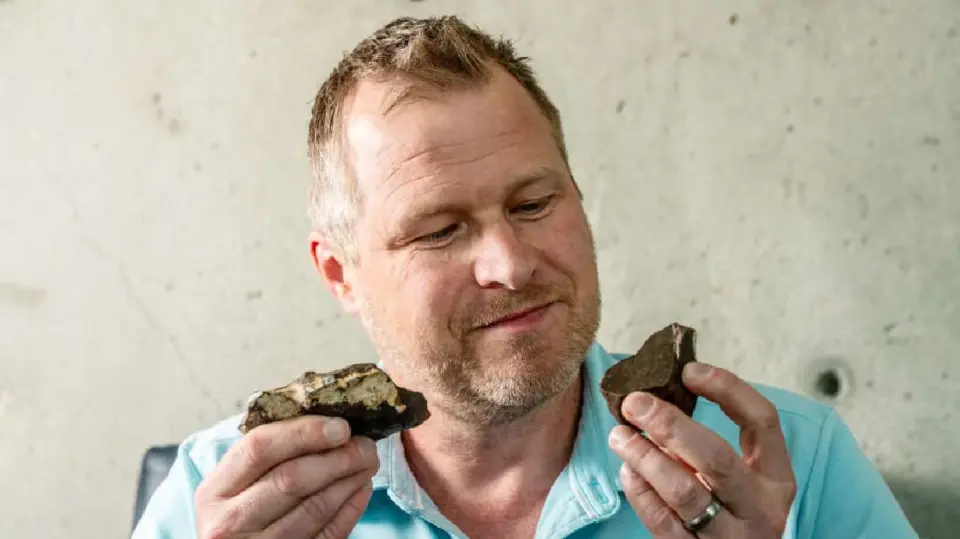
A 774-gram fragment of the Great Salt Lake meteorite, which fell in August 2022, is now on public display at the University of Utah. The exhibit, located in the Sutton Building, features video and interpretive materials detailing the event, which was the second witnessed meteorite fall in Utah's history. Scientists note that while the rock's composition is common, its tracked origin links it to a specific asteroid family, a rare occurrence.
Key points
- A 774-gram fragment, the largest recovered piece from the August 13, 2022, Great Salt Lake meteorite event, is the centerpiece of a new exhibit at the University of Utah.
- The exhibit, unveiled last week in the Department of Geology and Geophysics, includes video footage and interpretive materials explaining the 'fall' meteorite event.
- The 2022 event was the second witnessed meteorite fall in Utah history, following a 1950 event near Garland in Box Elder County.
- The meteorite is classified as an 'ordinary chondrite,' sharing composition with 80-85% of other meteorites, but its pre-impact orbit was successfully tracked back to the asteroid belt.
- Only about 70 meteorites in history have had their origin tracked to a specific asteroid family, making this event scientifically significant despite its common composition.
- James Karner, the University of Utah's resident meteorite expert, noted that 3.2 kilograms of material have been recovered so far, with more likely remaining in the playa and salt ponds.
Background
The Great Salt Lake has been the subject of recent scientific and economic attention, including a $100 million U.S. Department of Energy grant for a lithium extraction facility on its northeastern shore. While that project focuses on modern mineral extraction, the meteorite exhibit highlights the region's deep geological history, offering a tangible connection to cosmic events dating back 4.56 billion years.
Why it matters
The public display of the Great Salt Lake meteorite provides a rare opportunity for residents to see a piece of a witnessed cosmic event, emphasizing the intersection of local history and planetary science. It also underscores the importance of modern tracking technologies, such as Doppler radar, in linking meteorites to their parent asteroids, a capability that has only been achieved for a small fraction of known meteorites.
What to watch
The exhibit will remain on display at the University of Utah's Sutton Building, offering educational insights into the 2022 meteorite event. Researchers continue to believe that additional fragments may still be recoverable from the Great Salt Lake playa and surrounding salt ponds.
Want the full story? Read the original reporting
Read on KSL News