Tag

Meteorite

All articles tagged with #meteorite

New Jersey Meteorite Sparks Fresh Clues on Life’s Origins
science8 days ago

New Jersey Meteorite Sparks Fresh Clues on Life’s Origins

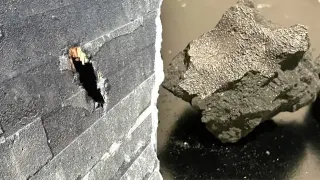
A roughly 1-kilogram meteorite fragment crashed through a New Jersey home's roof after a daytime fireball, later identified as a CM-type carbonaceous chondrite rich in extraterrestrial amino acids and brine minerals. The pristine sample preserves subsurface material and supports the idea that meteorites delivered organic compounds and water-related chemistry to early Earth, potentially aiding the origin of life.

Hillsborough meteorite uncovers hundreds of amino acids, most not from Earth
science10 days ago

Hillsborough meteorite uncovers hundreds of amino acids, most not from Earth

A Hillsborough, New Jersey meteorite—a primitive CM carbonaceous chondrite that fell in 2024—contains hundreds of amino acids, the majority not known to occur naturally on Earth, preserved in salty brines within the asteroid’s minerals. The finding highlights complex abiotic organic chemistry in a water-altered asteroid and underscores the value of rapid recovery to study pristine extraterrestrial material.

Ancient Martian Meteorite Found in Algeria Rewrites Mars’ Geological Timeline
space13 days ago

Ancient Martian Meteorite Found in Algeria Rewrites Mars’ Geological Timeline

A 1.27‑billion-year‑old Martian meteorite found in Algeria (NWA 13441) blends shergottite rock with neodymium‑rich material typical of chondrites, suggesting Mars preserves ancient mantle components. This unexpected combination helps fill a vast gap in Mars’ geologic record (about 600 million to 2.4–2.5 billion years ago) and points to a previously unsampled Martian reservoir between enriched and depleted shergottite sources. Ongoing isotope analyses aim to link NWA 13441 to other early Martian rocks and shed light on ancient magmatic and volcanic activity on the Red Planet.

Sky fire to rock treasure: NZ’s 11th meteorite recovered by citizen scientists
science14 days ago

Sky fire to rock treasure: NZ’s 11th meteorite recovered by citizen scientists

After a July fireball over New Zealand’s North Island, Fireballs Aotearoa and citizen scientists traced a possible strewn field and recovered four meteorite fragments totaling 75 g, including an 8 g piece found by Steve Wyn-Harris; a 39 g fragment was found the next day, followed by two more, all confirmed as meteorites and slated for naming and analysis, likely ordinary chondrites from an asteroid belt and possibly linked to NZ’s first meteorite near Masterton in 1863.

Rare Cosmic Crashes: Only Three Documented Meteorite Hits on Cars
science19 days ago

Rare Cosmic Crashes: Only Three Documented Meteorite Hits on Cars

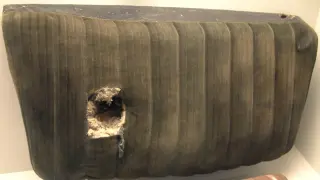
Three documented cases show that space rocks can and have hit cars: a 1938 3.9‑lb meteorite punched through Edward McCain’s Pontiac in Benld, IL; the 1992 Peekskill incident saw a 26.5‑lb iron chondrite smash Michelle Knapp’s Malibu, later becoming a museum piece and meteorite sale; and in 2009 a 0.1‑lb chondrite shattered a Nissan Pathfinder’s windshield in Grimsby, Ontario. NASA notes such events are extremely rare—Earth is peppered daily with space dust, intact meteorites reach the surface about once per year, and the odds of hitting a populated area are exceedingly small.

Garnet-Bearing Martian Meteorite Unveils a New Rock Type
geology23 days ago

Garnet-Bearing Martian Meteorite Unveils a New Rock Type

Scientists report a garnet-rich rock fragment inside Martian meteorite NWA 8171, providing the first evidence garnet may have formed in Mars’ crust and hinting at a new rock type or metamorphic process on the Red Planet; while Martian origin is supported by pyroxene chemistry and oxygen isotope signatures, confirming it will require direct isotope analysis of the garnet-bearing piece.

Casual map browse uncovers 390-million-year-old Quebec crater
science28 days ago

Casual map browse uncovers 390-million-year-old Quebec crater

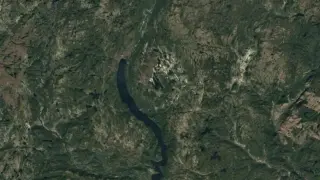
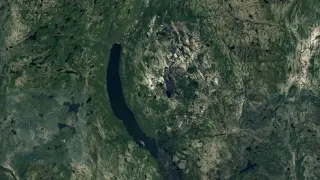
Amateur astronomer Joël Lapointe spotted a 15-km-wide pit near Lake Marsal on Google Maps, which geologists confirmed in 2025 is a 390-million-year-old meteorite impact crater now named Uhaachatik Crater after the Ekuanitshit Innu council; evidence includes zircon, shatter cones, and melt rock, with findings set to be presented at the Meteoritical Society congress, highlighting citizen science and Indigenous collaboration.

Amateur map search uncovers 390-million-year-old meteor crater in Quebec
science1 month ago

Amateur map search uncovers 390-million-year-old meteor crater in Quebec

An amateur in Quebec spotted a circular feature on Google Maps that led scientists to confirm Uhackatik, a roughly 15.5-mile-wide meteorite impact crater dating to about 390 million years ago in Quebec’s Côte-Nord. Fieldwork uncovered shatter cones and impact-melt rock, making it one of the largest crater discoveries in recent years; researchers plan to present results at the Meteoritical Society meeting.

Newly spotted 390-million-year-old meteor crater in Quebec revealed by Google Earth
science1 month ago

Newly spotted 390-million-year-old meteor crater in Quebec revealed by Google Earth

An amateur astronomer spotted unusual terrain on Google Maps near Lake Marsal in Quebec. Western University geologist Gordon Osinski provisionally confirmed the site as Uhackatik, a ~25 km wide crater about 390 million years old, with preserved shock metamorphic effects and shatter cones. The find isn’t yet peer‑reviewed and will be presented at the Meteoritical Society meeting; if confirmed, it would be among Earth’s largest recently discovered craters and offers clues about meteor impacts on lunar and Martian bodies, with comparisons to Kamestastin in Labrador and potential relevance to Artemis‑era lunar science.

Hillsborough Meteorite Uncovers Amino Acids, Hinting at Life's Origins
science1 month ago

Hillsborough Meteorite Uncovers Amino Acids, Hinting at Life's Origins

A Hillsborough, New Jersey meteorite that crashed into a home in 2024 contains amino acids and other organics and has been identified as a rare CM1/2 carbonaceous chondrite; NASA scientists say its complex organic chemistry supports the idea that life’s building blocks were delivered to early Earth by ancient asteroids, with findings published in Science Advances.

Hidden in plain sight: a 390-million-year-old crater unearthed in Quebec
science1 month ago

Hidden in plain sight: a 390-million-year-old crater unearthed in Quebec

Amateur astronomer Joël Lapointe spotted a circular depression on Google Maps in northern Quebec, sparking investigation that led scientists to confirm it as a 390-million-year-old meteorite impact crater named Uhackatik, following evidence of shatter cones and impact melt rocks. The crater, about 25 km wide, predates dinosaurs and offers a window into early terrestrial life. A 2025 expedition and collaboration with the Ekuanitshit Innu council culminated in naming the site and solidifying Canada’s newest crater discovery since 2010, illustrating how citizen observations can contribute to deep-time geology.

Rare meteorite class identified as Chicxulub’s trigger, study finds
science1 month ago

Rare meteorite class identified as Chicxulub’s trigger, study finds

A new study identifies Chicxulub’s impactor as a rare carbon monoxide–bearing chondrite, a meteorite type comprising about 5% of samples. While this confirms the asteroid theory for the dinosaurs’ extinction, researchers say atmospheric debris—not sulfur in the meteorite—was the main killer, and trace elements in a KT boundary clay point to an origin from the outer asteroid belt near Jupiter or the distant solar system.

Salty brines in an ancient asteroid unlock clues to life’s ingredients
science1 month ago

Salty brines in an ancient asteroid unlock clues to life’s ingredients

Analysis of the pristine Hillsborough CM1/2 meteorite, which fell in daylight over New Jersey in 2024, reveals concentrated salty brines in its parent asteroid and signs of aqueous alteration, preserving salts and a suite of organic compounds including amino acids, implying primitive asteroids harbored chemically active environments that could have seeded life's ingredients on early Earth.