
Tidal Resonance: How Sun and Moon Gravity May Trigger Slow Earthquakes
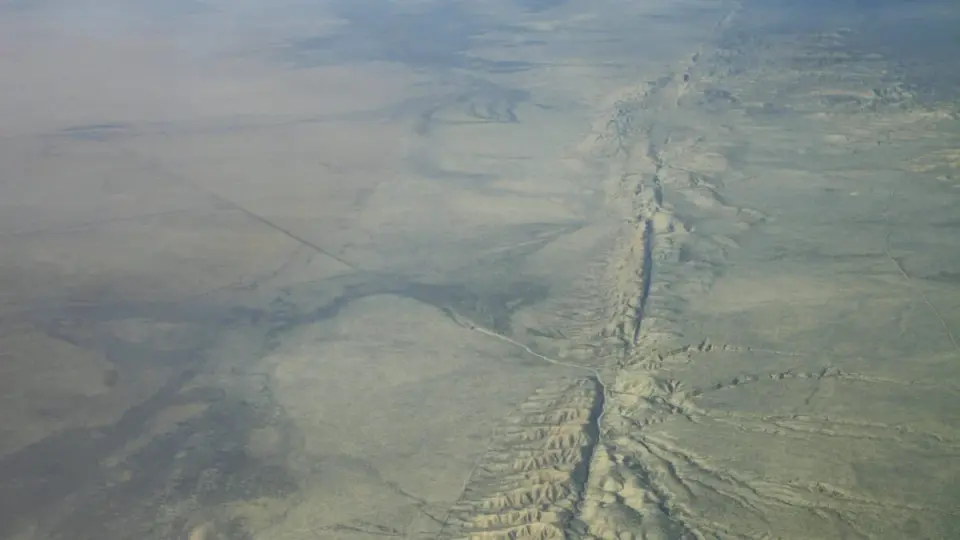
A new study in JGR Solid Earth suggests that gravitational tides from the Sun and Moon can trigger slow earthquakes through a resonance mechanism. Although these tidal stresses are minimal, comparable to a gentle hand press, they can nudge unstable fault lines into slipping when their timing matches the fault's natural response. This research provides a framework for understanding how minor forces can lead to significant seismic events, potentially aiding in the prediction of larger earthquakes.
Key points
- Researchers at PSL University in France used a spring-block model to simulate how tidal stresses affect fault movement.
- The study found that when the period of tidal stress matches a fault's natural response timescale, the fault becomes significantly more sensitive to triggering.
- Tidal stresses are described as being comparable to the pressure from a gentle hand press, yet they can cause faults to slip through resonance.
- Slow earthquakes, which are longer-scale rumblings undetectable to humans, have been observed to precede massive earthquakes.
- The findings suggest that tidal forces are one of many factors that can trigger earthquakes, particularly when their cycles align with specific fault characteristics.
Background
Previous research, including a 2016 study by Satoshi Ide, found a correlation between high tidal stresses and high-magnitude earthquakes. The British Geological Survey has considered the role of solar and lunar activity on earthquakes for over 100 years but lacked a compelling explanation until now. Recent archive coverage also highlighted the San Andreas Fault's higher-than-expected slip rate, reinforcing the importance of understanding seismic triggers.
How outlets are covering it
Gizmodo emphasizes the simplicity of the spring-block model and the resonance analogy, comparing it to pushing a swing at the right rhythm. ShiaWaves highlights the broader implication that tidal forces are not the sole cause but can act as a triggering factor when synchronized with fault characteristics. Both sources agree on the significance of the resonance mechanism but differ in their emphasis on the model's simplicity versus the broader geological context.
Why it matters
Understanding how minor tidal stresses can trigger slow earthquakes could improve the prediction of larger, more dangerous earthquakes. By inferring fault properties from observations of tidal-triggered slow earthquakes, scientists may better assess the risk of megathrust earthquakes and enhance preparedness in seismically active regions.
What to watch
Future research will likely focus on applying this resonance framework to real-world fault systems, accounting for regional geological conditions. Scientists may also explore how tidal-triggered slow earthquakes can be used to monitor fault stability and predict potential large-scale seismic events.
- Slow Earthquakes Sometimes Come Before Big Ones. The Sun and Moon May Be Setting Them Off Gizmodo
- How the moon and sun may trigger slow earthquakes on Earth Phys.org
- New Study Suggests Sun, Moon’s Gravity May Influence Slow Earthquakes ShiaWaves
- The Sun And Moon Can Trigger Earthquakes, And Scientists May Finally Know How Yahoo
Want the full story? Read the original reporting
Read on Gizmodo