Tag

Geophysics

All articles tagged with #geophysics

Pacific Core Flow Reversal Reveals Dynamic Earth
science17 hours ago

Pacific Core Flow Reversal Reveals Dynamic Earth

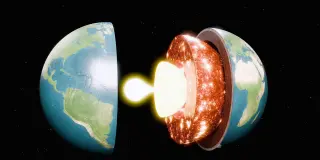
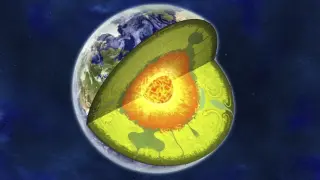
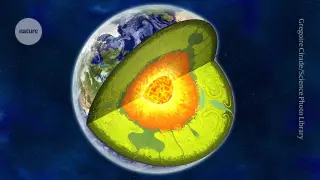
Satellite data from 1997–2025 show a portion of Earth's outer core beneath the Pacific reversed its flow from westward to eastward between 2010 and 2012, strengthening through 2020 before weakening again and accounting for about 5% of the outer-core surface flow. This hints that the deep interior is more dynamic than previously thought and may be linked to later geomagnetic jerks; improving our understanding of the geodynamo helps forecast the magnetic field and space weather.

Deep-Earth Plume Solves 75-Year Indian Ocean Gravity Puzzle
science4 days ago

Deep-Earth Plume Solves 75-Year Indian Ocean Gravity Puzzle

New mantle-convection modeling links the Indian Ocean geoid low to a hidden hot mantle plume rising from Africa and traveling beneath the Indian Ocean, creating a mass deficit that weakens gravity in the region; the findings align with satellite data and illuminate deep-Earth processes, though uncertainties remain about ancient plate motions and plume dynamics.

Ancient Taftan Volcano Signals a Quiet Wake-Up with Satellite-Detected Uplift
environment5 days ago

Ancient Taftan Volcano Signals a Quiet Wake-Up with Satellite-Detected Uplift

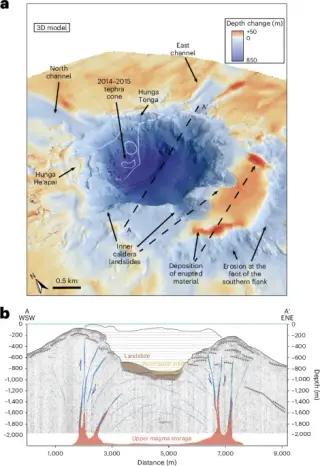
Satellite data show Taftan, a remote volcano in southeastern Iran, has risen about 9 cm in 10 months, signaling pressure buildup near the summit in a shallow hydrothermal/magmatic system. The uplift, centered near the summit, likely reflects gas and fluids moving through cracks rather than magma reaching the surface, so eruption is not imminent but ongoing monitoring is essential. Authorities should track gas emissions, install a basic seismic/GPS network, and update hazard maps while satellites continue to monitor.

Volcano Forecasting: The Quest for Weather‑Style Warnings
science18 days ago

Volcano Forecasting: The Quest for Weather‑Style Warnings

Scientists are inching toward weather‑style forecasts for volcanic eruptions, but predicting eruptions with that level of certainty remains challenging because magma sits deep and each volcano is unique. Advances in seismology, ground deformation monitoring, gas measurements, and machine learning are enabling earlier warnings and more detailed volcano models. Projects like Ex-X and SZ4D seek to uncover the governing physics, improve data collection, and develop archetype volcano models that could one day output probabilistic eruption forecasts days or weeks in advance, but achieving a generalized, reliable forecast will require decades of data and a far more extensive global monitoring network.

Pacific Ocean Drains Heat Faster, Revealing 400 Million-Year Cooling Imbalance
science29 days ago

Pacific Ocean Drains Heat Faster, Revealing 400 Million-Year Cooling Imbalance

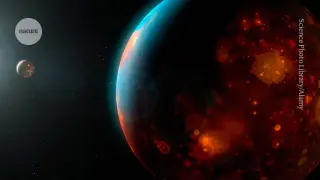
A 400-million-year computer-model study shows Earth's cooling is uneven: the Pacific hemisphere has shed about 50 Kelvin more heat than Africa, driven by rapid heat loss through the thinner seafloor and the vast Pacific Ocean, while continental regions trap heat; the findings illuminate a long-standing hemispheric heat disparity rooted deep in Earth's tectonic history.

Three Gorges Dam Tiny Spin: NASA Calculations Show Subtle Shift in Earth's Rotation
science1 month ago

Three Gorges Dam Tiny Spin: NASA Calculations Show Subtle Shift in Earth's Rotation

NASA scientists calculated that filling the Three Gorges Dam reservoir would lengthen the length of day by about 0.06 microseconds and shift Earth’s pole by roughly 2 centimeters due to moving 40 cubic kilometers of water higher up; the effect is minuscule compared with the Moon’s tidal slowing and other mass redistributions such as groundwater pumping and ice melt. It’s a real but negligible physical consequence of large-scale engineering, not a weapon or warning.

Humans Are Lengthening Earth's Day, New Study Finds
science2 months ago

Humans Are Lengthening Earth's Day, New Study Finds

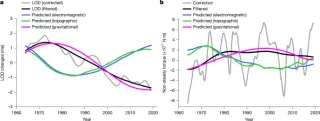
Researchers show Earth's day is lengthening by about 1.33 milliseconds per century due to climate-driven mass shifts from melting ice, using fossil foraminifera and a physics-informed deep learning model; the trend could soon surpass the Moon's influence, with implications for communications and space navigation, per a Journal of Geophysical Research: Solid Earth study.

Underground Freshwater Vault Discovered Beneath Great Salt Lake
science2 months ago

Underground Freshwater Vault Discovered Beneath Great Salt Lake

Researchers using airborne electromagnetic surveys and magnetic data mapped beneath Utah’s Great Salt Lake and uncovered a large, previously unknown freshwater reservoir that extends deep into the basin, challenging the idea that the lake is fully saline. The find suggests mountain-fed freshwater can infiltrate far beneath the surface and may offer new options for drought and dust mitigation, though surveys are incomplete and sustainable use requires caution; the study, published in Scientific Reports, emphasizes the need to survey the entire lake to determine the reservoir’s true extent.

Hidden mantle blobs could rewrite Earth's tectonic story
science3 months ago

Hidden mantle blobs could rewrite Earth's tectonic story

Seismologists using high-resolution full-waveform inversion on earthquake data detected large, anomalous pockets in the lower mantle beneath the Pacific, visible as regions where seismic waves move unusually fast or slow. These “sunken worlds” may be remnants of ancient plates or other mantle materials, challenging traditional ideas about subduction and plate evolution. A ETH Zurich–Caltech team notes the exact composition is unclear and more data and methods (including EM signals and mineral physics) are needed, but the findings could require updates to models of mantle convection and heat transfer. The study appears in Scientific Reports.

Antarctica’s Gravity Hole Grows Stronger, Hinting at Deep Mantle Shifts
earth-science3 months ago

Antarctica’s Gravity Hole Grows Stronger, Hinting at Deep Mantle Shifts

Scientists used earthquakes and geophysical data to reconstruct Earth’s interior and map a gravity hole beneath Antarctica that began weakening but has grown stronger over roughly 50–30 million years, driven by competing mantle flows (cold, sinking material beneath and hotter, rising material above). This amplified mass deficit alters the geoid and regional sea-level dynamics, offering clues about ice-sheet stability and climate-related sea-level changes, though the exact future impact remains uncertain.