
JWST Detects Methane on Interstellar Comet 3I/ATLAS, Revealing New Chemistry
TL;DR
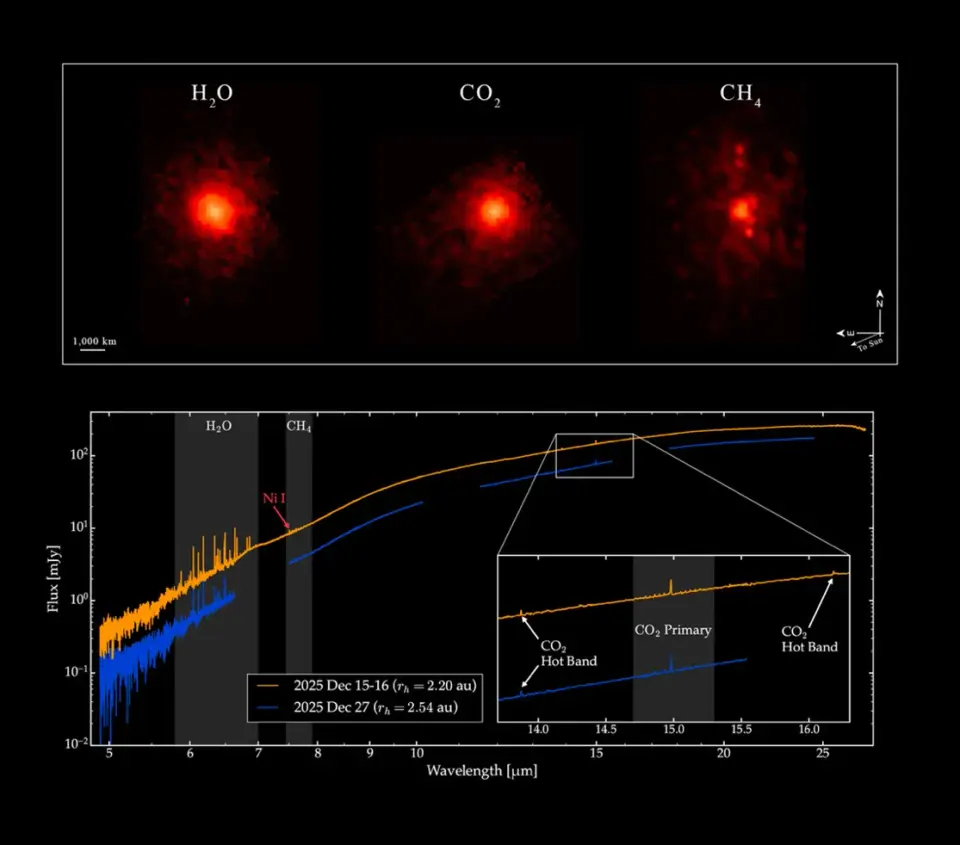
NASA’s James Webb Space Telescope detected methane in the interstellar comet 3I/ATLAS using the MIRI instrument, marking the first direct methane fingerprint on an interstellar object; the methane-to-water ratio is unusually high and CO2 is also abundant, pointing to a different formation environment than typical solar system comets. Methane appears buried beneath the surface and released as the comet heats near the Sun, while water vapor dissociates more widely in the coma; two observations show gas production declining with distance from the Sun, with methane and CO2 concentrated near the nucleus.
- NASA’s Webb Detects Methane on Interstellar Comet 3I/ATLAS NASA Science (.gov)
- Radio scans find no alien tech from the latest interstellar comet AP News
- Comet 3I/ATLAS has methane, unexpected discovery reveals EarthSky
- 3I/ATLAS is only the third confirmed interstellar object ever detected passing through our solar system. It may be older than the Sun itself, and Webb observations show it is carrying an unusually carbon dioxide-rich coma as it swings past once before leaving fo Space Daily
- SETI Institute Looks for Signs of Technology in Interstellar Visitor 3I/ATLAS SETI
Want the full story? Read the original reporting
Read on NASA Science (.gov)