Tag

Sciencespace

All articles tagged with #sciencespace

China Tests Stem-Cell Embryos in Orbit to Assess Space Reproduction Feasibility
sciencespace23 hours ago

China Tests Stem-Cell Embryos in Orbit to Assess Space Reproduction Feasibility

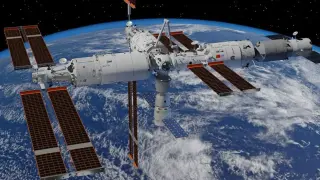
China conducted an on-orbit study aboard the Tiangong station using artificial embryos made from human stem cells to examine early development in microgravity. The two embryo models (one simulating uterine attachment and another using a microfluidic chip to mimic tissue formation) were cultured for about five days on the Tianzhou-10 supply ship, then frozen and returned to Earth for analysis, with Earth-based controls for comparison. The goal is to understand potential risks to human reproduction during long-term space habitation, not to create real babies in space.

SpaceX targets May 19 for first Starship Version 3 flight
sciencespace13 days ago

SpaceX targets May 19 for first Starship Version 3 flight

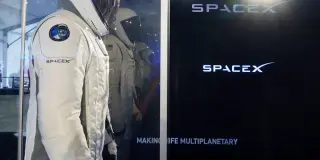
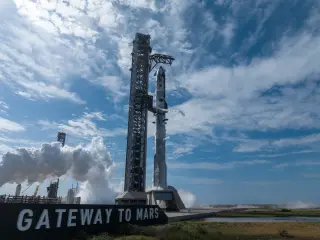
SpaceX announced May 19 as the target date for the first flight of Starship Version 3 from Starbase, Texas, featuring upgraded Raptor engines and a new launch pad. The Flight 12 test will validate the redesigned booster and upper stage, including a soft splashdown for the booster, 22 mass simulators to model next-generation Starlink satellites, imagery payloads to test heat shield readiness, and reentry maneuvers as SpaceX pursues full reuse for orbital missions and potential Artemis lunar missions. SpaceX is also exploring additional launch sites (including a Louisiana parcel) to support thousands of Starship flights per year, alongside pads at Kennedy Space Center and Cape Canaveral.

Global pact for planetary defence as Ramses targets Apophis
sciencespace18 days ago

Global pact for planetary defence as Ramses targets Apophis

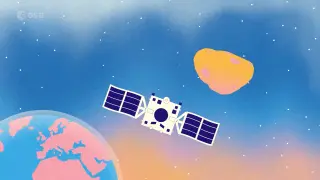
ESA and JAXA signed memoranda to deepen planetary-defence collaboration and advance the Ramses mission to rendezvous with asteroid Apophis ahead of its 2029 Earth flyby, with ESA leading spacecraft design and JAXA contributing key hardware to study tidal effects and improve deflection knowledge; the 2029 flyby will bring Apophis within about 32,000 km of Earth, presenting a rare science and public-engagement opportunity.

Martian Nickel Clue: Perseverance Uncovers 3-Billion-Year-Old Rocks with Rare Mineral Signatures
sciencespace1 month ago

Martian Nickel Clue: Perseverance Uncovers 3-Billion-Year-Old Rocks with Rare Mineral Signatures

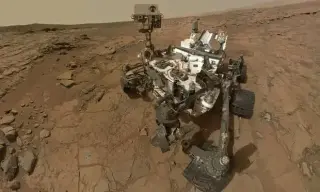
NASA’s Perseverance rover found unusually high nickel levels (up to 1.1% by weight) in rocks from Neretva Vallis in Jezero crater, dating about 3 billion years, with nickel‑rich minerals in magnesium‑sulfate veins that resemble Earth’s pyrite. While this hints at a chemical environment that could support microbial processes, it does not prove life on Mars; the nickel’s origin is uncertain and requires further study.

Rare Fireball Dazzles California Skies, SLO County Among Sightings
sciencespace2 months ago

Rare Fireball Dazzles California Skies, SLO County Among Sightings

A rare fireball lit up California skies Sunday night, with San Luis Obispo County observers among those viewing the event. NASA Space Alerts tracked the meteor as it sped about 35,000 mph, traveling roughly 58 miles through the upper atmosphere before disintegrating about 29 miles above Calflax. The American Meteor Society logged more than 230 sightings across California, Arizona and Nevada, with witnesses reporting colors from blue to orange and, in some places, a faint boom accompanying the event.

NASA's Methalox Boom: Florida Tests Gauge Rocket Safety
sciencespace2 months ago

NASA's Methalox Boom: Florida Tests Gauge Rocket Safety

NASA is conducting controlled detonation tests of methane-oxygen fuel (methalox) at Eglin Air Force Base in Florida to measure blast radius, concussion, and shrapnel distances for rocket-safety purposes. The program unfolds in three series, escalating from about 100 pounds to 2,000 pounds, then up to 20,000 pounds of fuel, with SpaceX having done its own testing but NASA pursuing its independent safety verification (and a bit of spectacle) before any full-scale launches.

NASA Sets Public Briefing on Artemis II Readiness for Crewed Lunar Mission
sciencespace2 months ago

NASA Sets Public Briefing on Artemis II Readiness for Crewed Lunar Mission

NASA will hold a 3 p.m. EDT media briefing at Kennedy Space Center on March 12 after completing the Artemis II Flight Readiness Review, outlining progress toward the four-astronaut crewed lunar mission and discussing the performance of the Space Launch System and Orion spacecraft; the live briefing will feature key NASA leaders and frame Artemis II as a stepping stone to sustainable lunar exploration and future Mars missions.

Artemis II set for lunar flyby with four-astronaut crew, launch delayed to April
sciencespace2 months ago

Artemis II set for lunar flyby with four-astronaut crew, launch delayed to April

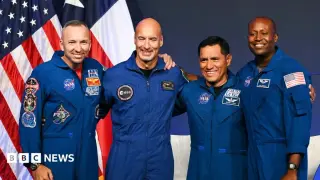
NASA's Artemis II will send four astronauts around the Moon on a 10‑day test flight aboard the Space Launch System and Orion capsule, marking the first crewed lunar mission in more than five decades. After a fueling‑system issue forced the rocket back to Kennedy Space Center for repairs, NASA moved the launch to no earlier than April. The mission will test life‑support and other deep‑space systems ahead of a lunar landing targeted for Artemis III in 2028. Crew members are Reid Wiseman, Victor Glover, Christina Koch and Canada’s Jeremy Hansen; Koch would be the first woman aboard a lunar mission, and Glover would be the first person of color to do so.

Elon Musk Signals SpaceX Shift: From Mars Settlement to a Moon-Based City
sciencespace3 months ago

Elon Musk Signals SpaceX Shift: From Mars Settlement to a Moon-Based City

Elon Musk revealed on X that SpaceX is pivoting from a Mars-first goal to building a self-growing Moon city, arguing the Moon could be developed in under a decade while Mars would take 20+ years. The shift comes as Blue Origin has begun demonstrating lunar capabilities and as Musk expands into AI via xAI, with plans that include mass-driver concepts on the Moon to enable in-space construction. The move suggests SpaceX may prioritize near-term lunar development and collaboration with NASA, rather than an immediate push to Mars, even as both destinations remain part of Musk’s broader space ambitions.

Space Reproduction Put on Hold as Experts Warn of Safety Risks
sciencespace3 months ago

Space Reproduction Put on Hold as Experts Warn of Safety Risks

A new report in Reproductive BioMedicine Online warns that reproducing in space is far from safe due to radiation, microgravity, and lunar dust, which may affect fertility, pregnancy, and offspring. It calls for a global ethical framework, better shielding, medical countermeasures, and advanced assisted reproduction tools before any long-duration missions, effectively delaying space births until safeguards are in place.

Meteor Causes Shaking and Loud Booms Over NYC and NJ
sciencespace1 year ago

Meteor Causes Shaking and Loud Booms Over NYC and NJ

A loud boom heard in parts of New Jersey and New York City was likely caused by a meteor fireball flying about 49 miles above Upper Bay near Jersey City, traveling at 34,000 miles per hour, and disintegrating 29 miles above Midtown Manhattan. NASA's Meteoroid Environments Office confirmed the event, while the US Geological Survey found no evidence of an earthquake. No meteorites were produced, and there were no reported impacts to the city.

sciencespace1 year ago

Meteor Explodes Over NYC, Causes Shaking and Loud Booms

A meteor exploded over Manhattan after flying over the Statue of Liberty at a speed 58 times faster than a Boeing 737, causing loud booms heard in New York and New Jersey. NASA and other authorities are uncertain if the booms were caused by the meteor or military activity, but no damage or injuries were reported. Despite the dramatic event, many New Yorkers remained unfazed.

Astronauts Capture Mysterious Glowing Orbs and Red Sprites from Space
sciencespace1 year ago

Astronauts Capture Mysterious Glowing Orbs and Red Sprites from Space

NASA astronaut Matthew Dominick captured a photo of glowing blue orbs, known as red sprites, from the International Space Station. These orbs, caused by thunderstorms off the coast of South Africa, are a rare atmospheric phenomenon that appear above storms due to lightning. The photo, taken on June 3, offers a rare glimpse of these high-altitude lightning events, which are difficult to capture from Earth. NASA encourages citizen scientists to contribute their own photos of sprites to the Spritacular database for research purposes.