sciencespace6.705 min read
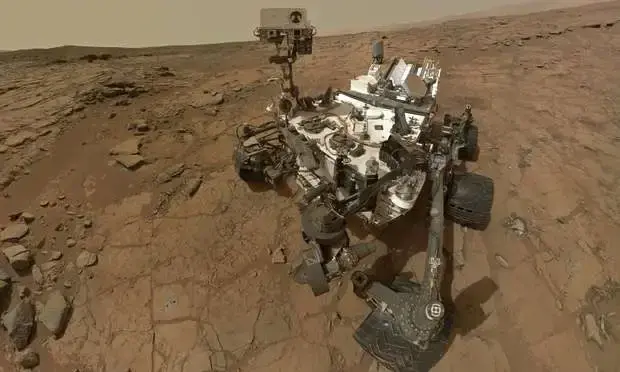
Curiosity Sends a Martian Postcard on Its 5,000th Sol
21 days ago•Source: Boing Boing

The latest sciencespace stories, each synthesized from multiple sources with added background and context.
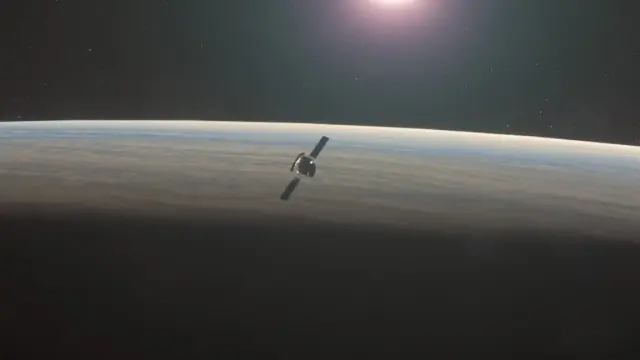
The European Space Agency will press ahead with the EnVision Venus orbiter using a European radar payload after NASA signaled it cannot deliver the originally planned US‑built radar; Europe has pushed the launch to 2032 to develop its own radar, while NASA’s budget pressures drive cuts to international partnerships, prompting ESA to cover the radar role domestically and explore other collaborations.
USA Today•2 months ago
Space Daily•2 months ago
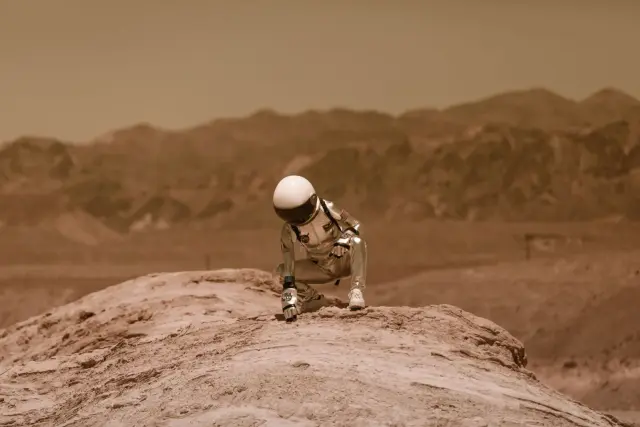
Astrophysicist Adam Becker warns that a self-sustaining Mars colony faces far more than travel challenges: toxic Martian dust would contaminate suits and habitats, and the planet lacks a thick atmosphere and magnetic shield. Add long transit times, radiation, low gravity, and huge logistical demands. Even with SpaceX’s pledge of $1 billion in shares for a 1-million-person colony, experts say the obstacles are severe and the goal would take far longer and be far harder than envisioned.

NASA's Voyager 1 is set to reach a distance of one light-day from Earth on November 18, 2026, making it the farthest human-made object as it continues its nearly 50-year journey; data still travels back to Earth with about a 23-hour delay, and the probe carries on with a small set of instruments while power wanes. Voyager 2, launched shortly before its twin, is also in interstellar space at about 21.3 billion miles from Earth, with some instruments powered down to conserve energy.
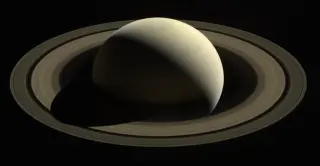
Cassini-era analyses suggest Saturn’s bright main rings may be tens to hundreds of millions of years old rather than billions, implying a relatively recent origin after much of the dinosaur era. While ring purity and mass measurements support a younger exposure age, newer studies caution that dust deposition, space weathering, and model assumptions keep the true age unsettled. Some scenarios even propose a collision or disruption of icy moons as the ring source. The rings are also losing material and evolving, so their future may include slow disappearance into Saturn, reinforcing that the exact formation time remains debated.

A Space Daily explainer shows that the 100-kilometre Kármán line is a regulatory boundary, not a physical cliff; if you drove straight up at highway speed you’d reach space in under an hour, illustrating how incredibly thin Earth's breathable air is. About 99% of the atmosphere’s mass sits in the lowest ~32 km, and by 100 km altitude the air is roughly one millionth as dense as at sea level. The atmosphere’s layered protection—troposphere for life-supporting gases and the ozone-rich stratosphere—makes surface habitability possible, underscoring how the “apple-skin” thickness of the air is truly remarkable.
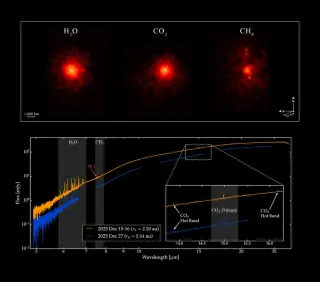
NASA’s James Webb Space Telescope detected methane in the interstellar comet 3I/ATLAS using the MIRI instrument, marking the first direct methane fingerprint on an interstellar object; the methane-to-water ratio is unusually high and CO2 is also abundant, pointing to a different formation environment than typical solar system comets. Methane appears buried beneath the surface and released as the comet heats near the Sun, while water vapor dissociates more widely in the coma; two observations show gas production declining with distance from the Sun, with methane and CO2 concentrated near the nucleus.
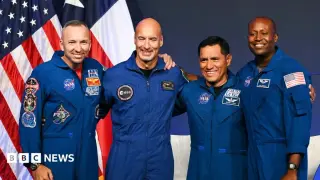
NASA unveiled Artemis III's four-astronaut crew for a 2028 Moon landing: commander Randy Bresnik; mission specialists Frank Rubio and Andre Douglas; and ESA astronaut Luca Parmitano. The mission is among NASA's most complex and hinges on lunar lander work by SpaceX and Blue Origin, with new AxEMU suits in development. Notably, Artemis III will be a four-man crew, an all-male lineup amid ongoing discussions about funding and timelines.
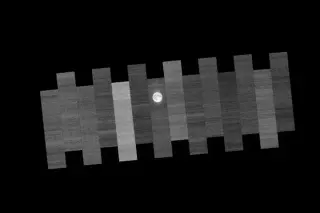
NASA’s Landsat 9 regularly points its sensors at the Moon during the full Moon to detect and correct drift, using the Moon’s stability as a reference to keep decades of Earth observations consistent, a process that runs alongside Artemis’ return to lunar exploration.

China conducted an on-orbit study aboard the Tiangong station using artificial embryos made from human stem cells to examine early development in microgravity. The two embryo models (one simulating uterine attachment and another using a microfluidic chip to mimic tissue formation) were cultured for about five days on the Tianzhou-10 supply ship, then frozen and returned to Earth for analysis, with Earth-based controls for comparison. The goal is to understand potential risks to human reproduction during long-term space habitation, not to create real babies in space.
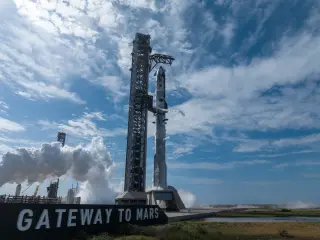
SpaceX announced May 19 as the target date for the first flight of Starship Version 3 from Starbase, Texas, featuring upgraded Raptor engines and a new launch pad. The Flight 12 test will validate the redesigned booster and upper stage, including a soft splashdown for the booster, 22 mass simulators to model next-generation Starlink satellites, imagery payloads to test heat shield readiness, and reentry maneuvers as SpaceX pursues full reuse for orbital missions and potential Artemis lunar missions. SpaceX is also exploring additional launch sites (including a Louisiana parcel) to support thousands of Starship flights per year, alongside pads at Kennedy Space Center and Cape Canaveral.
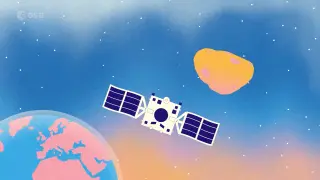
ESA and JAXA signed memoranda to deepen planetary-defence collaboration and advance the Ramses mission to rendezvous with asteroid Apophis ahead of its 2029 Earth flyby, with ESA leading spacecraft design and JAXA contributing key hardware to study tidal effects and improve deflection knowledge; the 2029 flyby will bring Apophis within about 32,000 km of Earth, presenting a rare science and public-engagement opportunity.