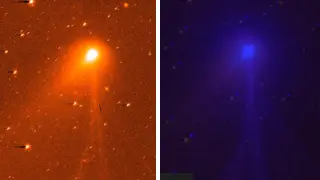
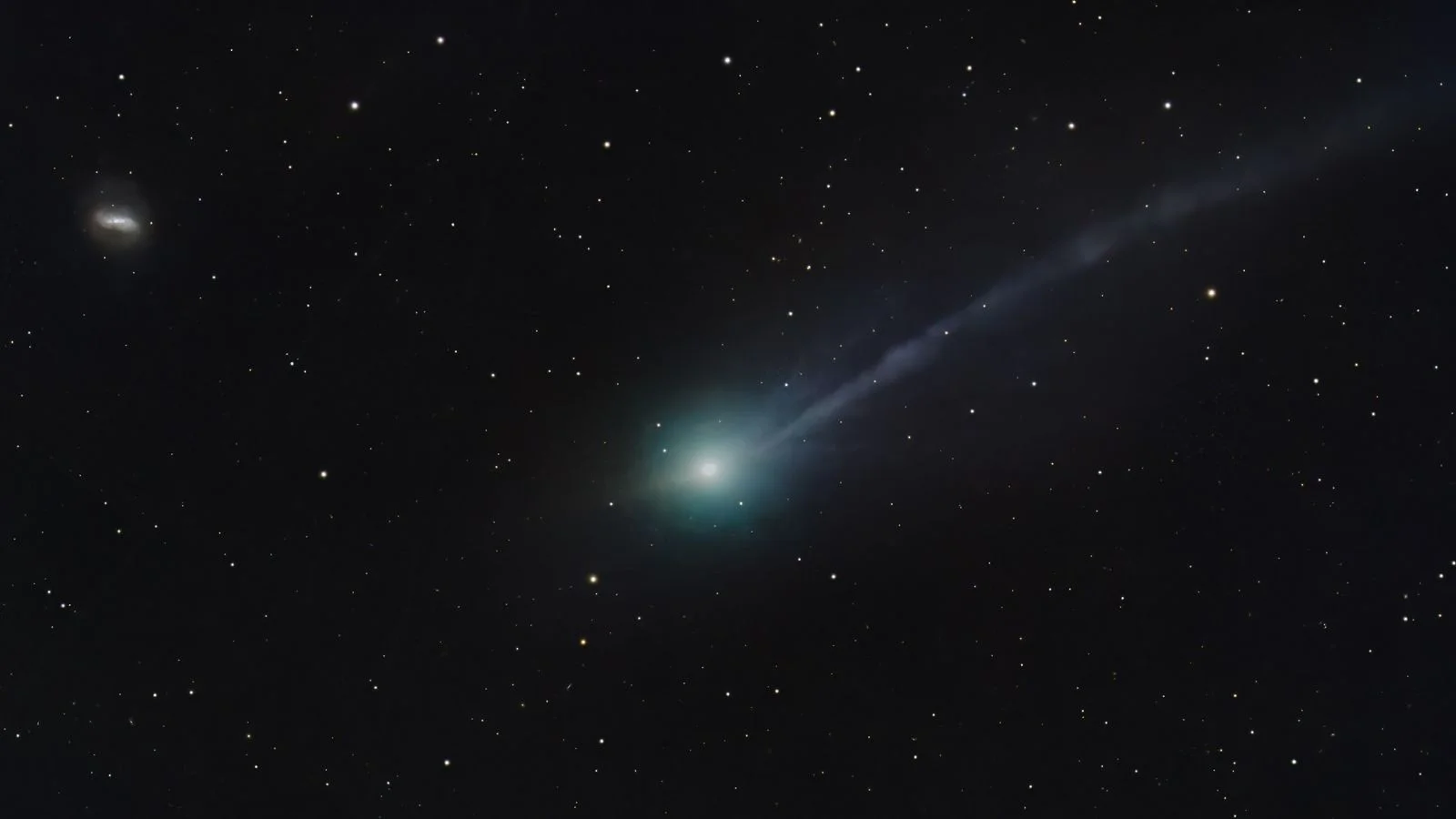
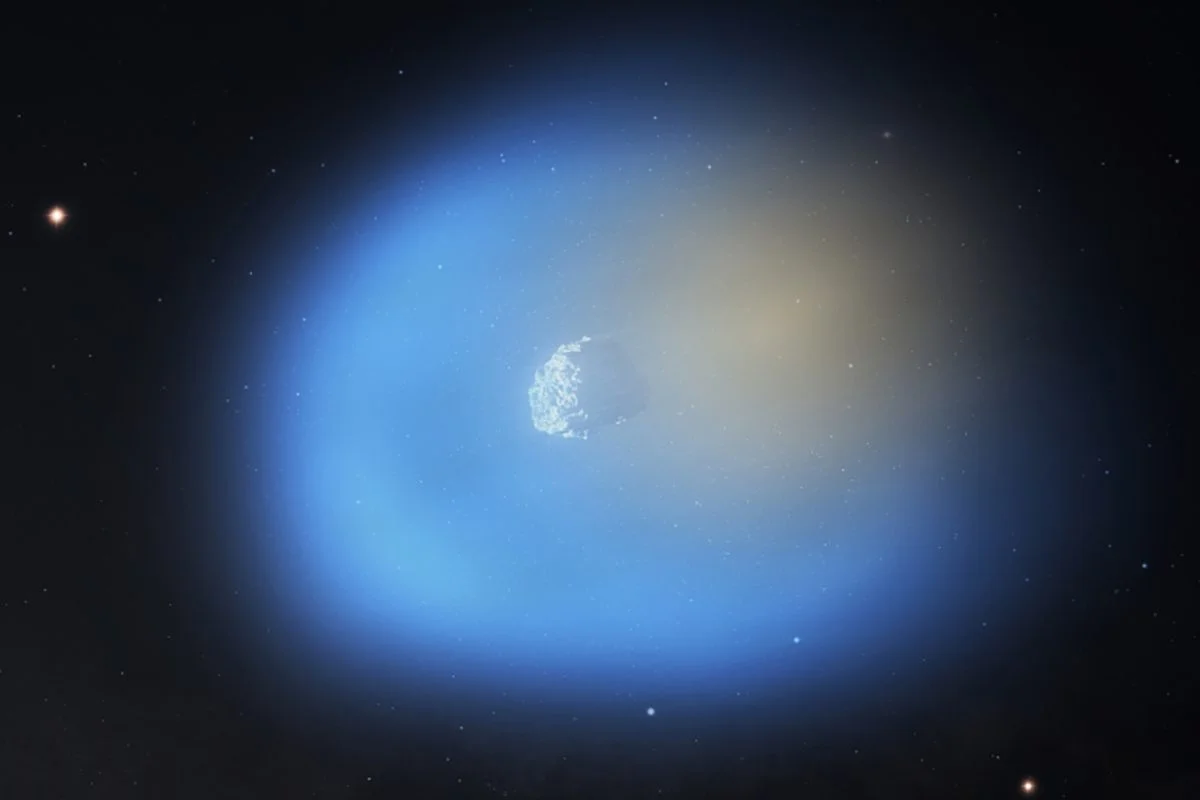
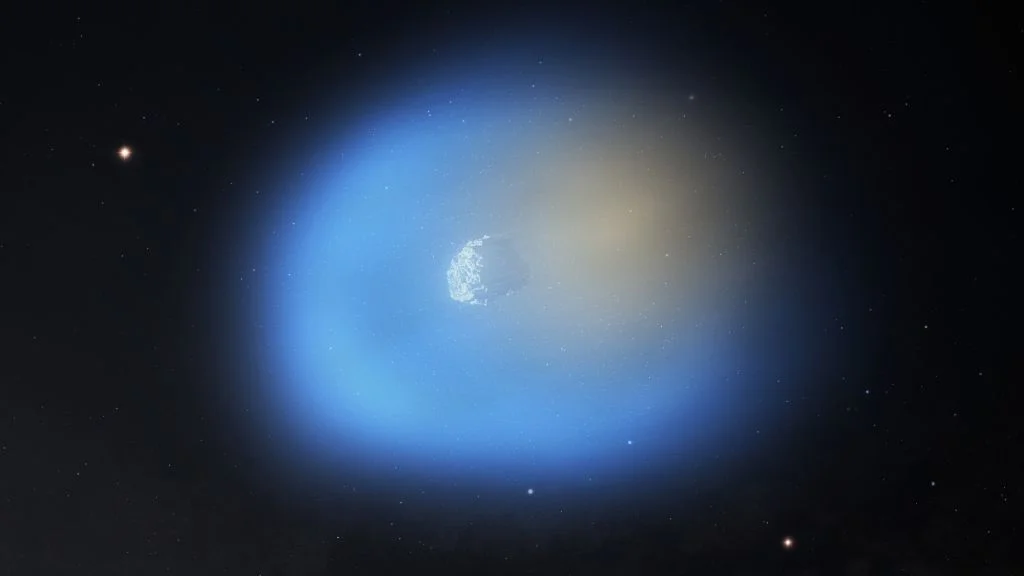
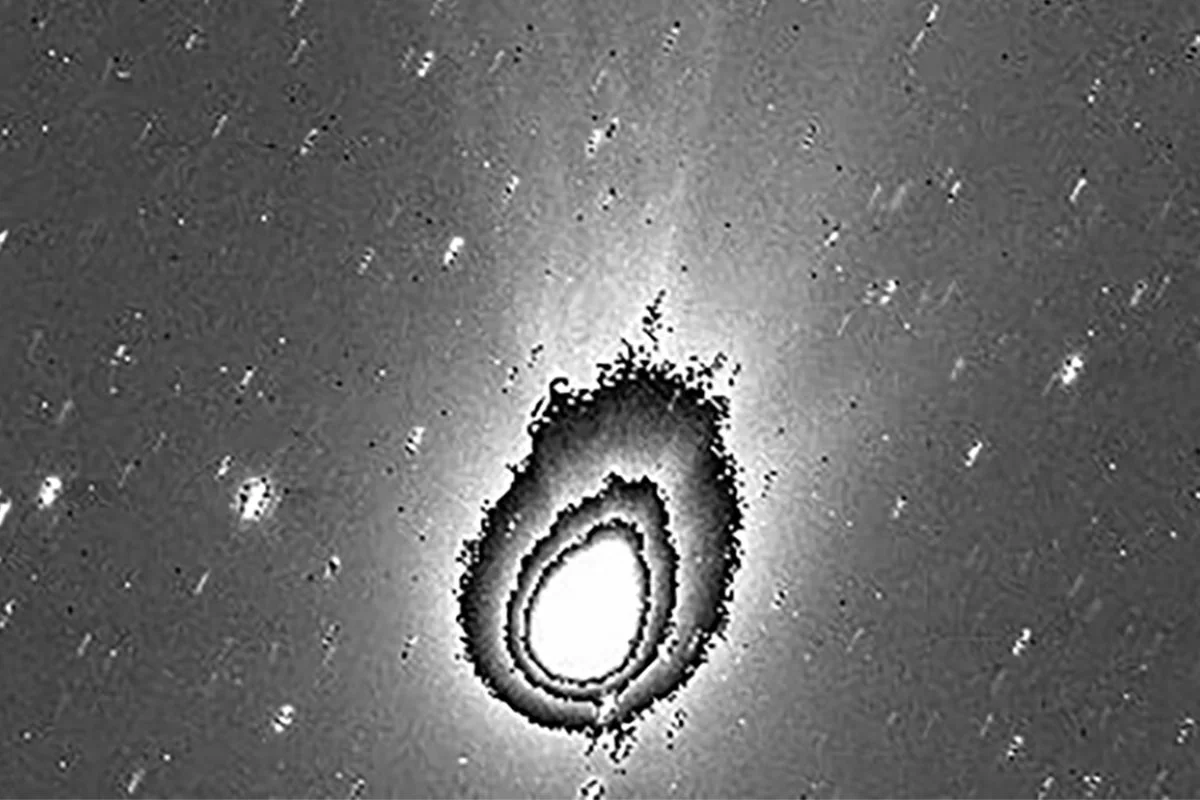
Astronomers using the WEAVE spectrograph on the interstellar comet 3I/ATLAS found a nitrogen-rich tail, suggesting it formed in extremely cold conditions (< -240°C) far from its star, likely in the outer reaches of another planetary system before entering our solar system.
A roundup of recent science finds: researchers trace laughter back to ape ancestors about 15 million years ago, showing a conserved, recognizable chuckle across great apes; the interstellar comet 3I/ATLAS is identified as the oldest detected object in the solar system, likely formed over 12 billion years ago; a conceptual study proposes “weather jiu-jitsu”—gentle atmospheric nudges to steer extreme weather events—though it remains a proof-of-concept; and an analysis of five decades of top hits reveals a rise in self-focused language in Western lyrics, with East Asian lyrics showing more stability.
NASA’s James Webb Space Telescope used its NIRSpec instrument to map the chemical makeup of interstellar comet 3I/ATLAS as it moved away from the Sun, finding unusually high deuterium (about 30x that of solar-system comets) and only traces of carbon-13, which together point to formation in a very cold, early galactic environment roughly 10–12 billion years ago during the universe’s cosmic noon; 3I/ATLAS is the third confirmed interstellar visitor and the findings, published in Nature, shed light on the conditions for planet formation and potentially prebiotic chemistry beyond our solar system.
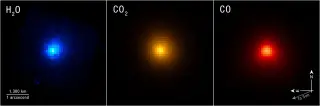
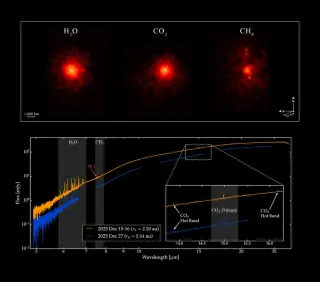
NASA’s James Webb Space Telescope detected methane in the interstellar comet 3I/ATLAS using the MIRI instrument, marking the first direct methane fingerprint on an interstellar object; the methane-to-water ratio is unusually high and CO2 is also abundant, pointing to a different formation environment than typical solar system comets. Methane appears buried beneath the surface and released as the comet heats near the Sun, while water vapor dissociates more widely in the coma; two observations show gas production declining with distance from the Sun, with methane and CO2 concentrated near the nucleus.
Scientists listening for technosignatures from interstellar comet 3I/Atlas using radio telescopes found no evidence of alien technology as it passed through the inner Solar System, and follow-up observations (including a NASA/Hubble image) detected no unusual signals, reinforcing a natural origin for the object.
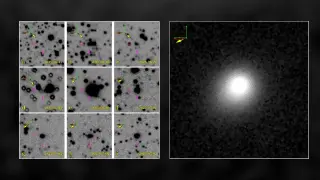
Astronomers found images of the interstellar comet 3I/ATLAS in Vera Rubin Observatory commissioning data from June 20, 2025, ten days before its official discovery by ATLAS on July 1, 2025. Rubin captured nine additional images between June 21 and July 2, with a clear coma, but a non-operational data pipeline during validation required a custom pipeline to extract the signals. The discovery hints Rubin LSST could detect about one interstellar comet per year. Joint observations by JUICE and Europa Clipper later detected hydrogen, oxygen, and carbon from 3I/ATLAS, with JWST data suggesting excess carbon dioxide; these findings help compare the comet’s origin to solar-system bodies. The nucleus is ~1 km wide and traveling ~140,000 mph, implying an age of several billion years and multiple stellar encounters. The study was published in The Astrophysical Journal Letters.
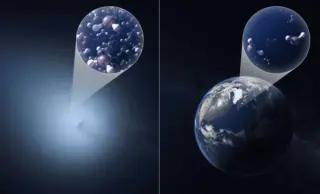
Astronomers using ALMA detected an exceptionally high abundance of deuterated water (HDO) in interstellar comet 3I/ATLAS—more than 30 times what’s typical in solar-system comets and over 40 times Earth's ocean water—indicating the comet formed in environments colder than about 30 Kelvin, far colder than the region that formed our solar system. The finding suggests interstellar comets carry preserved birth-region chemistry and underscores that planetary formation varies with local temperature and radiation across the galaxy.
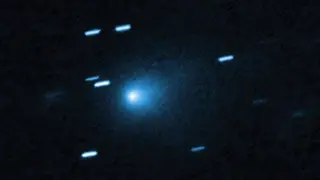
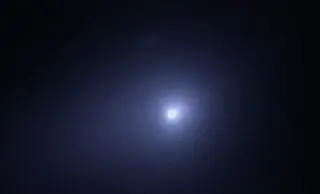
New Hubble observations of interstellar comet 3I/Atlas suggest it formed in a cold, distant region of the Milky Way and was ejected into interstellar space, supporting the idea that other star systems can send comets our way.
ESA's Juice spacecraft imaged interstellar comet 3I/ATLAS as it skimmed the Sun, illustrating how deep-space observations can reveal distant objects not visible from Earth and improve early warning by refining their orbits, a capability that complements Earth-based tracking and planetary-defense efforts.
Interstellar comet 3I/ATLAS is actively ejecting water vapor as it passes near the Sun, with an outflow of about two tons per second (roughly 70 Olympic swimming pools of water vapor per day), observed by ESA’s JUICE spacecraft using the MAJIS and JANUS instruments. Infrared detections of water vapor and carbon dioxide around perihelion show an extended coma, tail, and jets, offering a glimpse into materials formed around another star billions of years ago. The observations were unplanned and conducted in 2025, with data reaching Earth in 2026, highlighting JUICE’s capability to study interstellar visitors on its journey to Jupiter.
Astronomers using the Subaru Telescope captured a multi-wavelength image of interstellar comet 3I/ATLAS (C/2025 N1) in December 2025, revealing its chemical and physical properties and offering new insights into how planetesimals and planets may form in distant star systems.
James Webb Space Telescope analysis of interstellar comet 3I/ATLAS suggests it formed in a cold region of the Milky Way about 10–12 billion years ago, potentially making it older than Earth and possibly as old as the galaxy or even the universe. Its isotopic composition differs from solar-system comets, implying formation in a different stellar environment. The comet is now exiting the solar system after a close approach to Earth, with further travels past the outer planets as researchers continue to refine its origins.
ALMA observations reveal the interstellar comet 3I/ATLAS is unusually methanol-rich, with methanol originating from both the nucleus and coma. This chemical fingerprint suggests formation under conditions different from those of Solar System comets and provides a glimpse into the chemistry of distant star systems, with more interstellar visitors anticipated as powerful observatories come online.
ALMA observations show the interstellar comet 3I/ATLAS is unusually rich in methanol, released from both the nucleus and icy grains in the coma. The methanol-to-hydrogen cyanide ratio is higher than in Solar System comets, suggesting 3I/ATLAS formed under colder or chemically different conditions in another planetary system, providing a chemical fingerprint from a different star.
ESA's JUICE spacecraft captured over 120 JANUS images of interstellar comet 3I/ATLAS on 6 November 2025, revealing a bright coma, a long tail and jets as it passed about 66 million km from the Sun; five of JUICE's instruments (JANUS, MAJIS, SWI, PEP, UVS) gathered data to study the comet’s composition and behavior, with teams continuing analysis as data are processed.