
UK Awards ClearSpace £61M Contract for Robotic Space Debris Removal Mission
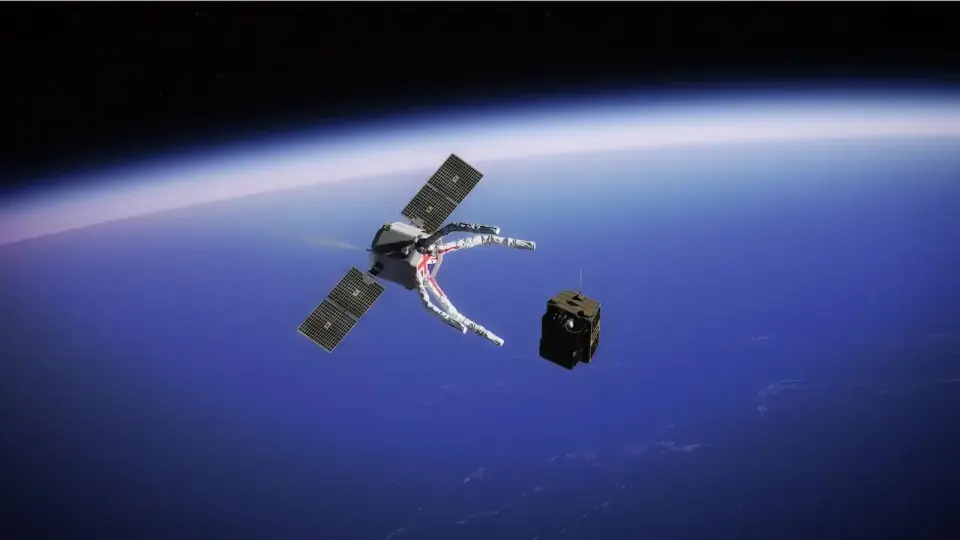
The UK Space Agency has awarded a £61 million contract to ClearSpace UK to develop a robotic spacecraft capable of capturing and deorbiting defunct satellites. The mission, known as Active Debris Removal, aims to remove two inactive UK satellites from low Earth orbit by 2032, demonstrating reusable cleanup technology to mitigate the growing risk of orbital collisions.
Key points
- The UK Space Agency selected ClearSpace UK for a £61 million (approx. $81 million) contract to build a spacecraft that will capture and dispose of two defunct UK-registered satellites in low Earth orbit.
- The mission is scheduled for launch in 2029 from SaxaVord Spaceport in the Shetland Islands, with the goal of removing the targets by 2032.
- The spacecraft will use robotic manipulators and computer vision to grapple with inactive satellites, then use thrusters to push them into a lower orbit for controlled atmospheric reentry and burn-up.
- A key innovation is the design for refueling and reuse, allowing the cleanup vehicle to perform multiple missions rather than being sacrificed after the first capture.
- The European Space Agency reports approximately 47,140 tracked objects in orbit, with millions of smaller pieces posing collision risks that could trigger a cascade effect known as Kessler syndrome.
Background
Recent developments in space infrastructure highlight the increasing complexity of orbital operations. While the UK focuses on debris removal, other agencies are dealing with technical challenges; for instance, ESA confirmed a crash of its Space Rider test model in October 2026 due to a parafoil detachment, though this is not expected to delay the 2028 launch. Additionally, JAXA is attempting a hybrid engine repair for the Hayabusa2 probe to save its asteroid mission, illustrating the broader trend of extending spacecraft lifespans through in-orbit servicing and repair techniques.
How outlets are covering it
Fox News emphasizes the dramatic nature of the 'robotic claws' and the potential for a new commercial cleanup industry, noting that the technology could make debris removal a routine service. New Atlas provides a more technical breakdown, highlighting that the spacecraft will also be tested for future In-orbit Servicing, Assembly, and Manufacturing (ISAM) missions, and cites Space Minister Liz Lloyd on the UK’s intent to lead global cleanup efforts. The Register offers a cultural perspective, reporting that the public naming competition for the mission has been dominated by humorous suggestions like 'Binface' and 'Spacey McSpaceface,' reflecting public engagement with the project despite its serious technical implications. All sources agree on the core facts regarding the contract value, the contractor, and the timeline, but differ in their emphasis on commercial potential, technical specifications, or public reception.
Why it matters
As the number of satellites in orbit grows, the risk of collisions increases, potentially rendering key orbital bands unusable. This mission aims to prove that active debris removal is feasible and economically viable, which is critical for protecting existing infrastructure and ensuring the long-term sustainability of space operations. Success could establish a precedent for commercial debris removal services, shifting responsibility from governments to private operators and reducing the likelihood of catastrophic chain-reaction collisions in low Earth orbit.
What to watch
The next steps involve the development and testing of the ClearSpace spacecraft, with a targeted launch in 2029. The UK Space Agency is currently accepting public suggestions for the mission's name. If successful, the mission will demonstrate the capability to capture multiple satellites with a single reusable vehicle, potentially paving the way for broader commercial applications in orbital servicing and debris management by the early 2030s.
Want the full story? Read the original reporting
Read on Fox News