
NASA's SkyFall Helicopters Feature Foldable Radar 'Capes' for Subsurface Ice Mapping
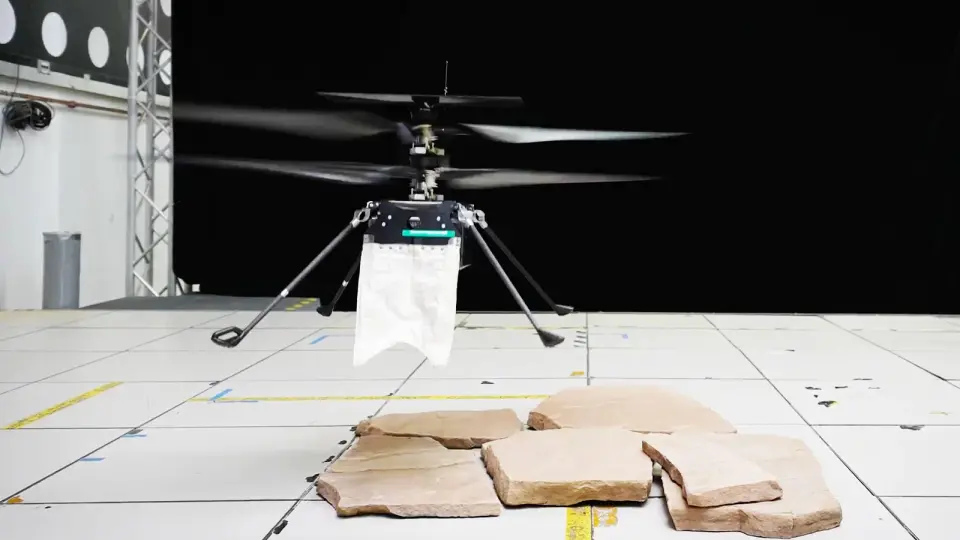
NASA's Jet Propulsion Laboratory (JPL) has revealed that the three SkyFall Mars helicopters will utilize flexible, fabric-based radar antennas resembling 'capes' to detect shallow subsurface ice. These lightweight instruments, weighing approximately 5 ounces, are designed to fold during landings to protect the hardware and deploy during flight to scan the Martian surface. The mission, scheduled for launch in late 2028 aboard the Space Reactor-1 Freedom spacecraft, aims to map near-surface ice deposits that orbiting satellites cannot detect, providing critical data for future human exploration and resource utilization.
Key points
- The SkyFall mission will deploy three mini-rotorcraft to Mars, each equipped with four instruments, including a ground-penetrating radar (GPR) system.
- The GPR antennas are constructed from flexible metalized fabric, specifically a Vivaldi antenna design, allowing them to fold during landings to avoid damage from the limited ground clearance of the helicopters.
- JPL engineers tested the prototype antennas through 200 simulated landings and extreme temperature variations, confirming they retain signal integrity after exceeding the requirements for a primary mission.
- The mission is scheduled to launch in late 2028 on the Space Reactor-1 Freedom nuclear-powered spacecraft, with AeroVironment co-designing the helicopters alongside JPL.
- The primary scientific goal is to map shallow ice deposits in the top few feet of Martian soil, a zone inaccessible to orbital radar but vital for future astronaut safety and resource extraction.
Background
SkyFall follows the legacy of Ingenuity, the first rotorcraft to fly on another planet, which completed 72 flights before a damaged rotor ended its mission in 2024. Previous reporting indicated that NASA awarded Firefly Aerospace a $13 million contract to build the aeroshell for the SkyFall descent, while the broader Space Reactor-1 Freedom mission is estimated to cost $2.1 billion. The SkyFall payload is distinct from the main nuclear propulsion system but relies on the same launch vehicle.
How outlets are covering it
Space.com emphasized the visual design of the 'capes' and the strategic importance of detecting shallow ice for future human missions. NASA’s official photojournal highlighted the technical specifications, noting that the helicopters will collect both subsurface radar data and near-infrared imagery. TechEBlog provided detailed engineering insights, focusing on the durability tests the antennas underwent, including 200 simulated landings and exposure to Mars-like temperature swings. Mirage News focused on the testing phase, highlighting the work of JPL engineers in the Environmental Test Lab. All sources agree on the late 2028 launch timeline and the collaboration between JPL and AeroVironment.
Why it matters
The success of the SkyFall mission could redefine how we approach resource mapping on Mars. By identifying accessible ice near the surface, the mission could significantly reduce the logistical challenges of future crewed expeditions, as water is essential for drinking, oxygen, and rocket fuel. The innovative use of flexible antennas also demonstrates a new approach to protecting sensitive scientific instruments during the harsh conditions of planetary landings.
What to watch
NASA and AeroVironment will continue to refine the SkyFall helicopters as they prepare for the late 2028 launch. The mission will be integrated into the Space Reactor-1 Freedom spacecraft, which is currently undergoing development. Upon arrival on Mars, the helicopters will be released mid-descent to begin their survey of the Martian surface, focusing on regions with high potential for shallow ice deposits.
- NASA's SkyFall Mars helicopters will wear tiny capes Space
- NASA’s SkyFall Helicopters at Work (Artist’s Concept) NASA Science (.gov)
- Antenna Testing For NASA's SkyFall Mission Mirage News
- NASA SkyFall’s Featherweight Radar Antenna Survives 200 Mars Landings TechEBlog -
- SkyFall on Mars: Water-snooping Helicopters Spun Up Inside Outer Space
Want the full story? Read the original reporting
Read on Space