
NASA’s 2003 Decision to Crash Galileo into Jupiter to Protect Europa
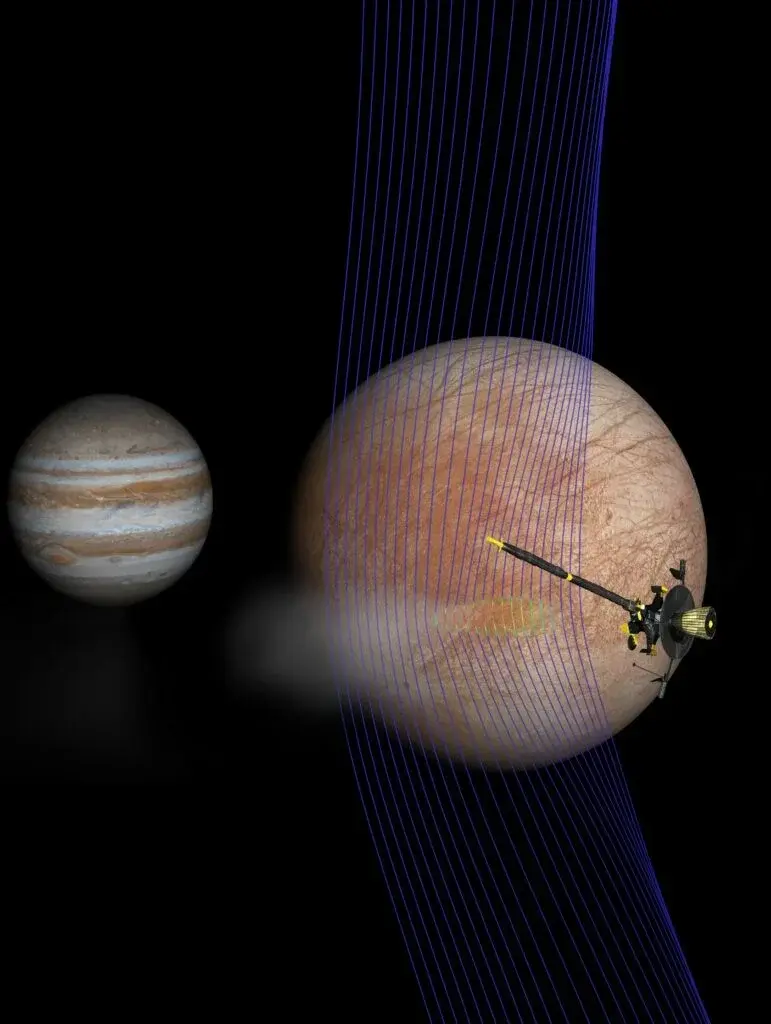
In September 2003, NASA deliberately crashed the Galileo spacecraft into Jupiter to prevent it from potentially contaminating Europa, a moon with evidence of a subsurface ocean. The orbiter lacked rigorous sterilization, and low fuel levels meant it could no longer be controlled. This action established a precedent for protecting potentially habitable worlds from Earth microbes.
Key points
- Galileo entered Jupiter's atmosphere at 48.2 km/s (108,000 mph) on September 21, 2003, a planned disposal rather than an accident.
- The decision was driven by planetary protection concerns; Galileo was not sterilized to the standards required for missions targeting potentially habitable bodies.
- Galileo’s magnetic data and surface imagery provided strong indirect evidence of a salty ocean beneath Europa’s ice, making the moon a prime candidate for life.
- Propellant depletion meant NASA could no longer guarantee the orbiter’s trajectory, risking an uncontrolled impact with Europa in the future.
- The mission ended with the loss of the carrier signal after 52 minutes of radio delay, confirming the spacecraft’s destruction in Jupiter’s atmosphere.
Background
This event occurred decades before NASA’s Europa Clipper mission, launched in 2024, which aims to study the same ocean with high precision. While Galileo’s findings were indirect, they shifted scientific consensus regarding Europa’s habitability. The 2003 disposal highlighted the ethical and scientific imperative to prevent forward contamination, a principle that now guides missions to icy moons and other potentially habitable environments.
Why it matters
The Galileo disposal established a critical precedent in planetary protection, demonstrating that safeguarding potentially habitable environments is a core responsibility of space agencies. It underscored that even without confirmed life, the risk of introducing Earth microbes to a world with liquid water must be mitigated. This decision influenced the design and sterilization protocols of subsequent missions, such as Europa Clipper, ensuring that future explorations do not compromise the scientific integrity of potential biosignatures.
What to watch
NASA’s Europa Clipper, en route to Jupiter, will conduct 49 close flybys to directly measure the ice shell thickness, ocean depth, and salinity. Unlike Galileo, it is designed with stricter contamination controls. Its data will determine whether future missions should attempt to sample the ocean, potentially leading to the first direct detection of extraterrestrial life or definitive proof of its absence.
Want the full story? Read the original reporting
Read on Space Daily