
JAXA Abandons Hayabusa2 Asteroid Landing After Engine Failure, Retargets 2028 Flyby
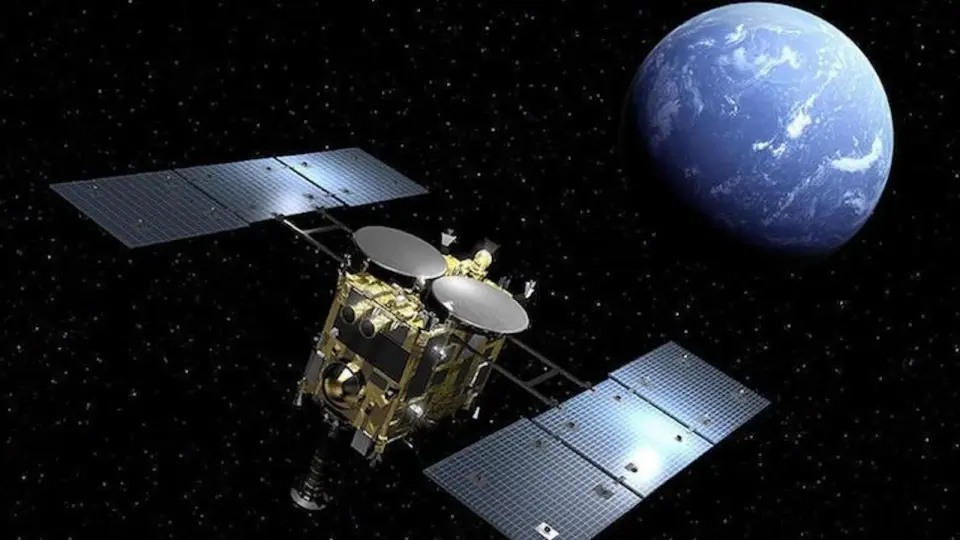
Japan’s JAXA has cancelled the planned 2031 landing of the Hayabusa2 probe on asteroid 1998 KY26 due to critical ion engine failures. The spacecraft will instead perform a high-speed flyby of asteroid 2015 BM510 in April 2028. This decision ends the direct observational debate over whether 1998 KY26 is a natural object or the lost Soviet Phobos 1 probe.
Key points
- JAXA announced on November 17 that Hayabusa2 will no longer attempt to rendezvous with and land on asteroid 1998 KY26 in 2031.
- The decision follows a malfunction in the spacecraft’s final functioning ion engine (Engine B) in mid-August, which could not be repaired despite a hybrid cross-operation attempt.
- Hayabusa2 will now target asteroid 2015 BM510 for a high-speed flyby in April 2028.
- The new target, 2015 BM510, is a D-type asteroid estimated to be 17 to 74 meters across, rotating once every 49 minutes.
- The cancellation leaves unresolved the scientific debate regarding the nature of 1998 KY26, which some researchers argue is the lost Soviet Phobos 1 spacecraft.
Background
Hayabusa2 launched in December 2014 to sample asteroid Ryugu, delivering samples to Earth in December 2020. Following a successful close flyby of the binary asteroid Torifune in July 2026, the probe began an extended mission. Previous archive coverage noted that JAXA attempted a hybrid engine repair in October 2026 to save the 1998 KY26 mission, but the power supply failure persisted. The debate over 1998 KY26’s identity, including claims by Harvard astrophysicist Avi Loeb that it is the lost Phobos 1 probe, had been expected to be resolved by the 2031 rendezvous.
How outlets are covering it
Space.com and MLQ.ai report that JAXA officials cited the 'deterioration of onboard equipment' and the inability to perform necessary trajectory changes as the primary reasons for the mission change. MLQ.ai provides technical detail, noting that Engine B suffered electrical discharges and that a power supply failure prevented the hybrid repair from working. IFLScience emphasizes the scientific implications, highlighting that the cancellation leaves the 'Phobos 1' hypothesis unresolved, as direct observation of 1998 KY26 is no longer scheduled. While Space.com and MLQ.ai focus on the engineering failure and the new target, IFLScience frames the event as a missed opportunity to settle a long-standing astronomical debate.
Why it matters
The failure of Hayabusa2’s final mission marks the end of a decade-long exploration effort and highlights the challenges of long-duration space missions. The retargeting to 2015 BM510, a D-type asteroid potentially rich in organic material, offers new scientific value, though it lacks the controversy of the 1998 KY26 debate. The incident also provides critical data for the design of future ion engines, such as those planned for the DESTINY+ mission, which is scheduled to launch in fiscal 2028.
What to watch
Hayabusa2 is expected to conduct a high-speed flyby of asteroid 2015 BM510 in April 2028. JAXA will continue to use data from the engine degradation to improve the ion engine design for the DESTINY+ mission, which will launch alongside ESA’s Ramses mission. The debate over the nature of 1998 KY26 will likely remain unresolved without direct observation.
- No more asteroid landing: Engine trouble forces Japan's Hayabusa2 probe to change plans Space
- Japan Cancels Mission To Asteroid 1998 KY26, As Astrophysicist Avi Loeb Argues It Is Human-Made Anyway IFLScience
- Engine failures end Hayabusa2's 2031 asteroid rendezvous as JAXA retargets the probe to a 2028 flyby MLQ.ai
- Japan's Hayabusa2 to fly by 2015 BM510 after engine issues NewsBytes
- Japan space probe changes target over engine trouble Phys.org
Want the full story? Read the original reporting
Read on Space