
NASA Backs SPARK Aerobots to Probe Titan’s Subsurface Caves
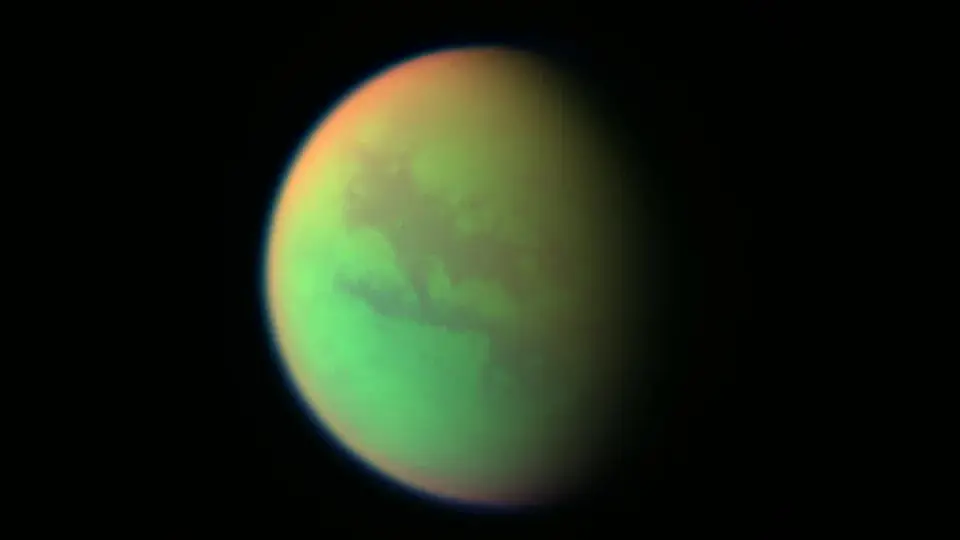
NASA has awarded $3.2 million to the SPARK project to develop spherical, ion-powered aerobots for exploring Titan’s underground cave networks. Led by Daniel Drew at the University of Hawaii, the concept uses electrohydrodynamic propulsion, which is projected to be 100 times more efficient on Titan than on Earth due to the moon’s dense atmosphere. The project is in a nine-month feasibility phase, with a potential two-year prototype stage, though it may miss the 2028 Dragonfly launch window.
Key points
- The SPARK project aims to deploy swarms of lighter-than-air, sphere-shaped robots to navigate Titan’s subsurface karst terrain, including caves and sinkholes formed by dissolved hydrocarbons.
- The robots utilize electrohydrodynamic (EHD) propulsion, or atmospheric ion thrusters, which generate thrust by ionizing air molecules without moving parts, avoiding the freezing issues of mechanical rotors in Titan’s cold environment.
- According to project lead Daniel Drew, EHD thrusters are expected to be over 100 times more power-efficient on Titan than on Earth, allowing for lighter power converters and minimal turbulent downwash to preserve delicate surface deposits.
- The project is currently in Phase 1, a nine-month feasibility study involving computer modeling and thermal testing with collaborators from NASA’s Jet Propulsion Laboratory and the Blue Marble Space Institute of Science.
- A Phase 2 evaluation of a flying prototype is planned for two years, but it remains uncertain if SPARK will hitch a ride with the Dragonfly rotorcraft, which is slated for launch in 2028.
Background
This development follows earlier coverage of the SPARK concept, which was highlighted as a potential forerunner to the Dragonfly mission. The project addresses the challenge of exploring subsurface environments, similar to the karst landscapes found on Earth, such as the Naica mine or Vietnam’s Sơn Đoòng cave, which are difficult for traditional rovers to access. While Titan’s surface features liquid hydrocarbon lakes and rivers, its subsurface remains unexplored, making aerobots a promising tool for mapping these hidden networks.
How outlets are covering it
Gizmodo and HotHardware emphasize the technical advantages of EHD propulsion, noting its efficiency and lack of moving parts. Interesting Engineering highlights the potential for SPARK to serve as a cave-exploration scout, comparable to the Ingenuity helicopter on Mars. All sources agree on the project’s early-stage status and the uncertainty regarding its integration with the Dragonfly mission. HotHardware also notes the potential application of the technology for high-altitude balloon station-keeping on other atmospheric targets like Venus, a detail not emphasized by the other outlets.
Why it matters
The SPARK project represents a significant step in developing new propulsion technologies for exploring subsurface environments on other worlds. If successful, it could enable the mapping of Titan’s underground cave networks, potentially revealing new insights into the moon’s geology and habitability. The technology’s efficiency and adaptability could also have applications for other atmospheric missions, expanding the scope of future space exploration.
What to watch
The SPARK team will continue its nine-month Phase 1 feasibility study, focusing on modeling EHD performance in Titan-like conditions and conducting engineering trade studies. If successful, the project will advance to a two-year Phase 2 evaluation of a flying prototype. The timeline for a flight-ready mission remains uncertain, with the possibility of hitching a ride with the Dragonfly mission or launching independently.
- A NASA-Funded Project Could Send Swarms of Aerobots to Explore the Underground Caves of Titan Gizmodo
- NASA funds spherical 'Aerobots' that could explore the caves of Saturn's moon Titan Space
- NASA Funds Spherical Flying Robots To Swarm Alien Caves On Saturn's Moon HotHardware
- NASA funds ion-powered flying drones to explore Saturn's largest moon Interesting Engineering
- Lighter-Than-Air Robots Powered by Atmospheric Thrusters Could Explore Titan’s Caves autoevolution
Want the full story? Read the original reporting
Read on Gizmodo