
NASA awards Advanced Space contract for CAPSTONE 02 dual-satellite lunar test
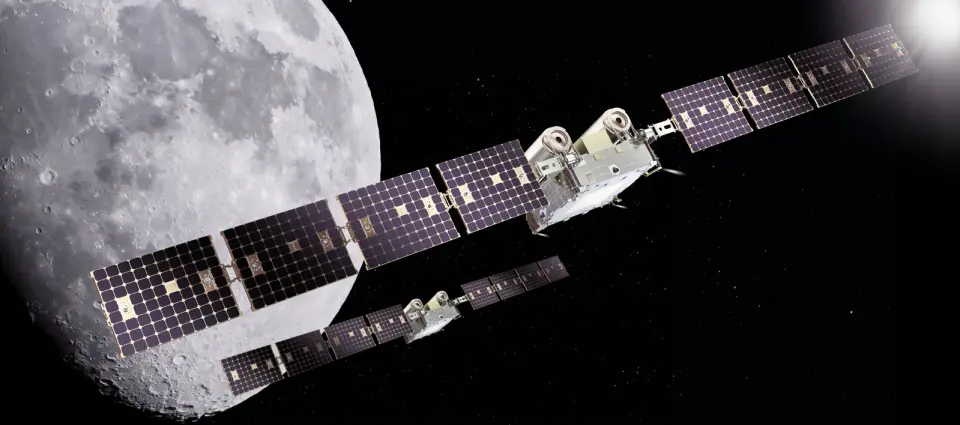
NASA has awarded Advanced Space a contract for the CAPSTONE 02 mission, a 2027 launch featuring two 400-kilogram satellites designed to test autonomous rendezvous and proximity operations in cislunar space. The mission aims to de-risk future lunar docking maneuvers for Artemis and the Moon Base program by validating navigation and communications in complex three-body orbits.
Key points
- NASA announced the contract award to Advanced Space on July 24, 2026, for the CAPSTONE 02 mission.
- The mission will launch in 2027 and utilize two identical 400-kilogram spacecraft built by Terran Orbital, a Lockheed Martin subsidiary.
- Primary objectives include testing autonomous rendezvous and proximity operations (RPO) where spacecraft switch roles as chaser and target.
- The mission will validate navigation software, cislunar communications architectures, and radiation environment measurements around the Moon.
- House appropriators directed NASA to spend between $20 million and $60 million on the mission in fiscal year 2027, though the exact contract value was not disclosed.
- CAPSTONE 02 follows the original CAPSTONE mission, which concluded in June 2026 after testing near-rectilinear halo orbits for the now-canceled Lunar Gateway.
Background
This development follows the conclusion of the original CAPSTONE mission in June 2026, which successfully demonstrated autonomous navigation in a near-rectilinear halo orbit. That orbit was originally intended for the Lunar Gateway, a project canceled in March 2026 as NASA shifted focus to a lunar surface base. CAPSTONE 02 is part of a broader strategy to mature cislunar capabilities, including recent expansions of the Commercial Lunar Payload Services program and preparations for Artemis crewed missions.
How outlets are covering it
SpaceNews and ExecutiveGov emphasize the technical risk-reduction aspect, noting that CAPSTONE 02 will validate the specific navigation and docking techniques required for the Orion spacecraft to rendezvous with lunar landers. Inside Outer Space highlights the collaborative nature of the mission, detailing partners such as Stellar Exploration for propulsion and Utah State University for communications systems. While all sources agree on the 2027 launch window and the dual-satellite configuration, Inside Outer Space provides additional detail on the specific instruments, including the Compact Electron Proton Spectrometer, whereas SpaceNews focuses more on the strategic alignment with the Moon Base initiative.
Why it matters
Successful demonstration of autonomous rendezvous and proximity operations in cislunar space is critical for the safety and feasibility of future crewed lunar missions. By validating these technologies with small satellites, NASA aims to reduce the risk of failure during high-stakes docking maneuvers involving the Orion spacecraft and lunar landers, thereby supporting the agency's goal of establishing a sustained human presence on the Moon.
What to watch
The next major step is the launch of the two CAPSTONE 02 satellites in 2027. Following launch, the spacecraft will conduct a series of formation flying and rendezvous tests in lunar orbit. The data collected will be used to refine navigation software and communication protocols for future Artemis missions and the development of the lunar surface base.
- NASA selects successor to CAPSTONE lunar mission SpaceNews
- NASA’s Minor CAPSTONE Moon Mission Was Actually So Big a Redo Will Forever Reshape Space Exploration autoevolution
- Advanced Space selects LLNL to provide optics system for CAPSTONE 02 Lawrence Livermore National Laboratory (.gov)
- New CAPSTONE Cislunar Mission Okayed – Supporting Moon Operations Inside Outer Space
- NASA Taps Advanced Space for CAPSTONE 02 Lunar Mission ExecutiveGov
Want the full story? Read the original reporting
Read on SpaceNews