
UK Startup Foundational Demonstrates Passive Laser Retroreflector for Tracking Silent Satellites
London-based startup Foundational.Space has successfully tested its Retro-2 laser retroreflector in low Earth orbit. The 50-gram passive device, developed with the European Space Agency, returned 6,111 laser signals from ground stations during five passes. The technology aims to track defunct satellites that no longer transmit data, helping mitigate collision risks as orbital debris increases. Foundational, which emerged from stealth in October 2026 with £8.2 million in funding, plans further tests at higher altitudes.
Key points
- Foundational.Space tested the Retro-2 system on a satellite launched in July 2026 via SpaceX’s Transporter-17 rideshare flight.
- The device uses seven corner-cube reflectors and requires no power, electronics, or commands from the host spacecraft.
- Ground stations recorded 6,111 laser returns across five passes at altitudes between 609 and 866 kilometers.
- The test achieved a single-shot ranging precision of 4 millimeters and an average uncertainty of 0.6 millimeters.
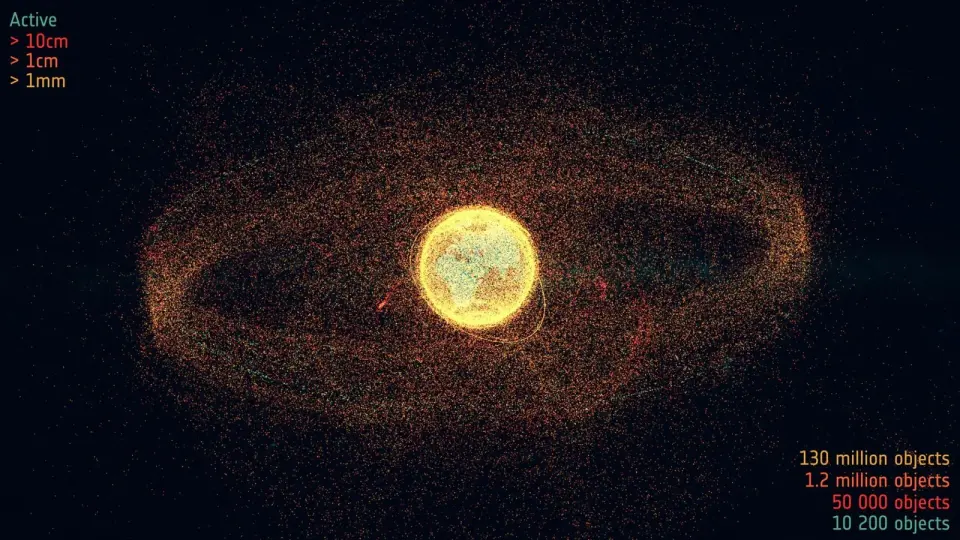
- The company aims to track satellites after they fail, addressing the growing problem of millions of space debris pieces in orbit.
Background
Space debris is a growing concern, with the European Space Agency noting millions of fragments circling Earth. While previous efforts have focused on active removal or refueling, Foundational’s approach is passive tracking. This follows other 2026 developments in space situational awareness, including funding for companies like Starfish Space and Katalyst Space. The technology complements existing radar and optical sensors, which struggle with the high speeds of orbital objects.
How outlets are covering it
Space.com emphasized the device’s lightweight design (50 grams) and its potential to manage collision risks as space becomes crowded. Via Satellite highlighted the technical superiority of laser ranging over radar, noting its inherent accuracy for space domain awareness. Aviation Week focused on the practical application of tracking defunct satellites to prevent accidents. Around Prague summarized the test results, stressing the importance of tracking silent hardware. All sources agree on the successful demonstration but differ in emphasis: some focus on the technical precision, while others highlight the broader context of orbital debris management.
Why it matters
As the number of satellites in orbit increases, the risk of collisions with debris grows. Passive tracking technologies like Retro-2 offer a low-cost, low-power solution to monitor objects that have gone silent, enhancing overall space situational awareness and safety.
What to watch
Foundational.Space plans to conduct further tests at ranges of 1,200 to 1,500 kilometers. The company, which raised £8.2 million in pre-seed funding, will likely continue developing its technology for broader integration into satellite fleets to ensure continuous tracking throughout a spacecraft’s lifecycle.
- Space is filling up with junk. Could laser-reflecting mirrors help humanity clean things up? Space
- UK Startup Foundational.Space Launches Laser Retroreflector for Space Domain Awareness Via Satellite
- UK Startup Pitches Reflectors To Ease Tracking Of Defunct Satellites Aviation Week
- A 50-Gram Mirror Returned 6,111 Laser Shots From Orbit to Track Space Junk Around Prague
Want the full story? Read the original reporting
Read on Space