Tag

Orbital Safety

All articles tagged with #orbital safety

UK Startup Foundational Demonstrates Passive Laser Retroreflector for Tracking Silent Satellites
space-technology5 days ago

UK Startup Foundational Demonstrates Passive Laser Retroreflector for Tracking Silent Satellites

London-based startup Foundational.Space has successfully tested its Retro-2 laser retroreflector in low Earth orbit. The 50-gram passive device, developed with the European Space Agency, returned 6,111 laser signals from ground stations during five passes. The technology aims to track defunct satellites that no longer transmit data, helping mitigate collision risks as orbital debris increases. Foundational, which emerged from stealth in October 2026 with £8.2 million in funding, plans further tests at higher altitudes.


Global Debris Crisis: Chinese Rocket Fragments Land in Indonesia and Minnesota
world1 month ago

Global Debris Crisis: Chinese Rocket Fragments Land in Indonesia and Minnesota

Two significant space debris landings occurred within days of each other, highlighting rising risks from increased launch activity. A large metallic fragment was found in an oil palm plantation in Indonesia’s Central Kalimantan province on Monday, October 19. Just days earlier, on October 14, a massive object was discovered in a cornfield in Stevens County, Minnesota. Both incidents are linked to Chinese commercial rocket launches, with no injuries reported.

Soviet Meteor 2-7 Satellite Fragments Again, Highlighting Rising Orbital Debris Risks
space1 month ago

Soviet Meteor 2-7 Satellite Fragments Again, Highlighting Rising Orbital Debris Risks

The Soviet-era Meteor 2-7 weather satellite, launched in 1981, has fragmented for the second time in low Earth orbit. Detected by LeoLabs in October 2026, the event produced tens of new debris pieces at an altitude of 530 miles. Experts warn this is part of a worrying trend, as tracked orbital debris has increased by 180% since 2005, raising collision risks for active spacecraft.

SpaceX demands open orbital data after 164,000 Starlink near-misses
technology1 month ago

SpaceX demands open orbital data after 164,000 Starlink near-misses

SpaceX has publicly criticized rival satellite operators for failing to share trajectory data, citing 164,000 potential collisions in six months. The company argues that undisclosed maneuvers pose the greatest risk in low Earth orbit and is urging the industry to adopt open ephemeris sharing to prevent catastrophic debris cascades.

Decades-Old U.S. Spy Satellite 'Farrah III' Shatters in Orbit, Adding to Space Debris
space-and-technology1 month ago

Decades-Old U.S. Spy Satellite 'Farrah III' Shatters in Orbit, Adding to Space Debris

The U.S. spy satellite USA-32, nicknamed 'Farrah III,' broke apart in low Earth orbit on September 13, 2026. Launched in 1988 to intercept Soviet signals, the satellite had been inactive for years. The cause of the explosion is unknown, but it has created a debris cloud in a crowded orbital region.

1988 U.S. Spy Satellite 'Farrah III' Shatters in Low Earth Orbit
space-and-spaceflight1 month ago

1988 U.S. Spy Satellite 'Farrah III' Shatters in Low Earth Orbit

A defunct U.S. intelligence satellite, designated USA-32 and nicknamed 'Farrah III,' unexpectedly fragmented in low Earth orbit on September 13, 2026. Launched in 1988 to intercept Soviet signals, the spacecraft broke apart at an altitude of 775 kilometers, creating a debris cloud. While the U.S. Space Force reports no immediate threats to other spacecraft, the cause of the explosion remains unknown, with possibilities ranging from propellant failure to space debris impact.

Yaogan-50-02 Breakup Creates Long-Lived Debris Field in Unusual Retrograde Orbit
space2 months ago

Yaogan-50-02 Breakup Creates Long-Lived Debris Field in Unusual Retrograde Orbit

China’s Yaogan-50-02 reconnaissance satellite broke apart in September 2026, generating 43 tracked debris fragments in a highly retrograde orbit. The fragments, located between 600 and 1,100 kilometers altitude, may remain in orbit for centuries or millennia due to minimal atmospheric drag. The cause of the breakup remains unknown, with experts citing potential battery or propulsion failures. This incident adds to the growing global concern over orbital clutter and the risk of cascading collisions.

Space Debris Re-entries Surge to Weekly Tons as Launch Activity Peaks
science-and-technology3 months ago

Space Debris Re-entries Surge to Weekly Tons as Launch Activity Peaks

The volume of space debris re-entering Earth’s atmosphere has escalated significantly, with large objects now falling back to the planet approximately once a week. This surge correlates with a sharp increase in rocket launches and satellite deployments, leading to a higher frequency of uncontrolled re-entries. While most debris burns up or lands in oceans, larger components are increasingly surviving descent and impacting populated areas. Current international regulations remain non-binding and outdated, leaving gaps in liability and safety standards as the number of orbital objects continues to grow.

Startup Proposes 4,000 Orbital Sky Mirrors to Shine Daylight After Dusk, Draws Astronomers’ Fears
technology7 months ago

Startup Proposes 4,000 Orbital Sky Mirrors to Shine Daylight After Dusk, Draws Astronomers’ Fears

A California startup, Reflect Orbital, plans a constellation of up to 4,000 low-Earth-orbit satellites each carrying large tilting reflectors to redirect sunlight toward Earth after sunset, potentially delivering daylight-like illumination for hours. A demonstration mission (Eärendil-1) is in the works, with ambitions to scale to tens of thousands of satellites, raising major concerns among astronomers and ecologists about night-sky brightness, wildlife impacts, and orbital congestion before any large-scale deployment.

Satellite Survives Space Debris Collision, Captures Selfie as Proof
science-and-technology2 years ago

Satellite Survives Space Debris Collision, Captures Selfie as Proof

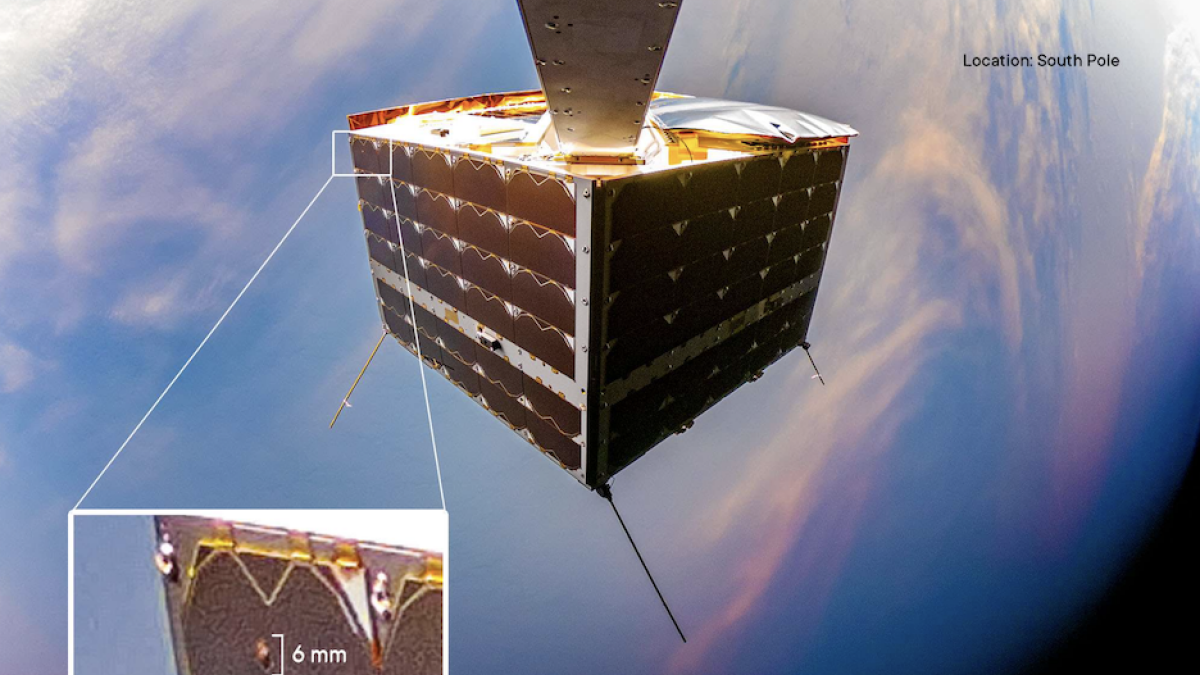
A small object traveling at high speed punctured NanoAvionics' MP42 satellite in Earth's orbit, highlighting the risks posed by space debris and micrometeoroids. The incident underscores the importance of responsible space operations to prevent the escalation of space debris, which could lead to the Kessler effect—a cascade of collisions in orbit. NanoAvionics has joined the European Space Agency's Zero Debris Charter to help mitigate this risk by promoting responsible satellite operations and disposal.

"SpaceX Starlink Satellites: 25,000 Near-Misses in 6 Months"
spaceflight3 years ago

"SpaceX Starlink Satellites: 25,000 Near-Misses in 6 Months"

SpaceX's Starlink satellites have had to make over 25,000 collision-avoidance maneuvers in the past six months, double the number from the previous six-month period. Concerns are growing over the long-term sustainability of satellite operations as the number of satellites in orbit continues to increase. Experts warn that the exponential growth in maneuvers could lead to a significant risk of collisions and the accumulation of space debris, potentially rendering parts of the orbital environment unusable.