
Ancient galaxy defies early-growth limits, seen 290 million years after the Big Bang
TL;DR Summary
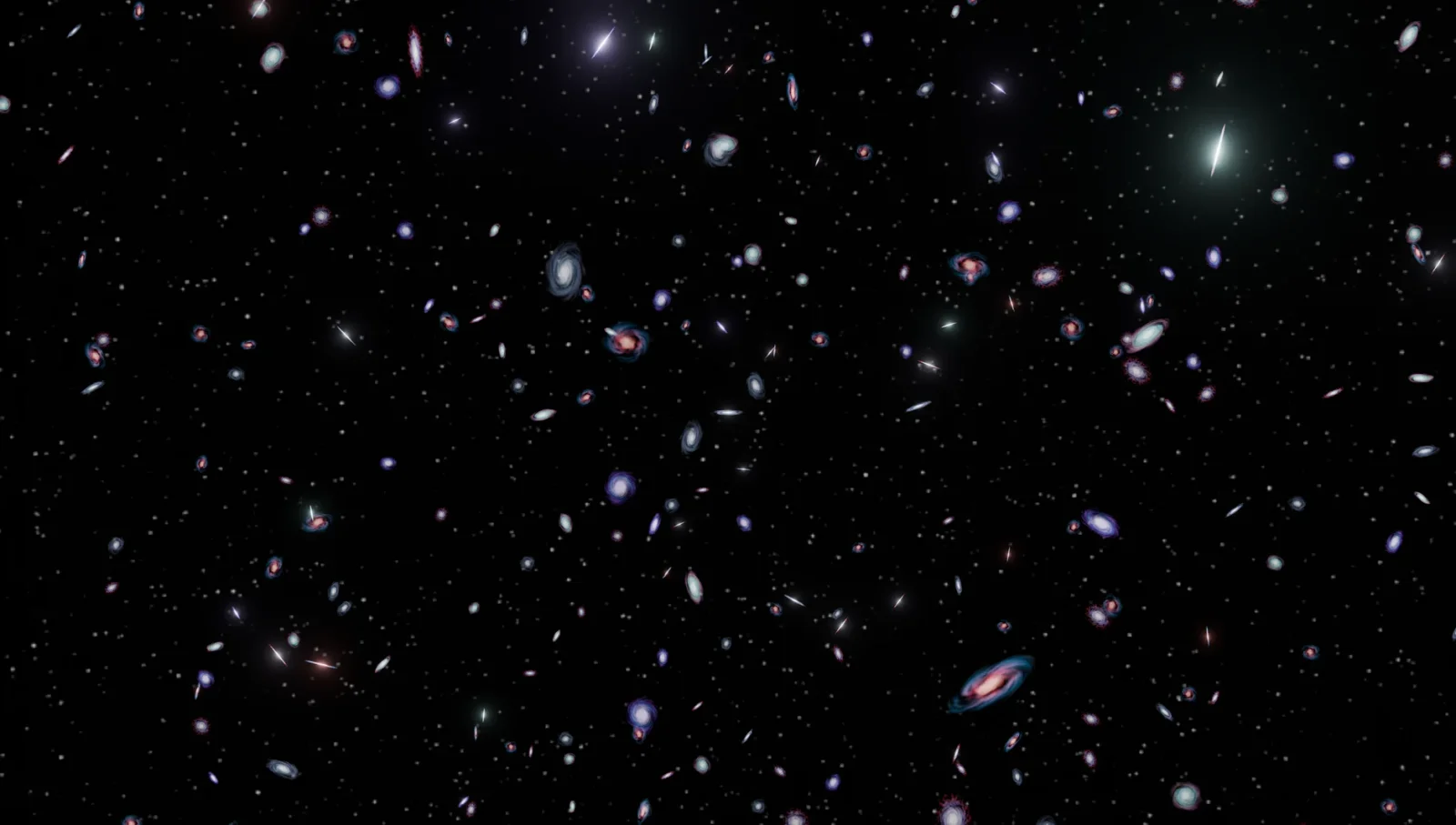
JWST confirmed the galaxy JADES-GS-z14-0 at about z~14.3 (roughly 290 million years after the Big Bang), unusually large and bright for its age, and ALMA detected oxygen indicating heavy-element enrichment far earlier than models predicted—raising questions about how quickly the first galaxies assembled while not overturning the Big Bang framework.
- A galaxy confirmed this January formed just 290 million years after the Big Bang, and the part astronomers cannot explain is that it is far too large, far too soon, as if the early universe was building things it was not supposed to be able to build yet. Space Daily
- The James Webb Space Telescope peered into one of the universe's oldest galaxy clusters, and scientists can't explain what they saw Space
- The most distant lensing cluster reveals a dark matter surprise Big Think
- James Webb Space Telescope catches 6 galaxies merging into one of the largest galaxies in the universe Yahoo
- The JWST Spies Six Galaxies Becoming One Universe Today
Reading Insights
Total Reads
0
Unique Readers
28
Time Saved
12 min
vs 12 min read
Condensed
98%
2,356 → 50 words
Want the full story? Read the original article
Read on Space Daily